


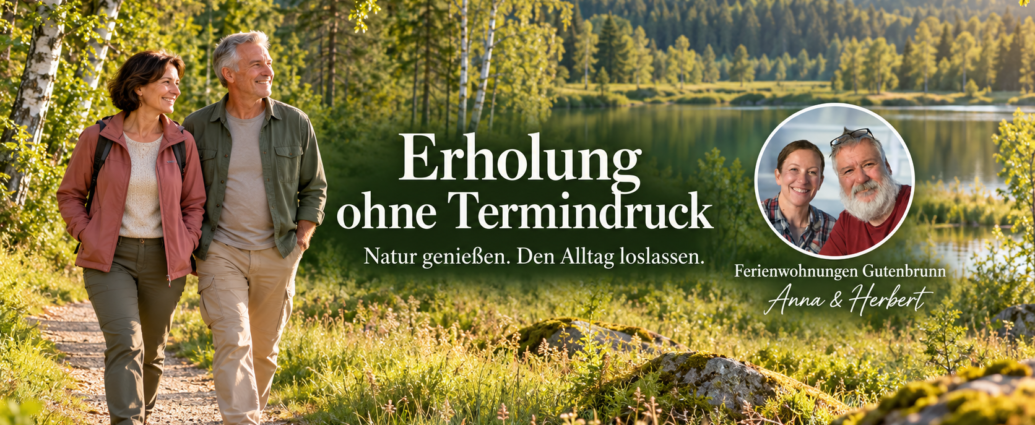
Why spending time in nature without the pressure of deadlines is so important
Relaxation in nature without the pressure of deadlines It’s not just a nice idea—it’s essential for your mental and physical health. Many people spend their days constantly available, rushing from one appointment to the next. The body remains in a constant state of stress. This leads to burnout, sleep disorders, and chronic fatigue.
That's no coincidence. The recreation in nature activates your parasympathetic nervous system, the part that controls relaxation and recovery. When you spend time in nature without constantly checking the time, your body can finally „wind down“ again.
The good news: You don't need much to make this happen. No exotic destinations, no expensive adventures. Just silence, greenery, and time that's all your own.
True relaxation begins when the pressure of deadlines ends. Your body needs time free of obligations to truly recharge.
The Role of Nature in Stress Management and Recovery
Scientists have known for years: Nature is a stress-relief tool that’s available for free. When you walk among the trees, your blood pressure drops. Your breathing slows down. Your cortisol—the stress hormone—decreases.
It doesn't work because nature is „beautiful.“ It works because your brain performs different tasks in nature than it does in the city. In the city, you constantly have to divide your attention: cars, noise, people, screens. In nature, your brain can focus on simple sensations: birdsong, light filtering through the leaves, the scent of the forest.
That is Regeneration in a biological sense. Your nervous system resets.
The Stress Management It doesn't work when you're sitting out in nature and checking your phone. It works when you're truly present. That's why digital detox is such an important topic later on.
A connection to nature isn't optional for your health—it's a basic need, just like sleep or water.
The forest in the Waldviertel is your free therapy room. Being fully present in nature can lower your stress levels.
Slowing Down on Vacation: Practical Tips for Letting Go
Many people go on vacation and bring their hectic lifestyles with them. They plan every day to be packed with activities. They check their emails between hikes. They’re constantly taking photos instead of just enjoying themselves.
That is the opposite of Slowing Down on Vacation.
True letting go means:
- No daily schedule. Wake up. See how you feel. Maybe go for a walk. Maybe sit on the patio with a cup of coffee. Maybe read a book. It's okay if nothing happens.
- No set times. Eat when you're hungry. Sleep when you're tired. Don't say, „Dinner is at 7 p.m.“
- No obligations. You don't have to visit anyone. No need to check off any sights. No need to take photos for Instagram.
- No deadlines. Your vacation ends when you have to leave, not an hour earlier just because you „have to.“.
For the first two days, it feels uncomfortable. Your brain isn't used to it. But starting on day three, something happens: You breathe more deeply. You sleep better. You realize that „doing nothing“ isn't boring—it's liberating.
The most common mistake: booking an apartment and then immediately planning all the activities in the region. That’s not a vacation—that’s sightseeing. Relaxing in nature without feeling pressured by a schedule only works if you’re allowed to cancel your plans.
Practicing Mindfulness on Vacation: Simple Exercises for Everyday Life
Mindfulness on Vacation Means: Focusing your full attention on the here and now. Don't think. Don't plan. Just observe.
That may sound esoteric, but it's a skill you can develop. And it's the key to true relaxation.
Three simple exercises:
1. The 5 Senses Exercise (5 minutes)
Sit down somewhere. Then say:
- 5 Things You See
- 4 Things You Hear
- 3 Things You Can Feel
- 2 Things You Can Smell
- 1 Thing You Can Taste
This forces your brain to stay in the moment—not worrying about tomorrow.
2. The Breathing Exercise (2 minutes)
Breathe in for a count of four. Hold your breath for four. Breathe out for four. That's all. Your nervous system will calm down immediately. Do this in the morning and at night.
3. The Mindful Walk (15 minutes)
Walk slowly. Focus only on your steps, the ground beneath your feet, and the air. No cell phone. No music. Just you and the forest.
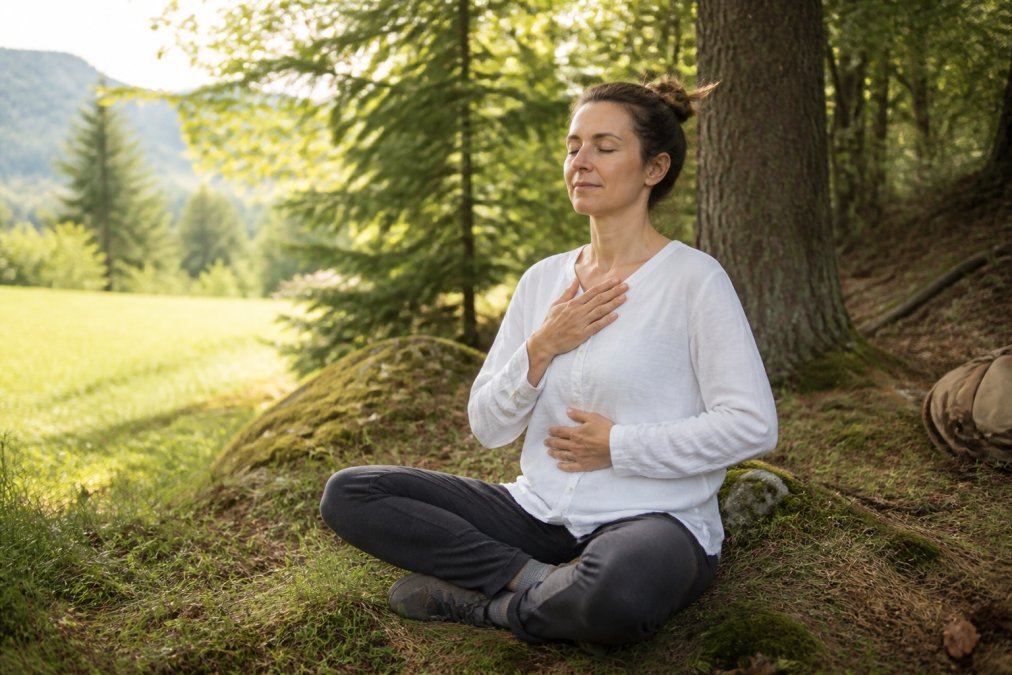
This conscious connection to nature can be deepened by Incorporating Lunar Cycles into Everyday Life learns to fine-tune their own rhythm even more precisely to the natural conditions.
These exercises don't work because they're magical. They work because they train your brain to be in the moment instead of lost in your thoughts.
Mindfulness isn't meditation. You don't have to sit still. Mindfulness is simple: it's about being mindful. You can do it anywhere—while eating, walking, or listening.
Active vs. Passive Relaxation: Which One Is Right for You?
Not everyone relaxes the same way. Some people need exercise. Others need rest. Both approaches are Relaxation, just different. The mistake is to choose one and ignore the other.
Passive Relaxation is:
- Sitting on the terrace
- Read a book
- Sleeping
- Listening to music
- Do nothing
This is important. Your body needs real rest. During this phase, your nervous system regenerates, your cortisol levels drop, and your brain consolidates memories and processes stress.
Active Relaxation is:
- Hiking
- Cycling
- Swimming
- Yoga
- Light Gardening
That's important, too. Exercise reduces stress hormones and releases "feel-good" hormones (endorphins). But here's the difference: active relaxation only works if it slowly and without pressure to perform is. A brisk hike with a specific goal isn't relaxation—it's exercise.
How do you know what you need?
Observe yourself during the first two days of your vacation:
- If you get restless when you're sitting, you need to move around.
- If you're exhausted and just want to sleep, you need some rest.
- If you need both (which is normal), then combine them.
A tried-and-true pattern is: Activity in the morning, rest at noon, light activity in the evening. This works because your body has energy in the morning, needs a break around noon, and can be active again in the evening.
Another pattern: Active every other day, passive every other day. This gives your body time to switch between the poses.
The psychological component:
Many people feel guilty when they relax passively. They think, „I should be doing something; otherwise, I’m wasting my vacation.“ That’s a mistake. Passive relaxation isn’t laziness; it’s active recovery. Your body is working during this time.
Some people force themselves to be active even though they need rest. They sign up for hiking tours because they think that’s „sensible.“ That’s wrong, too. If your body needs rest, resting is the most sensible thing you can do.
The best way to relax is a combination of: In the morning, perhaps a leisurely walk (45 minutes, at a relaxed pace). At noon, a break for lunch and reading. In the afternoon, perhaps cycling or swimming (again, at a leisurely pace). In the evening, rest.
Some people don't realize what's really good for them until they're on vacation. If you usually sit at a desk, you might need more exercise. If you do physical labor, you might need more rest. If you’re mentally exhausted, you probably need both: exercise to reduce stress hormones and rest to let your brain recover.
There is no „right“ or „wrong.“ There is only: What helps? you How can you recharge? And the answer can change from day to day.
Here's a practical test: If you feel more refreshed after an activity, you need more of it. If you feel more exhausted afterward, you need rest. Trust your body, not your expectations.
Wellness Vacation Rental with a Private Sauna in the Waldviertel Region
One Wellness Vacation Rental with Private Sauna It's not a luxury; it's a tool for deeper relaxation.
Why? Because heat and saunas activate your parasympathetic nervous system. The heat relaxes your muscles. Sweat flushes out toxins. After a sauna, you'll sleep more deeply.
If you choose this type of lodging, keep the following in mind:
- Private Sauna (not shared), so you can relax naked without strangers
- Quiet location, the sauna is no good if there's street noise outside
- Well-equipped, warm towels, water to drink, a lounge chair to rest on afterward
- Local Hosts, if something doesn't work, someone is there
For vacation rentals Gutenbrunn You'll find a peaceful setting with personalized attention from Anna and Herbert. No front desk. No lines. Just you, your family, or your partner, and nature.
Couples and individuals seeking deep relaxation. Also suitable for families, provided the children are old enough (children aged 10 and up can join for a short time).
Digital Detox in Nature: Taking a Break from Screens
That's the hard part. But it's also the most important part.
Digital Detox It doesn't mean turning off your cell phone for two weeks. It means taking intentional breaks from screens.
Why is this so important? Because your brain is constantly being stimulated by screens—notifications, new content, social media. Your nervous system stays in alert mode.
When you're out in nature and check your cell phone, you interrupt your relaxation. You bring the hustle and bustle with you.
Practical Guidelines for Digital Detox in Nature:
- Cell phone only at set times, for example: 10 a.m. and 6 p.m. Not all the time.
- No social media on vacation, Instagram, Facebook, and TikTok are dopamine traps. They make you feel like you're missing out on something.
- Emails only once a day, don't check it all the time.
- At night: Put your cell phone away, at least one hour before bedtime.
- A Walk Without a Cell Phone, when you go hiking, leave it at home.
The first detox can be uncomfortable. It gets better after a while.
Once you're back home, you may find that you're able to concentrate better, sleep better, and feel less stressed.
That's no coincidence. That's what happens when your nervous system truly regenerates.
Overcoming Psychological Barriers to Doing Nothing
Many people can't relax because they feel guilty.
You're sitting on the patio on vacation and thinking, „I should do something. I should go for a hike. I should explore the area. I'm wasting time.“
That's a psychological barrier. And it's deeply ingrained.
Why does this happen? Because we grow up in a culture that idolizes productivity. „Use your time wisely.“ „Always stay busy.“ „Boredom is a waste of time.“
That's not true. Rest isn't a waste of time. Rest is regeneration. Your brain needs it.
If you want to overcome this barrier:
- Give yourself permission to do nothing. Tell yourself, „This is my vacation. I’ve earned it.“
- Understand that peace and quiet takes work. Your body is healing. Your nervous system is resetting. That takes real work.
- Ignore FOMO (Fear of Missing Out). You're not missing out on anything. The region will still be there tomorrow. You need some rest first.
- Write down a sentence: „I'm resting so I can function better later.“ Read this when you start feeling guilty.
It takes many people a few days for that barrier to come down. After that, they can finally relax.
If you find that you can't relax even on vacation because your feelings of guilt are too strong, that's a sign that you really need some rest.
Planning a Budget-Friendly Getaway in Nature
You don't need a lot of money to truly relax in nature. That's one of the most important insights: True relaxation costs less than luxury spa treatments—not more.
How? Because relaxation doesn't depend on price, but on silence, time, and attention. And those are free.
Understanding the Cost Structure:
When you book a traditional wellness vacation, you're paying for:
- Expensive lodging (4-star hotel)
- Expensive Restaurants
- Paid Activities (Massages, Classes, Tours)
- Brokerage Fees and Commissions
If you have a Affordable Recreation If you plan to, you'll pay for:
- Affordable Accommodations (Vacation Rental with Kitchen)
- Home-cooked meals
- Free Activities (Hiking, Biking, Walking)
- Direct booking without an intermediary
Specific strategies:
1. Choosing the Right Accommodation
Not all vacation rentals are the same. Keep an eye out for:
- Kitchen available – That's the biggest way to cut costs. With a kitchen, you can cook for yourself. Without a kitchen, you have to pay for every cup of coffee and every lunch.
- Book directly with the host – No platforms like Booking or Airbnb that charge commissions. Booking directly saves 15–25 % in costs.
- Quiet location – Accommodations in tourist centers are more expensive. Accommodations in quiet villages are less expensive and better for relaxation.
- Self-catering Instead of All-Inclusive – "All-inclusive" sounds cheap, but it's actually expensive and forces you to stick to set times and locations.
2. Plan meals
Food is the second major cost driver:
- Shopping at the local supermarket – Not in tourist restaurants. Lunch at a restaurant costs €15–25. The same meal, if you cook it yourself, costs €3–5.
- Easy Cooking – You don't need complicated recipes. Pasta with vegetables, potatoes with fish, salad. It's quick, inexpensive, and healthy.
- A Picnic Instead of a Restaurant – Bread, cheese, fruit, water. Take them with you on your hike. It costs less than half of what you'd pay at a restaurant.
- Take Advantage of Local Markets – Many towns have weekly markets with affordable, fresh produce.
3. Make Activities Free
The best way to relax costs nothing:
- Hiking – Free. Nature is free.
- Cycling – Free (if you have a bike or rent one).
- Walk – Free.
- Swimming in the lake – Free (in most lakes).
- Watch the sunrise/sunset – Free.
- Reading, Writing, Drawing – Free.
Most paid activities (tours, classes, museums) aren't necessary for relaxation. They're nice, but not essential.
4. Minimize Transportation
- Walking – If your lodging is in a central location, you won't need a car.
- Public Transportation – Cheaper than renting a car.
- Ride a bike – Free and healthy.
Here's a concrete example of a budget-friendly week:
| Issue | Costs |
|---|---|
| Vacation Rental (7 nights, booked directly) | Price upon request |
| Food (cooking for yourself) | Costs vary |
| Activities (free) | 0 € |
| Transportation (public transit or on foot) | Costs vary |
| Total | 350-470 € |
By comparison, a 4-star hotel with restaurants can incur significantly higher costs.
The psychological component:
Many people think, „Cheap = poor quality.“ That’s not true. An affordable vacation rental with a kitchen is often better for a vacation, it's more expensive than a hotel because:
- You have your own schedule (not tied to restaurant hours)
- You have some peace and quiet (not in a hotel with lots of guests)
- You decide for yourself what you eat
- You don't feel guilty because you spent a lot of money and now have to „use“ everything
This last point is important: When you pay a lot of money, you feel pressured to make the most of it. You book activities you don't need. You eat at expensive restaurants, even though you'd rather eat at home. You end up with less peace of mind, not more.
Budget-friendly relaxation isn't about sacrifice. It's about focus. You focus on what really matters: nature, silence, and time for yourself. Everything else is a distraction.
The best investment for a budget-friendly getaway is a vacation rental with a kitchen in a quiet location, booked directly through the host. Everything else falls into place.
Conclusion: Plan your own personal time off without the pressure of deadlines
Relaxation in nature without the pressure of deadlines It's not something you buy. It's something you give yourself.
It starts with a decision: I'm going to stop rushing around. I'll book an apartment. I'll go there. And I won't do anything I don't want to do.
That's radical. In our world, that's almost revolutionary.
When you're ready, give it a try. Find a quiet place to stay surrounded by nature. Turn off your cell phone. Sit down. Breathe.
At Ferienwohnungen Gutenbrunn in Gutenbrunn, that’s exactly what you’ll find: a peaceful place to stay, surrounded by woods and tranquility, with personalized service from Anna and Herbert. Book directly with us and enjoy the kind of break you need—free from the pressure of a tight schedule.
Austrian Ministry of Health: Mental Health and Stress Relief
Waldviertel Tourism: Nature Experiences and Hiking Trails
European Society for Psychology: Mindfulness and Relaxation Techniques
Frequently Asked Questions
Why is spending time in nature without the pressure of deadlines so important for mental health?
Relaxing in nature without the pressure of a schedule allows for true regeneration and stress relief. Spending time in nature reduces stress hormones and promotes inner peace. Without the pressure of a schedule, you can relax at your own pace, leading to better mental health, increased resilience, and lasting relief. This is especially important for preventing burnout and restoring well-being.
How can you slow down on vacation if you're used to always being busy?
Slowing down on vacation is achieved through mindful planning without rigid time constraints. Set a goal—not a schedule—and allow yourself to reach it at a leisurely pace. Practice mindfulness through simple exercises such as breathing techniques or observing nature. Consciously let go of the need to be constantly available and make room for spontaneous moments. A peaceful place to stay without the pressure of a schedule is the ideal setting for this inner shift.
What are the benefits of a vacation rental with a private sauna for personal relaxation?
A vacation rental with a private sauna can offer deep relaxation in a familiar setting. The private sauna allows you to relax without time constraints or prying eyes, which can enhance your ability to unwind. Combined with the tranquil natural surroundings of the Waldviertel, this creates ideal conditions for rest and self-care. You decide for yourself when and for how long you’d like to use the sauna.
How can you truly leave everyday life behind and find real peace?
You’ll find true peace by consciously distancing yourself from the stress of everyday life and digitally detoxing. Choose a nature-oriented lodging with no time pressure, where you can clear your mind. Take advantage of active relaxation, such as hiking, or passive methods, such as breathing exercises. The combination of experiencing nature, personalized care, and a flexible schedule helps you truly let go of everyday life and achieve inner peace.

Comments are closed, but trackbacks and pingbacks are open.