


Table of Contents
- Legal Framework: What the Austrian Animal Welfare Act Says About Leaving Dogs Alone
- Requirements for Leaving Your Child Alone Safely
- Recognizing Signs of Stress and Separation Anxiety
- Helping Your Dog Adjust to a New Environment: The Adjustment Period
- Step-by-Step Training Plan for Vacation
- Keeping Your Dog Entertained on Vacation Without Stress: Tech Tools and Activities
- A dog is barking in a vacation rental—what should you do?
- Communication with the Landlord and Neighbors
- Avoiding Liability and Property Damage
- Frequently Asked Questions
Last updated: September 26, 2026
Legal Framework: What the Austrian Animal Welfare Act Says About Leaving Dogs Alone
The Animal Welfare Act specifies how long a dog may be left alone. A dog should be left alone for no more than four to five hours at a time. Longer periods of time can cause stress and behavioral problems.
The law does not prohibit leaving a dog alone. However, it requires that the dog be cared for in a manner appropriate to its species. This means that regular breaks, exercise, water, and mental stimulation are necessary.
If you leave a dog alone while on vacation, the same rules apply as at home. A vacation rental does not change your legal responsibility. The dog owner remains responsible for the animal’s well-being.
Violations of the Animal Welfare Act may result in warning fines. In serious cases, offenders may even face monetary fines or a ban on owning dogs.
The owner is solely responsible for the dog while on vacation. Landlords are not obligated to look after the dog. It is therefore essential to reach a clear agreement with the landlord.
Requirements for Leaving Your Child Alone Safely
A dog needs training before you can leave it alone in an unfamiliar environment while you're on vacation. Not every dog is ready for this. Some need weeks or months of preparation.
The following requirements should be met:
- The dog is already used to being left alone
- He can stay alone for at least two to three hours
- He is house-trained and has been trained reliably
- He doesn't have severe separation anxiety
- The vacation rental is dog-friendly
A puppy or dog with separation anxiety should not be left alone in a vacation rental. The risk of property damage and stress is too high.
Test at home beforehand to see how long your dog can actually stay alone. Start with short periods of time and gradually increase them. That way, you'll know exactly what's realistic while you're on vacation.
Age also plays a role. Young dogs under two years old need more frequent breaks than older ones. Senior dogs over ten years old often have different needs, such as more frequent bathroom breaks.
Recognizing Signs of Stress and Separation Anxiety
Separation anxiety manifests itself in various ways. A stressed dog may bark, howl, or scratch at doors and windows. Some dogs destroy furniture or mark their territory in the home.
Physical signs are just as important as behavior:
- Drooling or Panting
- Trembling or Nervousness
- Loss of appetite
- Diarrhea or vomiting
- Panting (rapid breathing)
A dog with separation anxiety really suffers. It feels panic. This isn't just „misbehavior“ or defiance.
Some dogs hide or seem depressed. They refuse to play or eat. These are warning signs that should be taken seriously.
Don't ignore these signs. A stressed-out dog in a vacation rental becomes a problem for the neighbors and a source of distress for the dog itself. It's better to take the dog with you or arrange for alternative care.
The first signs often appear within just a few minutes. Watch your dog closely when you leave him alone. That way, you can tell early on if there’s a problem.
Helping Your Dog Adjust to a New Environment: The Adjustment Period
A dog needs time to get used to a new environment. The first night in a vacation rental is often the hardest. The dog picks up on unfamiliar smells, hears unfamiliar noises, and misses familiar places.
The adjustment period lasts two to three days. During this time, the dog should not be left alone. Spend time together and explore your home and the surrounding area.
Here's how gradual acclimation works:
- Day 1: Arrive, explore the apartment, spend lots of time together
- Day 2: First short outings in the neighborhood; the dog gets to know the area
- Day 3: Short training sessions on being left alone (five to ten minutes)
- Starting on Day 4: Gradually extend the periods of absence
Bring along some familiar items: a favorite toy, a favorite blanket, or perhaps a piece of clothing that smells like you. This will help the dog feel more secure.
Rest periods are just as important as physical activity. An overstimulated dog cannot relax. Create quiet moments when the dog can rest.
Step-by-Step Training Plan for Vacation
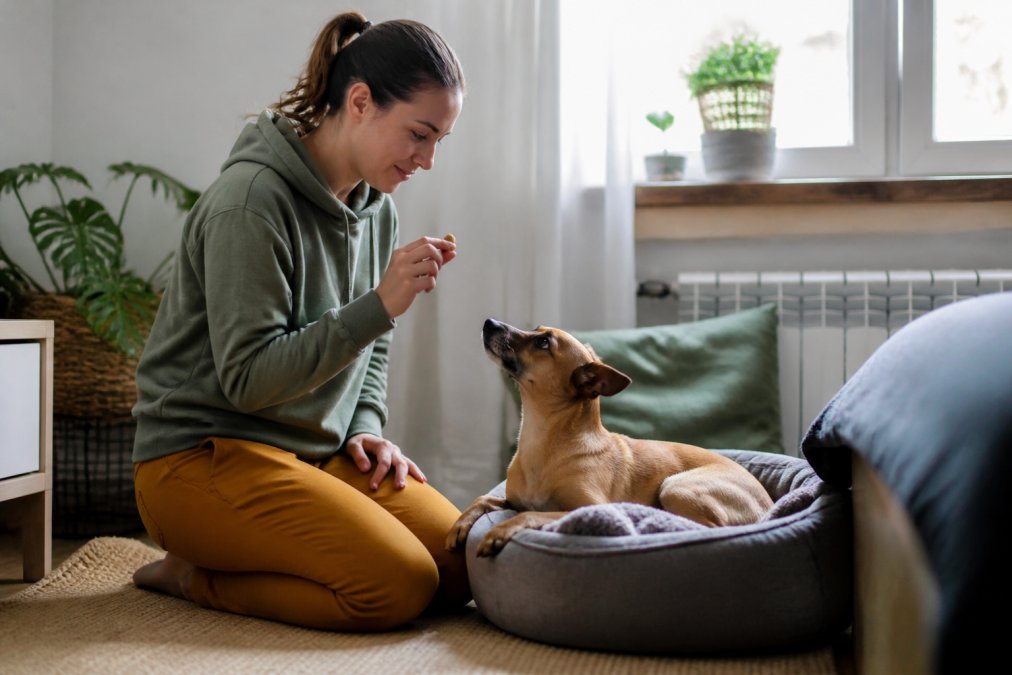
A structured training plan helps the dog get used to being left alone in the vacation rental. The plan should begin four to six weeks before the vacation and then continue once you arrive at your destination.
Weeks 1–2: Practice the basics (at home)
Start with very short absences. Leave the room for 30 seconds, then come back. Praise the dog if he stays calm. Repeat this five times a day.
Increase the time gradually: 30 seconds → one minute → three minutes. The dog should learn that you always come back.
Weeks 3–4: Longer breaks (at home)
Extend the times you're away to five to ten minutes. The dog should now remain more relaxed. Watch for signs of stress.
Practice leaving your dog alone at different times of the day. Train in the morning, at noon, and in the evening. This will help your dog become more flexible.
Weeks 5–6: Realistic Scenarios (at Home)
Train your dog in different rooms. Not just in the living room, but also in the bedroom or the kitchen. Your dog needs to learn to stay alone anywhere.
Increase the time to 30 to 45 minutes. That's a realistic amount of time for a vacation when you go shopping or take a trip.
| Week | Duration | Frequency | Objective |
|---|---|---|---|
| 1-2 | 30 seconds to 3 minutes | 5 times a day | Building Basic Trust |
| 3-4 | 5–10 minutes | 3–4 times a day | Practice taking longer breaks |
| 5-6 | 30–45 minutes | 1–2 times a day | Realistic scenario |
Don't reward your dog immediately after you return. Wait two minutes, then praise him. This way, your dog will learn that your return is normal and not a big deal.
The Critical First 24 Hours on Site: Intensive Training in the Vacation Rental
Training at home beforehand is important, but the first night in the vacation rental is the real test. Many dog owners underestimate this phase. Here’s a concrete plan for the first 24 hours:
Hours 1–2 after arrival: Arrival and Exploration
- Let the dog explore the apartment at its own pace. Take your time.
- Show the dog where its sleeping spot is (basket, blanket, dog bed).
- Provide water and a light snack.
- Avoid excessive play or excitement—it overstimulates the dog.
- Stay with the dog the whole time. Don't leave it alone.
Lessons 3–4: First Exploration Outside
- Take a 20- to 30-minute walk in the immediate vicinity.
- Let the dog get used to the new smells and sounds.
- Go back to the apartment and feed them.
- Please continue to stay with the dog.
Lessons 5–6: First short practice session
Now the first "leaving the child alone" training session begins on-site:
- Give the dog a chew toy or a toy filled with treats.
- Please leave the room for 2–3 minutes. Not any longer.
- Come back before the dog gets restless.
- Praise the dog calmly (not overly enthusiastically).
- Repeat this 2–3 times, staying away for 2–3 minutes each time.
This is crucial: Don’t leave the apartment for an extended period of time on the first day. Many dog owners make the mistake of going shopping or out to eat on the first evening. That’s too soon and causes the dog to panic.
Evening of the first day: Establish a routine
- Evening walk (20–30 minutes).
- A light meal.
- A quiet moment together (petting, light play).
- Bedtime: Your dog should sleep next to your bed or in a bed in the bedroom. Not alone in another room.
Day 2: Gradual Extension
- In the morning: a walk and breakfast.
- Training Session 1: 5 minutes alone (with a chew toy).
- Workout 2: 5 minutes on your own.
- A walk at lunchtime.
- Workout 3: 10 minutes on your own.
- An evening walk.
- Night: Back in your bedroom.
Day 3: Testing a Realistic Scenario
- In the morning: a walk and breakfast.
- Training session: 20–30 minutes on your own (simulate a realistic shopping trip or outing).
- If the dog stays calm, you can now take short walks.
- In the evening: As usual.
Important guidelines for the first 72 hours:
- No long absences: No more than 30–45 minutes, even if the dog can stay home alone for longer.
- Always have a chew toy on hand: Before you leave, give your dog a toy filled with treats.
- A Quiet Return: Don't make a big deal out of it when you come back.
- Watch for signs of stress: Panting, trembling, drooling? Then it took too long.
- Sleeping together at night: The dog should sleep in your room for the first few nights to make it feel safe.
Take photos or videos of the dog while you're away (using a dog camera or your smartphone). That way, you can see whether the dog is truly relaxed or just pretending to be when you return. This will give you accurate information about its stress level.
Common mistakes in the first 24 hours:
- Absences that are too frequent or too long: The dog needs time to get used to its surroundings.
- Too much excitement and playing: An overstimulated dog cannot relax.
- Not enough exercise: A dog that hasn't gotten enough exercise is nervous.
- Ignoring Signs of Stress: If the dog barks or scratches, it means the time was too long.
- Putting a child to sleep alone too early: The dog needs to be close to you during the first few nights.
After Day 3: Back to the Normal Routine
If the dog has come through the first 72 hours just fine, you can return to your normal routine. The dog is now familiar with the apartment and the surroundings, and knows that you’ll be back. The chances of having a relaxing vacation are now much higher.
Keeping Your Dog Entertained on Vacation Without Stress: Tech Tools and Activities
A busy dog is a relaxed dog. When a dog is mentally stimulated, it forgets that it's alone. Various activities and tools can help with this.
Puzzle Toys and Chew Toys
Fill a chew toy with treats or peanut butter. Your dog will stay occupied with it while you're away. This toy should keep your dog entertained for about 30 to 45 minutes.
Bring several different toys. That way, they won't get bored. Switch up the toys every day.
Music and Soundscapes
Some dogs relax when they listen to calm music. There are special music compilations for dogs. This music reduces stress and calms the dog.
Play the music at home beforehand so the dog gets used to it. While on vacation, the familiar music will have a calming effect.
Camera with Live Streaming
A dog camera lets you keep an eye on your dog. You can see whether your dog is relaxed or stressed. Some cameras also have a two-way intercom that lets you talk to your dog.
Daily Structure and Routine
Establish a consistent routine for the dog. Morning walks, lunch, short training sessions, rest time. This structure provides a sense of security.
A dog that knows what's coming is less anxious. Predictability reduces stress.
A dog is barking in a vacation rental—what should you do?
Barking is often a sign of stress or boredom. A dog is more likely to bark in an unfamiliar environment. This is normal, but it can become a problem with neighbors.
Why is the dog barking?
A dog barks for various reasons: fear, excitement, boredom, or separation anxiety. In a vacation rental, several factors come into play.
Unfamiliar noises from outside can startle the dog. Neighbors, cars, other dogs—everything is new and potentially threatening.
Emergency Measures
Close the windows and doors to minimize outside noise. Draw the curtains. This reduces visual stimuli.
Give the dog a safe spot. A dog bed or blanket in a quiet corner can help. The dog needs a „safe haven.“.
Long-Term Solutions
Getting more exercise before being left alone helps. A dog that has had plenty of exercise is more tired and calmer. A 30-minute walk before you leave significantly reduces barking.
Don't punish the dog for barking. That increases its anxiety and makes things worse. Instead, focus on the cause: reduce anxiety, increase stimulation, and establish a routine.
Start training your dog to stay calm at home. Practice calming your dog with a command. Your dog should know and obey commands like „Stay calm“ or „Down.“.
Communication with the Landlord and Neighbors
Open communication is essential. The landlord must know that there is a dog in the apartment. Surprises lead to conflicts.
Clarify Before Booking
Be sure to ask specifically about whether dogs are allowed. Some vacation rentals allow dogs, while others do not. Read the house rules carefully.
Please let us know how big the dog is and what its temperament is like. A calm, older dog is less of a concern for landlords than a young, energetic one.
Talk to the landlord in person
Introduce yourself to the landlord. Show that you are responsible. This builds trust.
Ask about the rules: Is the dog allowed to lie on the furniture? Are there any off-limits areas? How should accidents be handled?
Consideration for Neighbors
Barking is the biggest source of conflict. Politely let your neighbors know that there’s a dog on the premises. That way, they’ll be less surprised if there’s any noise.
Please provide your contact information. This way, your neighbors can reach you if there are any problems.
Documentation of Damage
Take photos of the apartment when you arrive. Document its condition. If the dog causes any damage later, you'll have proof that the damage is new.
Avoiding Liability and Property Damage
Dog owners are liable for any damage caused by their dog. This is clear under the law and is governed by the Animal Welfare Act and the General Civil Code (ABGB). Dog liability insurance is therefore not optional—it is essential.
How Dog Liability Insurance Works
Dog liability insurance covers property damage caused by the dog. This includes:
- Scratches and damage to furniture and household items
- Stains, dirt, or urine odors on carpets and upholstery
- Broken items (lamps, dishes, decorations)
- Damage to walls, doors, or windows
- Cleaning costs if the dog makes a mess in the apartment
The insurance pays up to an agreed-upon coverage limit—typically between 1 million and 5 million euros. That's enough to cover almost any scenario in a vacation rental.
Before you go on vacation, make sure your insurance is in effect and that there are no waiting periods or exclusions. Some insurance policies have clauses that limit coverage for damage to rental properties or vacation rentals. Check with your insurer directly.
Insurance and Vacation Rentals: What You Need to Know
Not all insurance policies provide the same coverage for damage to vacation rentals. Some distinguish between:
- Homeownership: Full Coverage
- Rental apartment: Often fully covered
- Vacation Apartment/Vacation Home: Sometimes with restrictions or a higher deductible
Check with your insurer to see if your policy also covers vacation rentals in Germany and abroad. Get written confirmation of this by email.
Insurance Claim: Step-by-Step Guide
If the dog causes damage, take the following steps:
-
Document immediately: Take photos of the damage from several angles. Note the date, time, and a description.
-
Notify landlords: Report the damage immediately. Don't hide anything—that will only make the situation worse and could lead to a denial of coverage.
-
Clarify compensation for damages: Ask the landlord for a cost estimate. Have the repair costs provided in writing.
-
Notify your insurance company: File a claim with your dog liability insurance provider. Include all photos, receipts, and correspondence with the landlord.
-
Insurance covers: The insurance company will pay the damages directly to the landlord or reimburse you for the costs.
Prevention: Avoiding Property Damage
The best strategy is to prevent damage from occurring in the first place:
- Dog-Safe Environment: Keep fragile items, expensive decorations, and valuables out of your dog's reach.
- Door grilles and barriers: Use a dog gate to keep your dog out of certain rooms (e.g., bedrooms with expensive furniture).
- Protective mats: Place protective mats under food and water bowls to prevent stains on carpets.
- Regular bathroom breaks: A dog that gets to go outside often is less likely to make a mess in the apartment.
- Have a good workout: A well-trained dog that doesn't destroy things out of fear or boredom is the best insurance.
Bring along some old towels or protective blankets. Place them on any furniture where the dog might lie down. This will protect the upholstery from stains and wear and tear.
Communication in the Event of a Claim
If damage occurs despite taking every precaution, open communication is crucial:
- Notify the landlord immediately and honestly.
- Offer to have the insurance cover the costs.
- Work cooperatively with your landlord.
- Ask about repair options—sometimes damage can be fixed more affordably than you might expect.
Honesty and a quick response build trust and often lead to accommodating solutions. If, on the other hand, you hide damage, the landlord can demand compensation and report you to the insurance company—which will result in a claim denial and legal problems. A well-behaved dog is less likely to cause such problems, which is why supportive Toys to Help with Separation Anxiety makes the time the animal spends alone much more pleasant.
Valid dog liability insurance, proper training, and a dog-safe environment are the three pillars of damage prevention. With these three elements in place, the risk is minimal.
Frequently Asked Questions
Is it okay to leave the dog alone in the vacation rental?
Yes, under certain conditions. The Austrian Animal Welfare Act allows dogs to be left alone, but stipulates that a dog may not be left alone for more than 4–6 hours at a time. The exact duration depends on the dog’s age, health, and level of training. Puppies and older dogs need more frequent breaks. It is important that the vacation rental is safe and that the dog has access to water and a suitable place to rest.
What is the maximum amount of time a dog can be left alone?
According to Austrian guidelines, a healthy adult dog should not be left alone for more than 4–6 hours. For puppies (under 6 months), the limit is about 2–3 hours, and for senior dogs (over 10 years old), it is also 3–4 hours. Trained dogs that are used to being left alone can handle it a little longer. Regular breaks, exercise, and mental stimulation are essential for their well-being.
What steps can I take to help my dog cope with being left alone while I'm on vacation?
Start targeted training 2–3 weeks before your vacation: Practice short absences from home, use chew toys and food dispensers to keep your dog occupied, and establish a consistent routine. Bring familiar items (a bed, toys, a piece of clothing with your scent) to the vacation rental. Make sure your dog gets plenty of exercise before being left alone, and create a safe, quiet place for them to retreat to.
What should I do if my dog barks in the vacation rental?
Excessive barking is often a sign of stress or boredom. Increase your dog’s physical activity by taking longer walks before leaving him alone. Use chew toys, food puzzles, or snuffle mats to keep your dog occupied. Create a quiet space free from external visual stimuli. If the barking persists, a calming medication from the veterinarian may help. Proactively inform your landlord and show that you’re actively addressing the problem.


Comments are closed, but trackbacks and pingbacks are open.