


Table of Contents
- Night Fishing in the Waldviertel: What You Need to Know Before Your First Fishing Trip
- Legal Basis: Where Night Fishing Is Permitted and Where It Is Not
- Waldviertel Fishing License: How to Get the Right Permit
- The Best Night Fishing Spots in the Waldviertel
- Fish Species in the Waldviertel: What Really Bites at Night
- Night Fishing Gear: The Complete Checklist
- Night Fishing Tips for Beginners: How to Get Started
- Seasonal Considerations: When Night Fishing Is Most Successful
- Lure Selection and Rigs for Night Fishing
- Rules of Conduct Near Water: Quiet Hours, Nature Conservation, and Fair Hunting Practices
- Travel, Amenities, and Lodging for Night Anglers
- Common Mistakes in Night Fishing and How to Avoid Them
- Conclusion: The Right Preparation for a Successful Night Hunt
- Frequently Asked Questions
Last updated: October 4, 2026
Night Fishing in the Waldviertel: What You Need to Know Before Your First Fishing Trip
Night Fishing in the Waldviertel: Rules and hotspots are the key difference between a relaxing fishing trip and an expensive surprise on the bank. If you know your leaseholder’s fishing regulations before you cast your line, you’ll avoid arguments with fisheries officials and trouble with the neighbors. This guide walks you through the legal basics, the different types of licenses, the most promising fishing spots, and the gear that really comes in handy after dark.
The Waldviertel isn’t a single fishing permit area, but rather a patchwork of leased waters. Ponds, reservoirs, and rivers belong to different clubs and operators, each with its own set of rules. If you get them mixed up, you’ll end up on the wrong bank at night.
Night Fishing This refers to targeted fishing in the hours after sunset, usually for predatory fish or carp, using bite indicators and stationary rigs. It differs from daytime fishing primarily in terms of regulations: many waterway regulations limit the hours during which night fishing is permitted, require the use of specific rigs, or prohibit night fishing entirely.
What most guides leave out: The rules are rarely posted online. They’re listed on the permit card, in the lease agreement, or on a notice posted on the shore. Always ask the manager, not the forum.
The most important rule for night fishing in the Waldviertel is: There is no single rule. Each leased body of water has its own regulations regarding fishing hours, tackle setups, and baiting.
Legal Basis: Where Night Fishing Is Permitted and Where It Is Not
Night fishing in Austria is permitted only with a valid fishing license and exclusively in bodies of water where the regulations expressly allow night fishing. There is no public right to night fishing. Only what is provided for in the water management regulations of the respective manager is permitted.
The legal basis is provided by the respective state fisheries law—in Lower Austria, the Lower Austrian Fisheries Act—as well as the regulations issued by the district administrative authorities and the private-law water management regulations established by the leaseholders. The right to fish is tied to the property, not to the individual. Therefore, anyone who fishes must always obtain the consent of the person holding the fishing rights.
There are three distinct levels:
- Federal and State Law: regulates fishing licenses, closed seasons, minimum sizes, and prohibited fishing methods
- Government Regulations: may temporarily close individual bodies of water or sections of waterways
- Tenant's Water Management Regulations: Covers fishing hours, night fishing, baiting, the number of rods, and access to the shore
You can find the current closed seasons and minimum sizes for Lower Austria in the Lower Austria Fishing Regulations and Closed Season Schedule.
Fisheries Act and Water Regulations: The Most Important Provisions
The practical guidelines for night fishing are almost always found in the local fishing regulations, not in the law. Before making a reservation, check these five details:
- Is night fishing allowed or prohibited? and, if permitted, during what time frame
- Permitted installations: Some leaseholders prohibit certain predatory fish rigs or limit anglers to one rod
- Baiting: often restricted or permitted only under certain conditions
- Access to the Shore and Vehicle Access: Not every stretch of shoreline is open to anglers.
- Fisheries Enforcement: Checks are common; be sure to bring your map and ID with you to the water
A common mistake is assuming that a day pass is automatically valid at night as well. That is not the case. Many passes are expressly limited to daytime hours.
Legal Gray Areas in Night Fishing: What Many People Don't Know
The biggest gray area is the time of day. Many fishing regulations do not define „night“ precisely, but instead refer to „after sunset“ or „until midnight.“ Anyone who relies on these definitions may find themselves in a dispute with the authorities if there is any doubt.
A second gray area concerns camping and spending the night by the water. A fishing spot is not a campground. Anyone who sets up a tent or spends the night in a car needs a separate permit to do so, regardless of whether they have a fishing license.
The third point concerns lighting. Bright headlight beams on the shore can be considered a disturbance of the peace at night and are restricted in some regulations. Subdued lighting at the fishing spot is the safest choice.
Anyone found by the water at night without written permission from the manager risks being charged with illegal fishing. This applies even if the person has a valid day pass that does not cover night fishing.
Waldviertel Fishing License: How to Get the Right Permit
You can obtain the Waldviertel fishing license directly from the respective water management authority—that is, from the fishing club or the leaseholder—not from a central office. There is no single Waldviertel permit that covers all bodies of water.
The process is usually the same:
- Select a body of water and identify the manager
- Ask about the current fishing regulations and nighttime rules
- Apply for a permit, often online or in person
- Have a valid fishing license and photo ID ready
- Bring a map and a sense of order with you to the water
For guests without an Austrian fishing license, it’s worth asking: Some lodge owners offer guest permits with simplified requirements, while others require full documentation. Clarify this before you arrive, not once you’re at the shore. If you’d like to pass the time while waiting by the water at night with a hot cup of something, here are some helpful tips on how to Making Coffee Without Electricity to be able to.
Daily Pass, Weekly Pass, or Annual Pass: Which One Is Best for You and When?
Which license is best for you depends on the number of fishing trips you take, not just on the type of license. A one-day license is suitable for a single trip, a weekly license for a vacation with multiple fishing trips, and an annual license for anyone who fishes regularly at the same body of water.
| Map Type | Typical Applications | Night fishing | Best for |
|---|---|---|---|
| Day Pass | A single hunting blind | Only if expressly permitted | Short-term vacationers, first attempts |
| Weekly Menu | Several days in a row | Usually available as an add-on | Vacation lasting several nights |
| Annual License | Year-round, one body of water | Typically includes | Regular local anglers |
Each operator sets their own specific terms and prices. Be sure to ask directly whether night fishing is included in the price or charged separately. Asking this question will help you avoid the most common disappointment at the water’s edge.
The Best Night Fishing Spots in the Waldviertel
The most promising night fishing hotspots in the Waldviertel are located along the quiet, still waters of the pond landscape and in the deeper sections of the reservoirs. What matters isn’t the name of the body of water, but rather access: wherever the landowner allows night fishing and the shore is safely accessible, that’s where a good fishing spot begins.
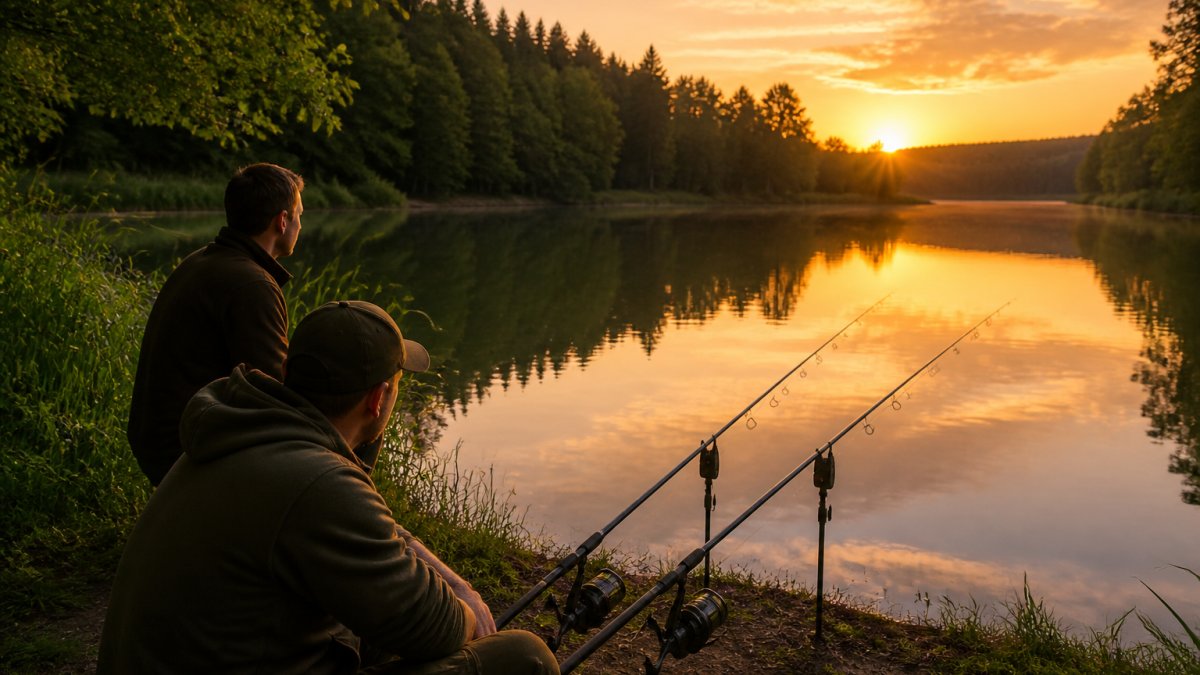
What sets this section apart from typical guidebooks is that, instead of a generic list of pond names, you’ll find a selection organized by water body type and nocturnal behavior. While specific regulations for water bodies may change, the underlying mechanisms remain the same—and it is precisely these mechanisms that determine whether a spot is productive at night.
Pond landscape: Shallow water with slow heat dissipation
The pond landscape around Heidenreichstein, Litschau, and Schrems is the heart of night fishing. The shallow, nutrient-rich ponds warm up significantly during the day and slowly release that heat at night, keeping non-predatory fish and their predators active for longer.
Look for these characteristics:
- Shallow areas with water lilies or reeds providing cover
- Inlet and outlet areas with gentle currents that carry oxygen and nutrients
- Free, secure spots on the shore for your rod and chair
- Sufficient distance from residential buildings to ensure a quiet night's sleep
Carp fishing in ponds is a classic. Anyone fishing for carp plans to sit and wait for several hours and feeds sparingly. Tench and crucian carp are also caught in the shallow, weedy edge zones, often within the first two hours after dark.
Reservoirs and deeper still waters: Structure for predatory fish
The situation is different in reservoirs and deeper still waters. Predatory fish such as zander and pike take advantage of the darkness to hunt in shallower water, where they are less disturbed by light.
Search for:
- Transitions between deep and shallow water
- Wake behind groins and rocks
- Illuminated areas on dam walls that attract small fish
- Transitions from gravel to mud
At reservoirs, the shoreline is often steeper, and the water is deeper right at the shore. Check the access in daylight before arriving at night with your gear. A spot you can reach in ten minutes in daylight can become a challenge to find in the dark.
Streams: Bends, Gullys, and Stagnant Areas
On flowing waters such as the Lainsitz, the Kamp, or the Thaya, the structure matters more than the stretch of river. Predatory fish hold in bends and eddies at night, where the current breaks and prey is easier to catch off guard.
Search for:
- Inspection points behind stones and pillars
- Outer bends with an eroded bank
- Stream mouths that carry in food
- Transitions from fast-flowing to slow-flowing water
Please note that many sections of waterways in Lower Austria are owned by private lessees, and access to the banks is often permitted only at designated locations. Before setting up your hunting blind, ask the landowner about the designated bank areas.
The best hotspot is the one you can safely visit at night
What most guidebooks leave out: The best spot is one where you can safely get in and out of the water in the dark. A spot teeming with fish but with a steep, slippery bank is a poor choice at night.
Before setting up a night hunt, check each potential spot in daylight for three things:
- Access: Is there a well-maintained, safe path from the parking lot to the shore?
- Return trip: Can you find your way in the dark without a flashlight if the battery dies?
- Safe Space: Is there a spot sheltered from the wind where I can sit and set up my gear?
At night, a hotspot is only as good as its access. If you scout out the spot during the day, you’ll fish more relaxed and safely, no matter how many fish are in the water.
Check local water regulations
The specific night fishing rules, feeding bans, and shore access policies vary from leaseholder to leaseholder and change with each season. Don’t rely on forum posts or outdated maps. Ask the leaseholder directly about the current regulations and have night fishing confirmed in writing if it isn’t explicitly stated on the permit card.
Fish Species in the Waldviertel: What Really Bites at Night
At night, predatory fish and bottom-feeding non-predatory fish are the ones that bite most often. The most common species in the Waldviertel are carp, zander, pike, catfish, and tench, as well as eel and barbel in the flowing waters.
The species are active at different times of the night. Zander and pike are most active at dusk; carp and catfish take over in the middle of the night; and a second window for catching predatory fish often opens around dawn.
| Fish species | Best Time of Night | Typical bait | Water Body Type |
|---|---|---|---|
| Carp | From 10 p.m. until early morning | Boilies, corn, dough | Pond, standing water |
| Zander | Twilight, Dawn | Rubber fish, bait fish | Reservoir, flowing water |
| Pike | Twilight | Bait fish, wobbler | Reservoir, shoreline areas |
| Catfish | Deep Night | Bait fish, dew worm | Deep Stagnant Waters |
| Tench | Early Night | Worm, Corn | Shallow Ponds |
Be sure to observe the closed seasons and minimum sizes for each species. These are listed in the state regulations and the water body regulations. Taking a quick look before you cast your line will save you from having to release a fish that you weren’t even allowed to catch in the first place.
Night Fishing Gear: The Complete Checklist
Night fishing gear differs from daytime fishing gear in three ways: You need to be able to see, hear, and stand securely. If you neglect these things, you’ll spend the night searching instead of fishing.
This checklist covers a standard hunting blind:
- Rods with matching reels, depending on the target fish
- Bite indicator with sound and light for each rod
- Headlamp with red light and spare batteries
- Tripod or rod holder for stability
- Landing net with a long handle
- Unhooking Mat and Fish Disinfection
- Seating, a blanket, and protection from the elements
- Thermos, water, snacks
- Permit Card, Fishing License, ID Card
- First-aid kit and cell phone with a fully charged battery
Bite indicators, lights, and accessories for fishing in the dark
Bite indicators are the heart of night fishing. A good bite indicator signals bites both audibly and visually, so you don't have to constantly stare at the tip of your rod.
What matters:
- Adjustable volume: Full volume disturbs a good night's sleep and the neighbors
- Red light instead of white light: preserves night vision and causes less disturbance
- Water resistance: Dew and rain are common at night
- Replacement batteries: An empty bite indicator at two o'clock ends the wait
Lighting should be minimal. A dim lamp that emits a red light at your fishing spot is sufficient for rigging and unhooking. It’s best to avoid illuminating large areas of the shore.
Pack your gear while it's still light out and lay it out in the order you'll set it up. That way, at night, you can reach for the right piece by feel instead of searching for it in the grass with a flashlight.
Night Fishing Tips for Beginners: How to Get Started
Tips for beginners on night fishing all boil down to one thing: Practice setting up your rig in daylight before you go fishing in the dark for the first time. If you’ve mastered your rig, bite indicator, and landing net while it’s still light out, you’ll have the peace of mind at night that makes for a successful fishing session.
Getting Started in Five Steps:
- Select bodies of water where night fishing is permitted and read the instructions beforehand
- Setting Up a Hunting Blind in Daylight and check out the place
- Start with one rod, not three
- Hold initial positions briefly, until around midnight, instead of fishing straight through
- Make a note after each hunt, what worked: location, bait, time
Common beginner mistakes include bringing too much gear, using bite indicators that are too loud, and choosing a spot that's hard to find in the dark. Stick to the essentials.
If you're fishing in the region for the first time, you should also consider traveling there and back at night. A spot that takes ten minutes to reach in daylight can become a challenge to find in the dark.
Seasonal Considerations: When Night Fishing Is Most Successful
Night fishing in the Waldviertel is most successful during the warm months from May through September. During this time, water temperatures are high enough that carp and catfish remain active even at night.
The season proceeds in phases:
- Spring: The water is still cool; predatory fish are active at dusk
- Early summer: The best time for carp and zander, with long, bright evenings
- Midsummer: Warm nights, plenty of catfish and carp, but a mosquito plague
- Fall: More predatory fish activity again, shorter nights
- Winter: Night fishing is usually not very practical and is often restricted
Weather conditions defy all calendar rules. A sudden cold snap brings activity to a halt for days, while stable, warm high-pressure systems provide the best nights.
The best night isn't the warmest one, but the most stable one. After several calm, warm days, the fish are more reliably active than they are immediately after a change in the weather.
Lure Selection and Rigs for Night Fishing
The choice of bait and rigs should be based on the target fish and local fishing regulations, not on habit. For non-predatory fish, boilies, corn, and dough are the staples; for predatory fish, live bait and soft plastic lures are the staples.
Basic Rules for the Night:
- Strong-Smelling Baits help in murky water because fish can still see them
- Solid Baits They'll stay on the hook longer if you don't want to keep reeling them in
- Rigs with Bite Indicators They must be securely fastened so that a bite isn't lost
- Feed sparingly and only where regulations permit it
Check in advance whether your rig is permitted under the local fishing regulations. Some leaseholders require specific leader lengths or hook shapes, while others prohibit certain predator rigs entirely.
Rules of Conduct Near Water: Quiet Hours, Nature Conservation, and Fair Hunting Practices
Stricter rules of conduct apply at bodies of water at night than during the day, because noise and light travel farther. Quiet hours, nature conservation, and fair use of the waters are not trivial matters; rather, they are often the very reason why night fishing is permitted at a given body of water in the first place.
In practical terms, this means:
- Keep it quiet: Keep your voice down; close doors and trunk lids gently
- Limiting light: Use red light; do not illuminate the entire shoreline
- Take your trash with you: as well as fishing line scraps and bait packaging
- Protect the shoreline: no paths through the reeds and meadows
- Respect fish populations: Take only what is permitted; release undersized fish
- Fair Hunting: Landing net, unhooking mat, and handling the fish gently
Nature reserves deserve special consideration. In protected areas, access and fishing may be restricted or prohibited entirely. Check this before you set up your hunting blind, not after.
Travel, Amenities, and Lodging for Night Anglers
Accommodations in nearby The conditions of the body of water determine whether a night fishing trip remains a relaxing experience or ends with a drive home while you’re exhausted. If you still have an hour’s drive ahead of you after four hours on the water, you’re taking a risk that isn’t worth it, no matter how many fish you catch.
For a fishing vacation lasting several days in the Waldviertel, here's what you'll need:
- Short distances to the water
- Secure parking on the riverbank
- A place to stay with a storage area for equipment and drying
- The chance to sleep during the day if you're fishing at night
This is exactly where we at Ferienwohnungen Gutenbrunn come in. Our four lovingly furnished apartments offer families, wheelchair users, and dog owners the perfect retreat to settle in, take a deep breath, and enjoy themselves. Surrounded by the tranquil natural beauty of Gutenbrunn, you’ll benefit from personalized service and an ideal base for numerous recreational activities such as hiking, biking, and excursions throughout the region. Book directly with us and look forward to a break free from the pressures of a tight schedule in one of Austria’s most beautiful natural landscapes.
Common Mistakes in Night Fishing and How to Avoid Them
The most common mistakes in night fishing stem from time pressure and poor preparation, not from a lack of skill. Once you know what they are, you can usually avoid them right from your first fishing session.
| Error | Episode | Here's How to Avoid It |
|---|---|---|
| Order not read | Caution, Ejection | Check with the property manager in advance regarding the rules for overnight stays |
| Bite indicators that are too loud | Conflict with Local Residents | Turn down the volume, use the red light |
| Explore the Waterfront at Night | Fall, Injury | Reconnaissance of the site in daylight |
| Too Much Equipment | Chaos at the Field | Keep it to the essentials |
| No backup light | The hunt ends early | Pack spare batteries and a spare bulb |
| Tired on the way back | Risk of an accident | Choose accommodations near the water |
Another often-overlooked mistake is not using an unhooking mat. It protects the fish and makes unhooking it in the dark much easier.
Conclusion: The Right Preparation for a Successful Night Hunt
Night fishing in the Waldviertel rewards preparation and punishes improvisation. If you know the fishing regulations, have the proper license, set up your gear during daylight hours, and choose a safe spot, you’ll enjoy a peaceful night by the water instead of an argument with the authorities.
The second half of the preparation doesn’t take place on the shore, but just in front of it: short walks to get there and a dry place to retreat to. That’s exactly what Ferienwohnungen Gutenbrunn offers, with its four accessible, pet-friendly apartments, personalized service from Anna and Herbert, and a quiet location in Gutenbrunn near the region’s natural highlights. When you book directly with us, you can plan your fishing vacation without any stopovers. Make your next night by the water one you’ll remember for the catches, not the circumstances.
Frequently Asked Questions
Is night fishing generally allowed in the Waldviertel?
Night fishing is not generally prohibited in the Waldviertel, but it is not permitted everywhere either. The regulations for the specific fishing area determine whether it is allowed. Some areas expressly allow fishing after sunset, while others restrict it to certain months or prohibit it entirely. Before each fishing trip, check the current fishing regulations and obtain a fishing license for the relevant fishing district. If you have any questions, the fisheries inspector or the district owner can provide definitive information.
What equipment do I need for night fishing?
For night fishing, you’ll need at least one rod with a matching reel, a bite indicator with an audible or visual signal, a headlamp with a red light setting, and enough glow sticks or electronic bite indicators. A sturdy rod pod or bank stand keeps the rods secure. For the cold night hours, a thermos, warm clothing, and a camping chair are essential. You can find a complete checklist in the article under “Equipment for Night Fishing.”.
Do I need a special permit to fish after sunset?
In most cases, a standard fishing license for the respective fishing area is sufficient, provided that the local fishing regulations permit night fishing. However, some fishing areas require an additional night fishing permit or a separate authorization. Check with the area owner or the responsible fisheries authority in advance. Without a valid license and without complying with the local fishing regulations, you risk severe penalties.
Is catch-and-release allowed in Austria?
Catch-and-release is a legally controversial practice in Austria. In principle, the rule of fair hunting applies: Caught fish must generally be kept if they meet the minimum size requirement and are not subject to a closed season. Releasing a fish without a valid reason may be considered a violation of animal welfare and fisheries regulations. Be sure to familiarize yourself with the specific rules of the respective fishing area before releasing a fish.
Where can I go fishing at night near Gutenbrunn?
In the area around Gutenbrunn, there are several ponds and still bodies of water that are of interest to night anglers. Which bodies of water actually allow night fishing depends on the specific fishing regulations for each one. It’s best to check directly with the property owner or the local fisheries authority. Local hosts are also often familiar with the current regulations and can provide valuable advice.
What kinds of fish can I catch at night in the Waldviertel?
At night, predatory fish such as zander, pike, and catfish are particularly active. Carp and other non-predatory fish can also be caught easily at night, especially during the warmer months. The Waldviertel pond landscape is home to a diverse fish population. The fishing regulations specify which species you are permitted to target. Be sure to observe closed seasons and minimum size limits to help sustain fish populations.
How can I behave in a way that respects nature when night fishing?
Respect quiet hours and avoid unnecessary noise, especially near nature reserves. Do not leave any trash behind, including leftover fishing line or bait. Use red light instead of bright white light whenever possible to avoid disturbing animals. Fish only in designated areas and respect the shoreline as a habitat. Fair hunting practices and sustainability should be a top priority during every hunting trip.
As a beginner, what should I keep in mind when night fishing?
Plan your first night fishing trip thoroughly: Check the fishing regulations, obtain a fishing license, and choose a safe, easily accessible fishing spot. Bring all the necessary gear, including a flashlight and warm clothing. Don’t fish alone at first, and let someone know where you’ll be. Practice casting and handling your gear during the day before heading out to the water at night.


Comments are closed, but trackbacks and pingbacks are open.