


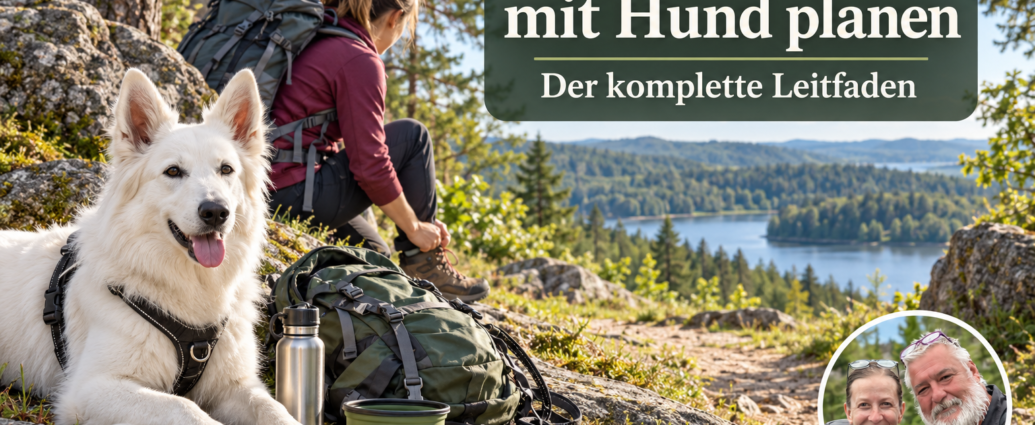
Planning a Hiking Vacation with Your Dog: The Most Important Steps
A hiking vacation with your dog is well worth it.
Plus, you'll avoid stress and improve your safety.
Finally, make sure to plan your itinerary, gear, and legal requirements in advance so you can enjoy a relaxing time in the mountains.
You'll find more planning tips in the table of contents.
This Guide to Vacation Rentals Gutenbrunn summarizes the most important steps. It begins with choosing a region.
Choosing the right region makes all the difference, as it affects the length of the stages, the hiking trails, and the lodging options. You’ll find an overview in the table of contents. You should also set your priorities to ensure your planning stays on track.
Have your emergency contacts on hand and check the rules regarding dog care and leash requirements. You should also figure out how much time to allow for each leg of the trip and which accommodations are suitable.
In addition, be sure to keep in mind dog care, leash laws, and local regulations so you can remain flexible. See the table of contents for more tips to help you be well prepared.
The good news is that if you're planning a hiking vacation with your dog, you'll be in good hands in most regions.
Plus, you know what's important, and a lot of things just fall into place.
The bad news, however, is that many people underestimate the elevation gain. They also underestimate how sure-footed their dog is and the rules regarding grazing livestock.
Here is an overview of the key steps:
- Choose a region and difficulty level that match your dog's fitness level
- Realistically estimate the length of each stage and the elevation gain
- Putting Together Gear for Dogs and Their Owners
- Internalize the rules of conduct on alpine pastures and when interacting with grazing livestock
- Check leash and muzzle requirements in advance
- Planning Your Trip and Getting Around with Your Dog
- Prepare a first-aid kit and an emergency plan
- Train Your Dog Specifically Before the Trip
If you go through these points, you'll avoid a lot of surprises. The following section shows which regions are particularly suitable.
The Best Hiking Regions and Trails for Dogs
Also, not every region is right for every dog.
However, the condition of the trail, the amount of shade, and the opportunity to stop and drink water along the way are crucial.
Table of Contents
In addition, there are many trails in the Eastern Alps and the Waldviertel that are suitable even for less experienced dogs. If you're planning a hiking vacation with your dog, you'll find great options in these regions.
Regions with well-marked hiking trails, moderate inclines, and places to stop for a break are particularly suitable. Alpine huts often provide water for dogs, and shaded forest sections help keep the strain low on hot days. If you’re hiking with an older dog, you should choose wide forest trails over narrow summit trails.
Accurately Assessing Difficulty Levels and Elevation Gain
Difficulty levels are usually rated for people. Also, keep in mind that a trail that’s easy for hikers can be challenging for a dog with short legs.
In addition, the following applies: For every 100 meters of elevation gain, the physical strain increases significantly, especially on rough terrain and when carrying heavy loads. Dogs They have a harder time regulating their exertion than humans do (avma.org). If you're planning a hiking vacation with your dog, keep these tips in mind for safety and motivation.
A common mistake is to underestimate the time it takes to return. On the way down, uneven terrain puts more strain on the joints than the climb does. Therefore, it’s better to plan shorter stretches with breaks and watch to see if the dog is still moving comfortably.
Table of Contents: Planning Stages and Long-Distance Hiking Trails with Your Dog
Long-distance hiking trails can be broken down into stages that suit the dog’s stamina. For a multi-day long-distance hike with a dog, the rule of thumb is: a maximum of four to five hours of pure walking time per day, with a longer lunch break (akc.org).
Check in advance whether there are any dog-friendly accommodations . Not every mountain hut allows dogs, and not every stage ends at a place that offers overnight accommodations. If you stay flexible and plan daily stages instead of rigid routes, you’ll have more leeway.
Gear for Hiking Dogs: What to Pack in Your Backpack
Having the right gear for hiking dogs determines how enjoyable the hike will be. A well-fitting harness, an adjustable leash, and plenty of water are the basics. Everything else depends on the length of the hike and the weather.
The following basic equipment has proven to be effective:
- A harness instead of a collar: distributes tensile forces more evenly and reduces strain on the cervical spine
- Adjustable leash: for sections where dogs must be on a leash and sections where they can run free, alternating between the two
- Foldable Water Bowl: Lightweight, space-saving, for on the go
- Paw Care: A protective ointment can help with heat-sensitive or sensitive paws
- Poop bags: A must even in the mountains, to leave behind tracks that don't bother anyone
Interactive Packing List for Hiking with Your Dog
You can go through this checklist before every trip. Check off the items you've packed:
- Tableware with a snug fit
- Leash plus spare leash
- Water bottle and collapsible bowl
- Food for the planned duration of the day
- First-Aid Kit for Dogs
- Paw protection or protective ointment
- Towel for drying off
- Muzzle, if required
- Vaccination Record and Dog Registration Card
- Emergency Numbers in the Region
Rules of Conduct for Dogs on Alpine Pastures and Around Grazing Livestock
There are clear rules on alpine pastures, and failure to follow them is the most common cause of incidents involving grazing livestock. Cows, sheep, and goats defend their young and their territory. A dog instinctively triggers defensive behavior in them, even if the dog is merely curious.
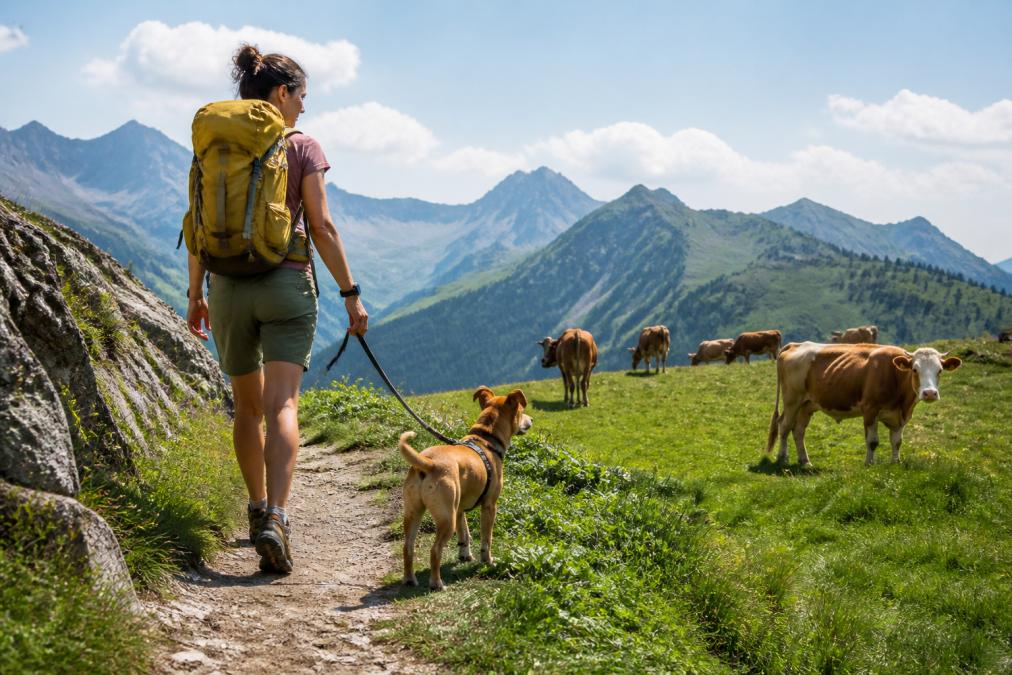
The most important rules of conduct:
- Put the dog on a leash, as soon as grazing livestock comes into view
- Keep Your Distance, at least 20 to 30 meters away from the herd
- Not between a cow and a calf end up
- Stay calm, don't run, don't scream
- When attacked: Let the dog off the leash immediately so it can run away
If you keep the dog on a leash during an attack, you’re putting it in immediate danger. Cows attack the animal, not the person. Letting go of the leash feels wrong, but it’s the right thing to do.
Leash Requirements and Legal Regulations for Hiking with Dogs
Leash laws vary by region and depend on the protected area, the season, and the state. In nature reserves and national parks, dogs are almost always required to be on a leash, and in some cases, they must also wear a muzzle (europa.eu). Before setting out on your hike, it’s a good idea to check the regulations for the respective protected area.
As a general rule, dogs must be kept on a leash near grazing livestock, on alpine pastures, and in wildlife protection areas. During the breeding and nesting season—that is, in the spring—additional restrictions apply in many places. If you’re unsure, check with your local municipality or the tourist information office.
Checking the website of the respective national park or protected area can save you a lot of trouble. The sites provide up-to-date information on leash and muzzle requirements, often including notices about closures due to wildlife rest periods or the annual drive of cattle to summer pastures.
Traveling and Getting Around with a Dog: Public Transportation, Mountain Railways, and Cars
The trip there is the most underestimated part of a hiking vacation with a dog. If you combine trains, buses, mountain railways, and cars, you’ll encounter four completely different sets of rules, and the details determine whether your day starts off relaxed or escalates right there on the train platform.
Traveling by Train and Bus
Dogs must generally be kept on a leash on trains and buses, and dogs that are not traveling in a carrier usually require their own ticket. Small dogs in a crate often travel for free, while larger dogs require a ticket; the exact conditions vary depending on the transit authority and rail carrier and should be checked on their website before booking.
A common hurdle: On busy regional trains and buses, the train crew decides on a case-by-case basis whether a dog can be brought on board. If you want to play it safe, choose routes outside of rush hour and reserve a seat with sufficient legroom on long-distance trains. Find a durable dog toy.
Mountain Railways: Cabin, Time Slot, Registration
Mountain railways almost never allow dogs on board without restrictions. There are typically three options:
- Only in certain cabins: Cable cars with multiple gondolas often assign dogs their own cabin so as not to disturb other passengers.
- Only at scheduled times: Some railroads only allow dogs on trains during off-peak hours, such as early in the morning or late in the afternoon.
- By registration only: For small lifts with limited capacity, advance registration is often required; otherwise, the dog will have to stay at the bottom station.
If you take the mountain railway up and walk down, you avoid the problem of the descent. That’s the gentler option for your dog’s joints anyway.
Traveling by Car
A car is the most flexible option, but it has its own pitfalls. Dogs must be secured during the ride, either in a carrier, with a safety harness, or behind a safety gate. On longer trips, it’s a good idea to take breaks every two hours to let them stretch their legs and drink water. Caution in warm weather: A parked car can quickly heat up to dangerous levels even when outside temperatures are mild; never leave your dog alone in the vehicle.
Practical Overview
| Means of Transportation | Typical rule | Practical Tip |
|---|---|---|
| Train and Bus | Leash requirement; tickets are often required for larger dogs | Choose off-peak times, check network conditions |
| Mountain Railway | Restricted carry-on; in some cases subject to time limits or requiring advance registration | Ascent by train, descent on foot |
| Car | Duty to Secure Cargo While Driving | Take breaks every two hours; never leave them in a parked car |
| On foot | Leash Requirements by Region and Protected Area | Review the regulation in advance |
If you're planning to travel by public transportation, you should schedule your trip so that your dog gets plenty of exercise and water before the first leg of the journey. A stressed-out dog won't be as ready to start a long hike.
Dog-Friendly Vacation Rental in the Waldviertel: What Matters Most
A dog-friendly Vacation Rental in the Waldviertel Region It should offer more than just permission to bring your dog along. A securely fenced-in area, sturdy flooring, and enough space for the dog to rest after a walk are essential. Location also matters: being close to quiet walking paths makes the stay more relaxing.
Dogs are welcome at Ferienwohnungen Gutenbrunn, and the quiet location in Gutenbrunn offers ideal conditions for long walks starting right from the accommodations. The four lovingly furnished apartments, each with a kitchen-diner and bedrooms, serve as a great base for hikes and bike rides in the region. Your hosts, Anna and Herbert, are personally available to answer any questions you may have, such as how to choose the right tour.
When you book directly, you skip the middleman and can discuss special requests directly with the hosts. For families, people who use wheelchairs, and dog owners, this makes a noticeable difference in their daily lives while they’re there.
First Aid and Emergencies in the Mountains: How to Be Prepared
Every hiking backpack should include a first-aid kit for your dog, even on short hikes. Common incidents include cuts on the paws, insect bites, heat exhaustion, and upset stomachs after eating something unfamiliar. If you know the basics, you can respond appropriately in those first few minutes.
The set should include:
- sterile wound dressings and gauze bandages
- Wound Disinfectant
- Tick remover or tweezers
- Paw protection and bandaging supplies
- Emergency numbers for the region and the veterinarian
- Muzzle for transport
The most important rule in an emergency is: If your dog is overheating, immediately find shade, offer water, and slowly cool the dog down. Signs include heavy panting, staggering, and a glassy-eyed look.
Training and Preparation for a Hiking Vacation with Your Dog
A hiking vacation with your dog goes more smoothly if the dog has been trained beforehand. Uphill slopes, uneven terrain, and longer walks are unfamiliar and put a strain on muscles, joints, and paws. If you start with short hikes four to six weeks before your trip, you’ll quickly notice where your dog still lacks stamina and can make adjustments in time.
The Schedule by Week
A proven framework looks like this:
- Weeks 1–2: Short walks on uneven ground, forest trails instead of paved paths, 30 to 45 minutes
- Weeks 3–4: Gradually increase elevation gain; start with climbs of 100 to 200 meters in elevation
- Weeks 5–6: Longer walks lasting three to four hours; practice walking on a leash in environments with many distractions
- Before the trip: Reinforce the recall command even when sighting wildlife; get the dog used to walking on different surfaces
What matters is consistency, not intensity. A dog that runs on forest trails for 45 minutes every day for three weeks is better prepared than one that goes on a long run once a week.
Food on the Mountain: The Underestimated Factor
Many mountain huts do not provide water bowls, and water from streams is not always a safe source. Therefore, the dog must carry its own water, or the owner should plan for sufficient supplies. As a rule of thumb, a medium-sized dog needs about 0.5 to 1 liter of water for a hike lasting several hours—and more in hot weather.
When it comes to food, less is more. Heavy meals before or during a hike put a strain on the stomach and can lead to gastric torsion. It’s better to give small portions spread out throughout the day—about a handful of dry food every two hours. After the hike, you can give your dog a main meal, but only after a rest period.
The most important rule for preparation is this: Train your dog the way you would train yourself—gradually, regularly, and with plenty of rest. An overwhelmed dog often doesn’t show signs of it until it’s too late, and by then, there’s no turning back.
Conclusion
Planning a hiking vacation with your dog isn't rocket science, but it does require careful consideration of the route, equipment, and legal requirements.
In addition, the dog's stamina, balance, and diet are realistically assessed.
This is how you can enjoy relaxing days in nature instead of dealing with stress.
Gutenbrunn Vacation Rentals offers the perfect setting for this: a quiet location in the Waldviertel, dog-friendly accommodations and personalized service from Anna and Herbert. The accessible apartments, featuring a kitchen-dining area and bedrooms, are ideal for families, wheelchair users, and active travelers alike. Send your inquiry directly to the hosts and take your time planning your next hiking vacation with your dog.
Frequently Asked Questions
What equipment do you need for a hiking vacation with your dog?
For a hiking vacation with your dog, you’ll need a well-fitting leash and a harness, enough water for the trip, a collapsible bowl, paw care products, a first-aid kit for dogs, and a blanket or towel. Depending on the length of the hike and the weather, a muzzle for public transportation, tick repellent, and an emergency contact list are also a good idea. An interactive packing list helps ensure you don’t forget anything.
Is it mandatory to keep dogs on a leash on hiking trails in Austria?
In Austria, there is no uniform leash requirement on all hiking trails; regulations vary by state and municipality. In nature reserves, national parks, and on alpine pastures, a leash requirement—or even a muzzle requirement—may apply. Check with the relevant municipality or tourism association before your hike. As a general rule: When in doubt, keep your dog on a leash, especially near grazing livestock.
How can I find dog-friendly accommodations for hikers?
When searching for a dog-friendly vacation rental, make sure to look for clear information regarding dog-friendliness, the dog’s size, and any possible restrictions. A dog-friendly vacation rental in the Waldviertel often offers direct access to hiking trails and a quiet location. Before booking, ask whether dogs are allowed, if there are additional cleaning fees, and if there are plenty of places nearby for your dog to run around.
How do I physically prepare my dog for long hikes?
Start taking regular walks six to eight weeks before your vacation, gradually increasing their length. Slowly increase the distance and the type of terrain to build up your dog’s stamina and sure-footedness. Make sure to take plenty of breaks and provide opportunities for your dog to drink. A checkup with your veterinarian before the trip will ensure that your dog is healthy enough for the planned hikes.


Comments are closed, but trackbacks and pingbacks are open.