


Table of Contents
- The Most Beautiful Lakeside Routes for E-Bikers in Lower Austria
- Danube Bike Path: A Classic Route with River Views
- Traisental Bike Trail: Combining Nature and Culture
- Thermal Spa Bike Trail: Relaxation on Two Wheels
- E-Bike Tours in Lower Austria: Explore Regional Routes
- Bike Paths Along the Danube: More Options Along the Riverbank
- Daily E-Bike Range: Planning and Navigation
- E-Bike Rentals in the Waldviertel: Explore with Flexibility Without Bringing Your Own Bike
- Trail Conditions and Safety Along the Shore
- Mastering Travel and Stage Logistics
- Frequently Asked Questions
Last updated: October 18, 2026
The Most Beautiful Lakeside Routes for E-Bikers in Lower Austria
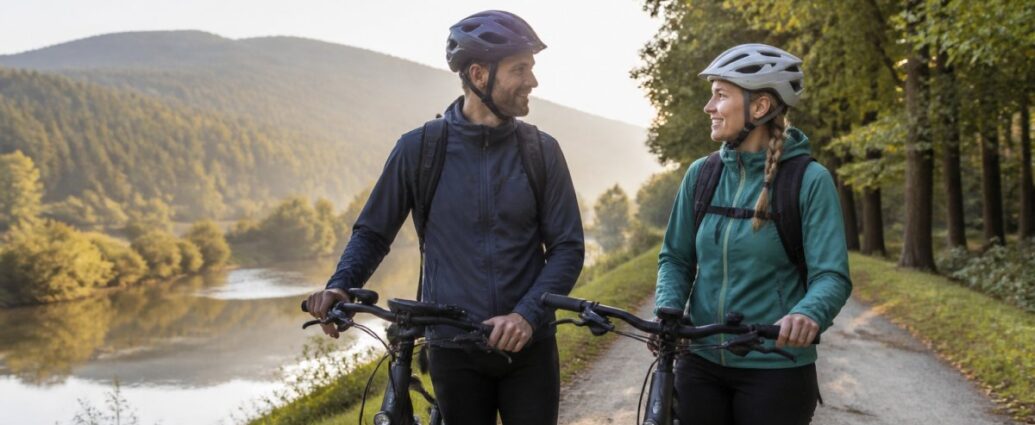
Anyone riding an e-bike wants one thing above all else: to enjoy the scenery without overexerting themselves. Waterfront routes offer exactly that—flat paths, ever-changing views of the water and nature, and the chance to go on longer rides without significant elevation gain. The “E-Biker Niederösterreich” waterfront routes are among the most beautiful in all of Austria.
Why Waterfront Routes Are Ideal for E-Bike Tours
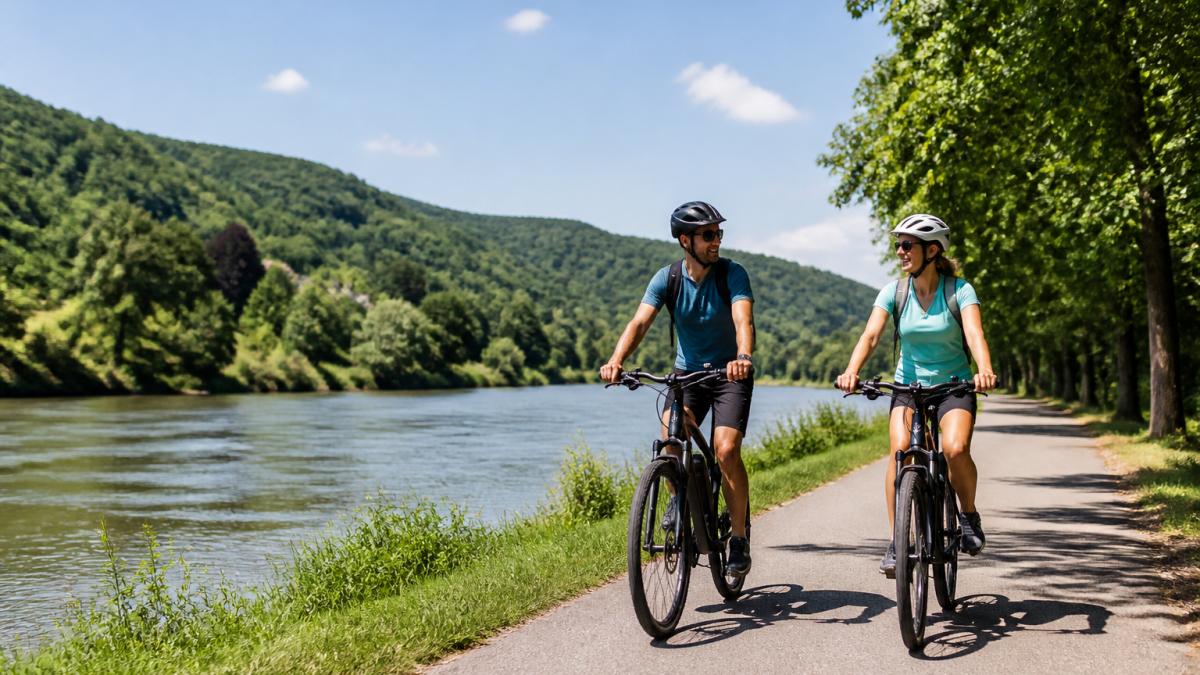
River routes and riverside routes are perfect for e-bike riders for several reasons. The terrain is flat or only slightly hilly—the motor doesn’t have to work constantly. The scenery changes constantly, without requiring the same level of concentration as on mountainous routes.
Waterfront routes are well-developed. Many follow existing paths that have been maintained for years. This means: safe riding surfaces, clear markings, and few surprises.
Also: Water has a calming effect. A ride along a river feels more relaxing than covering the same distance on a country road. It’s not just a feeling—many e-bike riders report feeling less fatigue on river routes.
Danube Bike Path: A Classic Route with River Views
The Danube Cycle Path is the most famous riverside route in Austria. It’s ideal for e-bike riders because it combines long, flat stretches with regular rest stops—and because the infrastructure along the river is more extensive than on most other routes.
Route Length and Itinerary
The entire Danube Cycle Path stretches for about 290 kilometers. About 180 kilometers of it are in Lower Austria. The route begins in the west at the border with Upper Austria and extends to the border with Vienna.
The trail follows the river closely. You can see the Danube almost the entire time. In some sections, you ride right along the riverbank; in others, the route heads a short distance inland and then returns.
Popular stopover destinations with e-bike information:
| Stage | Length | Elevation Gain (Ascent) | Travel time by e-bike | Charging option at the destination |
|---|---|---|---|---|
| Grein – Ardagger | about 30 km | less than 50 hm | about 1.5 hours | Inns in Ardagger, some with outdoor electrical outlets |
| Ardagger – Melk | about 25 km | less than 50 hm | about 1.25 hours | Charging stations in Melk, including one near Stift |
| Melk – Dürnstein | about 20 km | less than 50 hm | about 1 hour | Dining options in Dürnstein; some offer charging stations |
| Dürnstein – Krems | about 10 km | less than 50 hm | about 0.5 h | Extensive charging infrastructure in Krems |
The table is for reference only: The actual elevation gain depends on the section of the riverbank you choose, and you should check with the operator directly before your tour to confirm charging options. If you’re riding with a 500-Wh battery and medium assistance, you’ll generally be able to complete these stages without needing to recharge.
Elevation Gain and Difficulty Level
The Danube Cycle Path in Lower Austria has virtually no significant elevation gain. Most sections have a total daily elevation gain of between 0 and 50 meters.
That makes it the perfect e-bike route. Even without a motor or with a dead battery, the route is still rideable. With e-bike assistance, it becomes even more relaxing.
The difficulty level ranges from easy to moderately difficult throughout. Beginners can ride this route without any problems. Experienced cyclists won't find the route boring because the views are constantly changing.
Road Conditions and Safety
The main path is mostly paved or well-maintained. Some sections of the riverbank may be muddy or covered with loose gravel after rain—it’s important to adjust your speed in those areas. During the summer months, expect pedestrians, dogs, and recreational traffic, especially on weekends and near boat docks.
Charging Options and Range Planning
Along the Danube Bike Path, larger towns—such as Grein, Melk, Krems, and Dürnstein—have restaurants and lodging facilities with access to power outlets. There’s no guarantee, though: If you need to take a break to charge, you should call ahead to confirm whether charging is available and during what hours. For most e-bike riders, a full battery charge is enough for a daily ride of 50 to 70 kilometers on this flat terrain.
The Danube Cycle Path gets very crowded on weekends. If you're looking for some peace and quiet, ride during the week or choose lesser-known sections, such as the stretch from Grein to Ardagger.
Traisental Bike Trail: Combining Nature and Culture
The Traisental Bike Trail is less well-known than the Danube Bike Trail, but just as charming. It follows the Traisen, a small river, through green valleys and charming villages.
The route is about 70 kilometers long and can be covered in two to three stages. The path is flat and well-maintained. There are small villages at regular intervals with inns and rest areas.
Highlights of the Traisental Bike Trail:
- Less traffic than on the Danube Bike Path
- Small churches and historic town centers to explore
- Great places to stop for a bite to eat at inns
- Unpaved sections in their natural state
For e-bike riders, the Traisental Bike Trail is ideal for riding away from the crowds. The difficulty level is easy. The elevation gain is minimal.
Thermal Spa Bike Trail: Relaxation on Two Wheels
The Thermal Spa Bike Trail connects several thermal spas in Lower Austria. The route is about 65 kilometers long and winds through a gently rolling landscape.
The name says it all: The route was designed to take you from one spa to the next. Along the way, you'll find rest stops, inns, and small attractions.
The Thermal Bike Trail is perfect for e-bike riders who want to combine exercise with relaxation. Unwinding at a thermal spa after a stage of the ride—that’s the idea behind this route.
The difficulty level ranges from easy to moderately difficult. There are a few gentle inclines, but nothing too strenuous. With e-bike assistance, the entire route is easy to ride.
E-Bike Tours in Lower Austria: Explore Regional Routes
In addition to the major, well-known routes, there are many shorter e-bike tours that complement the “E-Biker Niederösterreich” riverside routes. These routes are often better suited for beginners or offer a change of pace from the classic routes.
Popular regional routes:
- Waldviertel Bike Trail: 70 km, hilly, but manageable with an e-bike
- Kamp Bike Trail: 40 km, very flat, little traffic
- Göttweig Loop: 35 km, combining the river bike path with cultural sites
- Langenlois Bike Trail: 25 km, perfect for half-day rides
Each of these routes has its own character. The Waldviertel Bike Trail winds through forests and small villages. The Kamp Bike Trail is quiet and unspoiled. The Göttweig Loop combines cycling with history.
Regional routes are often underestimated. They have less infrastructure than major bike paths, but they offer more peace and quiet and fewer crowds.
Bike Paths Along the Danube: More Options Along the Riverbank
In addition to the main bike path, there are several smaller bike paths along the Danube. These routes are often more appealing because they are less crowded.
The South Bank Trail runs along the southern side of the Danube. It is narrower and more natural than the main trail. For e-bike riders with some experience, it is a good alternative.
The trail winds through riparian forests and small wetlands. The flora and fauna are impressive. The difficulty level ranges from easy to moderate.
Other shoreline options:
- Danube-March-Thaya Bike Trail: 290 km, runs through several federal states
- Danube Floodplain Bike Trail: 40 km, unspoiled and wild
- Danube Loops Route: 60 km, with views of river loops and islands
All of these trails are suitable for e-bikers. The elevation gain is minimal. The infrastructure varies—some trails have fewer inns but more nature.
Daily E-Bike Range: Planning and Navigation
Proper planning is crucial for a successful e-bike vacation. Many beginners overestimate how far they can ride—and underestimate how much terrain, riding style, and temperature affect their range.
How many kilometers can I travel on a single battery charge?
The typical range of an e-bike is between 40 and 80 kilometers per battery charge. This depends on:
- Motor power (250 watts standard, up to 500 watts possible)
- Battery capacity (typically 400–750 Wh)
- Riding style (how much assistance you use)
- Terrain (flat vs. hilly)
- Weight (rider + luggage)
On flat riverside routes, you can cover about 60–80 kilometers with a good e-bike and medium-level assistance. With high-level assistance or heavy luggage, it's more like 40–50 kilometers.
Play it safe. It's better to reach a charging station and not need it than the other way around.
Many e-bikes lose up to 20 % of range in cold weather. In the fall and winter, you should plan shorter rides.
Charging options along the waterfront routes
Charging options are the most commonly underestimated planning factor. Along the major riverside routes in Lower Austria, there are three convenient charging stations:
- Food Service and Lodging: Many inns and hotels provide an outlet when you stop in or stay the night. Ask in advance—not every outdoor outlet is approved for e-bike batteries.
- Public charging stations: In larger towns along the Danube and in the Traisental valley, there are an increasing number of public e-bike charging stations, often located at train stations, tourist offices, or bike rest stops. Availability varies by region and should be checked before setting out on a tour.
- Accommodations: If you're staying in a vacation rental or hotel, you should check when booking whether you can charge the battery in your room or in a lockable room. That's more convenient than having to bring the charger along on your trip.
A full charge is sufficient for most daily stages on flat routes along the riverbank. If you're planning longer distances or riding with high assistance levels, you should schedule a lunch break where you can recharge.
Calculate Duration and Route Planning Realistically
The average riding speed on riverside routes with an e-bike is 20–25 km/h. That's faster than riding without a motor, but not as fast as on country roads.
So, for 60 kilometers, you'll need about 2.5 to 3 hours of pure riding time. Add to that breaks, photo stops, and time to enjoy the ride.
A realistic daily schedule looks like this:
- 8:00 a.m.: Departure
- 10:30 a.m.: First break (30 minutes)
- 1:00 p.m.: Lunch break (1 hour)
- 3:00 p.m.: Second break (20 minutes)
- 5:00 p.m.: Arrival
That's 9 hours on the road, but only about 6 hours of actual driving time. With this schedule, there's still energy left for the next day.
Navigation and Battery Management
A pre-installed map or offline navigation on your smartphone is recommended for riverside routes, because not all sections are consistently signposted. Fully charge your smartphone before the ride or bring a power bank—navigation drains the battery, and a dead phone battery is more of a hassle on secluded stretches of the riverbank than a dead e-bike battery.
As for the e-bike itself: Use the assist sparingly on flat stretches and shift to a higher gear when riding into a headwind or on uphills. That way, you’ll get further on a single charge and have some power left over for unexpected detours.
E-Bike Rentals in the Waldviertel: Explore with Flexibility Without Bringing Your Own Bike
Not everyone owns an e-bike. That's no problem. There are several places in the Waldviertel where you can rent e-bikes.
The advantage: You can test out different models before buying one yourself. You save on shipping costs. And you don't have to worry about maintenance.
What to Look for When Renting
Not all e-bike rental services are the same. Keep these points in mind:
- Battery capacity: At least 500 Wh for day trips
- Condition of the bicycle: Worn brakes or tires are dangerous
- Insurance: Is damage caused by normal wear and tear covered?
- Return Location: Can I return the bike to a different location?
- Support: Is there a hotline in case something breaks?
Good rental shops offer a briefing. They explain how the motor works and what assistance levels are available. This is important if you don't have much experience with e-bikes yet.
Many bike rental shops in the Waldviertel are small and personal. The owners know the local routes and can offer tips. This is a major advantage over anonymous online platforms.
E-Bike Rental In the Waldviertel, it's ideal for beginners and day-trippers who want to try out a route without having to buy an expensive bike.
Trail Conditions and Safety Along the Shore
The condition of the paths along the waterfront varies. Some paths are perfectly paved. Others are gravel or unpaved paths.
This is important for e-bike riders because rough terrain uses up more energy. A wide, flat paved path uses less battery power than a narrow gravel path.
Most major riverside routes, such as the Danube Bike Path, are well-developed. Smaller routes can be bumpy.
Safety on the Shore:
- Shores can be slippery, especially after it rains
- Some sections are narrow and have limited space
- Pedestrians and dogs may suddenly appear
- Visibility is sometimes limited on curves
Drive carefully. Slow down when the road narrows or when it's raining. Watch out for other road users.
Mastering Travel and Stage Logistics
Getting there is often the trickiest part. Many lakeside routes aren't directly accessible from where you live.
The best solution: Travel by car with a bike rack. Your e-bike is safely stowed away, and you save your energy for the actual ride.
Apartments Gutenbrunn is located in the Waldviertel region, centrally situated between the major riverside routes.
Tips for planning your itinerary:
- Book accommodations before you leave
- Keep your luggage to a minimum—every kilo drains the battery
- Check the battery charging station at the hotel
- Plan Your Return Trip – Use the Train Whenever Possible
- Write down emergency numbers
Many riverside routes have train stations at their starting and ending points. This makes it easy to get there and back.
An e-bike tour along one of Lower Austria’s most beautiful riverside routes is a wonderful way to explore the region—without overexerting yourself. Proper preparation, realistic planning, and comfortable accommodations make all the difference. Ferienwohnungen Gutenbrunn offers you an ideal base with personalized service, a quiet location, and easy access to the region’s best bike routes. Book directly with us and start your next e-bike adventure in the Waldviertel.
Frequently Asked Questions
Which riverside routes are best suited for e-bike riders in Lower Austria?
The Danube Bike Path, the Traisental Bike Path, and the Thermen Bike Path are among the most popular riverside routes for e-bike tours in Lower Austria. These bike routes feature flat to gently rolling terrain and combine nature experiences with culture and places to stop for refreshments.
How do I properly plan my daily e-bike range?
Plan realistic daily routes to account for breaks, hills, and charging times. Use bike maps and navigation to identify charging stations along the way and avoid range anxiety.
Are there e-bike rentals in the Waldviertel if I don't have my own bike?
Yes, several providers in the region offer e-bike rentals. When renting, be sure to check the battery capacity, frame size, maintenance, and roadside assistance. Many rental companies also offer tour advice and cycling maps. Check with local businesses or your lodging for available rental options and reservation details.
What should I keep in mind when taking an e-bike tour along the waterfront?
Check the trail conditions and safety: Trails along the water’s edge can be slippery after rain. Wear protective gear, ride defensively on curves, and watch out for pedestrians. Make sure your battery has enough charge before you start, plan for breaks, and bring water and snacks. Check the weather conditions and any route closures before your ride.


Comments are closed, but trackbacks and pingbacks are open.