


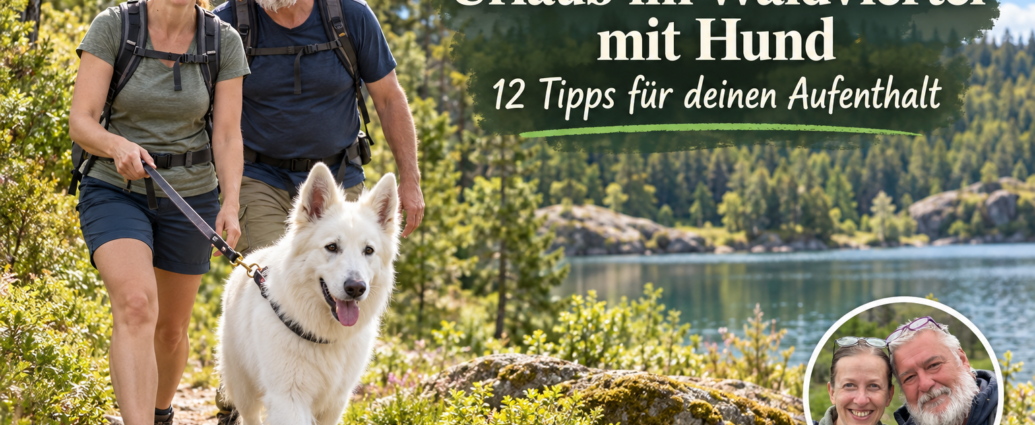
Why a Vacation in the Waldviertel with Your Dog Is Worth It
The Waldviertel is one of Austria's most peaceful and unspoiled natural landscapes.
Visitors on vacation here with their dogs will find vast forests, clear ponds, and a network of trails.
It is this combination of open space and tranquility that makes a vacation in the Waldviertel with your dog so special.
Furthermore, in regions with a high concentration of tourists, you'll often look for something like that in vain.
A vacation in the Waldviertel with your dog is the perfect opportunity to leave everyday life behind.
Plus, instead of the city park and a quick walk, you can enjoy hours-long walks here on natural trails where hardly anyone else is around.
What many people underestimate: The Waldviertel is not a remote wasteland, but is well-developed and easily accessible. To Gutenbrunn and the Edlesberg pond There is a well-marked network of hiking trails throughout the area, which is ideal for day trips with your dog and offers a variety of routes suited to different fitness levels.
And for those who’d like to stop for a bite to eat after a long walk, there are an increasing number of dog-friendly restaurants in the region that are equipped to welcome guests with their four-legged friends, often featuring outdoor seating and suitable food options.
When planning your trip, it’s worth checking the official information from the Lower Austrian Nature Park Administration. It lists current trail conditions and closures, which are important to know when planning hikes with your dog.
A vacation in the Waldviertel with your dog is especially worthwhile because of the unspoiled nature, the lack of tourist crowds, and the short distances to great hiking trails right on your doorstep.
Hiking with Your Dog in the Waldviertel: The Most Beautiful Trails Around Gutenbrunn
Hiking with your dog in the Waldviertel works best where the trails are wide, well-marked, and not too rocky. Around Gutenbrunn, you’ll find exactly that: forest trails that are also suitable for older or less fit Dogs get used to it without having to climb a peak right away.
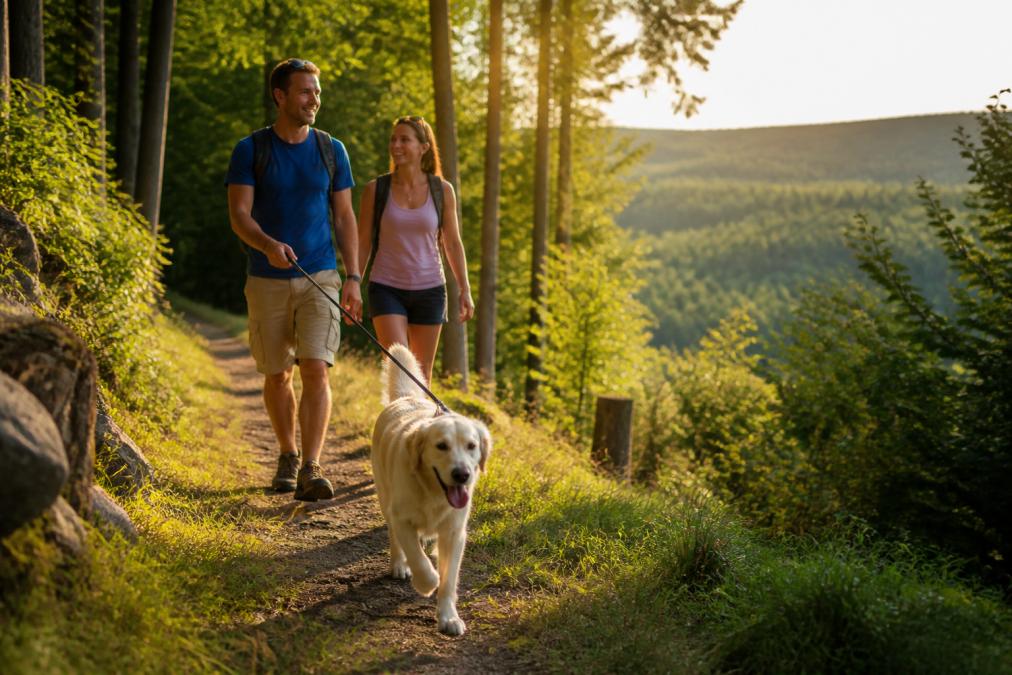
The region around Gutenbrunn is nestled in the Weinsberg Forest, which is characterized by its dense spruce and beech forests. The elevation changes are moderate, which means you can take a leisurely two-hour walk with your dog or go on a more ambitious day hike with several hundred meters of elevation gain.
Specific Routes for Different Needs
The Edlesberger Pond Loop (approx.. 4 km): This walk is the perfect way to get started. It follows flat, partly gravel paths around the pond and is also suitable for dogs who aren’t exactly young anymore. Several shallow spots along the shore allow your dog to cool off along the way. The walk takes about 1 to 1.5 hours and is ideal for the first day after arrival.
The Panoramic Trail to the Ödteich (approx.. 7 km): This route also starts at Edlesberger Teich and winds through dense mixed forest over gentle hills. The trail is well-marked and features benches at several points offering views across the rolling hills. For dogs, the mix of soft forest floors and short gravel sections is ideal. Some sections pass by damp depressions where dogs like to sniff around—keeping them on a leash is especially important here, as wildlife often frequents these areas.
The long forest hike toward the Gutenbrunner Alm (approx.. 12 km): For well-trained dogs and ambitious hikers, this route leads along wide forest trails up to the higher-elevation meadows. There are hardly any water sources along the way, so a water bowl with enough water is not optional here—it’s a must. The advantage of this hike: It takes you through the quietest forests in the area, where you often won’t encounter a soul for hours.
What to Consider When Choosing a Route
A mistake many people make when planning a hike: they underestimate how taxing forest terrain can be on dogs. Moss and soft soil are pleasant, but longer stretches over gravel or roots can be hard on their paws. So don’t plan the longest route—plan the most varied one instead.
Here’s a good tip for your first exploration: Start early in the morning, when the trails are still quiet and the temperatures are pleasant. That’s when the forest is at its liveliest, and you’ll have the best chance of spotting deer or other wildlife from a safe distance.
Always bring a collapsible water bowl set on your first hike. Many forest trails in the region The trails do not pass by any natural water sources, and still ponds are not always suitable for dogs. You can find detailed information about trail conditions and any closures on the Lower Austrian Nature Park Administration’s website.
GPS Navigation and Orientation
The trails around Gutenbrunn are well-marked. However, it’s easy to lose your way in the dense forests if you stray from the main route. If you’re vacationing in the Waldviertel with your dog, it’s a good idea to save the route on your phone in advance. It’s a good idea to plan the route so that you have some leeway for unplanned dog breaks.
Places to Visit in the Waldviertel with Your Dog: Nature, Ruins, and Wildlife Parks
There are more places to visit with your dog in the Waldviertel than you might think. The region offers a mix of nature experiences, historic ruins, and easily accessible animal parks—all of which you can visit with your dog.
One of the most worthwhile destinations is the nearby zoo, which features native animal species as well as a birds-of-prey show. Dogs are welcome here on a leash, and the paths are wide enough to ensure stress-free encounters with other visitors. Be sure to check the park’s website in advance for the current dog policies, as some facilities restrict dogs from certain areas, such as petting zoos.
The region’s many castle ruins and Baroque monasteries are also worth a visit. While dogs are often not allowed inside the monasteries, the sprawling outdoor grounds and monastery gardens are wonderful places to explore with your dog. A walk through the ruins of a medieval castle also offers shaded spots on hot days.
On days when the weather is bad, we recommend visiting one of the reservoirs in the region. Around There are paved paths along the waterways that are easy to walk on even when wet. Many operators have also set up their own dog zones with areas where dogs can run free.
Leash Requirements, Wildlife, and Grazing Livestock: Rules for Peaceful Coexistence
The most important rule for a vacation in the Waldviertel with a dog is the leash requirement. In large parts of Lower Austria’s forests, a legal leash requirement is in effect from May 1 through December 31 to protect wildlife during the breeding and rearing season. This regulation is not intended to be a nuisance, but rather to protect the animals and, ultimately, your dog as well.
What many dog owners don’t realize: A dog running free that chases a deer causes the animal to panic. Especially in the spring, this repeatedly results in fawns being separated from their mothers and dying. Anyone walking their dog in the woods should therefore keep the dog on a leash, even if their dog usually obeys well.
Take special care in areas with grazing livestock. Cattle and sheep often react to unfamiliar dogs with curiosity or defensiveness, and a herd of cows with calves can pose a real danger. If in doubt, keep a safe distance from the animals and be sure to keep your dog on a leash when crossing a pasture.
Respecting nature also means addressing the issue of dog waste: Dog waste should always be disposed of in the trash or in the designated containers. Away from the trails, it decomposes only slowly and puts a strain on the sensitive forest soil. The official Rules of Conduct for Forest Visitors in Lower Austria provide a good overview of the key points.
Don't underestimate grazing livestock. A herd with calves may perceive a dog on a leash as a threat and attack it. Always keep your dog on a short leash when in pastures, and give the herd a wide berth.
::: Comfort for Older Dogs.
Packing List for a Dog Vacation: What You Really Need to Bring
The packing list for a dog vacation is shorter than many people think, but there are a few things you shouldn't forget. First things first: bring enough water for the trip. In the Waldviertel While there are many streams, not all of them are suitable for dogs, and on longer hikes, your four-legged friend will need regular breaks to drink.
Travel First-Aid Kit and Tick Protection
The Waldviertel is a classic tick-infested area due to its mixed forests and damp meadows. Make sure your dog is up-to-date on tick prevention, and check its fur thoroughly after every walk. Tick tweezers belong in your first-aid kit, along with a small bottle of antiseptic and bandages for paw injuries.
What to Do in Hot Weather and on Long Hikes
Probably the most important rule in hot weather: Leave your dog at home when temperatures rise above 25 degrees and the sun is high in the sky. Instead, go for a hike in the early morning or late evening, when the forest has cooled down. Dogs cool themselves only by panting and through their paws, which can quickly lead to heatstroke in extreme heat.
On long hikes, it’s better to take shorter stretches with plenty of breaks than to go on one long hike. Keep an eye on your dog’s paws, especially on hot gravel paths, which can get very hot in the sun. A small amount of beeswax applied to their paws before the hike helps prevent cracks.
The dog-friendly vacation rental in Gutenbrunn: Your home away from home for the week of your vacation
Choosing the Right Accommodation decides whether the Vacation with Your Dog whether you'll be able to relax or not. A dog-friendly vacation rental in Gutenbrunn should offer more than just permission to bring your dog along. The location, the amenities, and a host who understands the needs of both people and pets are key.
The Anna & Herbert vacation apartments in Gutenbrunn are located right on the outskirts of town, nestled in the peaceful natural surroundings of the Waldviertel region. From here, you can reach the forests and walking trails around Edlesberger Teich in just a few minutes on foot, without having to get in the car first. This close proximity to nature makes everyday life with your dog hassle-free: a short walk in the morning before breakfast, and a long walk in the evening to watch the sunset.
What makes this lodging special is the personal attention you receive from Anna and Herbert. Anyone who travels with a dog knows the problem: You’re on your own and have to take care of everything yourself. Here, however, you’ll get specific on-site tips about where the most beautiful trails begin, where dogs are welcome, and which destinations are worth visiting in bad weather.
When choosing a dog-friendly vacation rental, we recommend asking specific questions before booking: Is there a fenced-in yard or outdoor space for the dog to run around? Are the floors durable and easy to clean? Is there a way to dry off the dog after wet walks in the woods? The Anna & Herbert vacation rentals answer these questions openly and honestly, because they know that a satisfied dog owner is the best guest.
Traveling and Daily Life with a Dog: Practical Tips for When You're on the Go
The easiest way to get to the Waldviertel is by car, since many attractions are best reached by car. If you’re traveling with a dog, you should plan a break every one to two hours so your four-legged friend can stretch its legs and drink some water. A travel crate or a safety harness will protect your dog in the event of an accident.
Traveling Through the Waldviertel by Bus and Train
If you’d like to travel by public transportation, ÖBB trains generally allow you to bring dogs along. Small dogs can travel for free in a carrier; larger dogs require their own ticket. On buses in the region, dogs are usually required to be on a leash and wear a muzzle, though the specific rules vary by transit authority. Check the website of the Lower Austria Public Transportation Authority about the current regulations.
A practical tip for traveling by train: For longer trips, reserve a seat in a open-plan car, where there’s more floor space available for your dog. On regional trains traveling from Vienna to the Waldviertel, dogs are generally allowed in second class. For the last leg of the journey from the train station to your lodging, it’s a good idea to reserve a taxi that accepts dogs—not all drivers are required to do so.
Emergency Veterinary Care: What You Should Be Prepared For
One thing many vacationers don’t realize until an emergency arises is the importance of knowing where to find the nearest emergency veterinary care. In the Waldviertel region, there are no veterinary hospitals staffed around the clock. Most veterinary practices in the region offer office hours during the week and on Saturday mornings. For emergencies outside these hours, there is a veterinary emergency service, which can be arranged through the respective practice or the State Veterinary Association.
Our recommendation: Before you leave, write down the phone number of the veterinary clinic closest to your lodging, as well as the number for the veterinary emergency service in Lower Austria. Save these contacts on your cell phone and put a note with the numbers in your first-aid kit. In an emergency, every minute counts, and you don’t want to have to spend time searching for them while your dog is suffering.
The nearest large veterinary clinics with extended hours are located in the larger cities in the surrounding area. In the event that your dog needs urgent surgery or intensive care, you should plan on driving there. Before you arrive, check whether your lodging is near an easily accessible veterinary clinic—the Anna & Herbert vacation apartments in Gutenbrunn will be happy to provide you with the relevant contact information upon request.
Everyday Life with a Dog: Shopping, Stopping for a Meal, and Being Considerate
In your day-to-day life there, there are a few things that can make your vacation with your dog much more enjoyable. Plan your larger shopping trips so that your dog doesn’t have to wait in the car for too long, and check in advance whether the restaurant of your choice has a dog-friendly patio. In Gutenbrunn and the surrounding towns, you’ll find an increasing number of restaurants that provide water for dogs and are happy to welcome guests with their four-legged friends on the patio.
When making a reservation at a restaurant, always ask explicitly whether dogs are allowed on the patio. Many restaurants have designated areas for guests with dogs, while others ask that you tie your dog up outside out of consideration for other guests.
One thing that’s often overlooked is making sure your dog has access to fresh drinking water while you’re out and about. You’ll usually find public fountains in town centers, but not all of them are labeled as drinking water. Therefore, it’s better to refill your water bottle at inns or with your hosts along the way than to give your dog water from an unsafe fountain. Your hosts, Anna and Herbert in Gutenbrunn, will gladly refill your water bottle upon request and give you tips on where to find safe water for your dog along the way.
Conclusion: A Relaxing Vacation in the Waldviertel with Your Dog
A vacation in the Waldviertel with your dog promises relaxation for both people and pets—if you make the most of the region. The combination of dense forests, tranquil ponds, and well-marked hiking trails makes the Waldviertel one of Austria’s most dog-friendly vacation destinations. With the right preparation, a well-thought-out packing list, and respect for wildlife and grazing livestock, nothing stands in the way of a relaxing week.
If you’re looking for accommodations that truly cater to the needs of dog owners, you’ll be in good hands at the Anna & Herbert vacation rentals in Gutenbrunn. The peaceful setting surrounded by nature, the proximity to the most beautiful hiking trails, and the personalized attention from the hosts make your stay an experience where both you and your dog can truly unwind. Book directly with the hosts and look forward to a break free from the pressures of a tight schedule in one of Austria’s most beautiful natural landscapes.
Frequently Asked Questions
Is there a general leash law for dogs in the Waldviertel region?
In Lower Austria, dogs must be kept on a leash in the forest and in vulnerable areas during the breeding and nesting season. This means that dogs must be kept on a leash on hiking trails and in the forest. Outside of this season, the leash requirement applies only in certain protected areas and around grazing livestock. If in doubt, check with the local municipality or your host about the local regulations for your vacation in the Waldviertel with your dog.
What should be included in a first-aid kit for dogs?
In addition to your own gear, your dog needs a small first-aid kit: tick tweezers, wound disinfectant spray, bandages, and tweezers for splinters or grass awns. For longer hikes, paw balm and a cooling compress can be helpful. Before you leave, ask your veterinarian for advice on whether a tick vaccine or appropriate tick protection is advisable for your route in the Waldviertel region.
How far can I hike with my dog each day?
For a healthy, adult dog, 10 to 15 kilometers a day is easily manageable if the weather is right and enough breaks are planned. Puppies and older dogs need significantly less. Pay attention to your dog’s signals: panting, a slower pace, or frequent stops to lie down are signs that it’s time for a break. Be sure to bring drinking water along, and avoid the midday heat in the summer.
Is my dog allowed to swim in Edlesberger Pond?
The Edlesberger Pond is a popular destination, but dogs aren’t allowed to swim everywhere. Dogs are generally prohibited in nature reserves and designated swimming areas. Check the signs on-site for more information. Near Gutenbrunn, you’ll find quieter stretches of shore and streams where dogs can cool off after a long walk. Ask your hosts about the best spots.
Comments are closed, but trackbacks and pingbacks are open.