



Table of Contents
- Why Renting a Vacation Rental With Your Dog Can Be a Good Idea
- Vacationing with a Dog: What Does It Really Cost?
- Advantages of a Vacation Rental with a Dog Compared to Other Types of Accommodations
- Differences Between Vacation Apartments, Vacation Homes, and Hotels
- Legal Considerations and Insurance When Booking a Trip with a Dog
- Tips for Finding Dog-Friendly Properties
- Checklist for Vacationing with Your Dog: How to Prepare
- Cost-Benefit Analysis: When Is a Vacation Rental Really Worth It?
- Conclusion: Making the Right Decision
- Frequently Asked Questions
Last updated: September 23, 2026
Why Renting a Vacation Rental With Your Dog Can Be a Good Idea
The Vacation Rental with a dog Preis offers dog owners a level of flexibility that traditional hotels simply can't provide. Your four-legged friend can enjoy a vacation in a private setting without having to adapt to strict house rules. This significantly reduces stress for both people and pets.
Many dog owners report that their dog is much more relaxed in a vacation rental. There’s no commotion from other guests, no strangers in the common areas, and no encounters with other dogs in hallways or lobbies. Instead, a temporary home awaits, where your dog can behave as usual.
The biggest advantage is having control over the environment. You decide when your dog goes outside, when it gets to rest, and when it gets to play—not a hotel's house rules.
At Ferienwohnungen Gutenbrunn, for example, dog owners benefit from personalized attention from the hosts, Anna and Herbert. Specifically, this means that if your dog has special needs or if you have any questions during your stay, the hosts are available to assist you and will actively support you.
Vacationing with a Dog: What Does It Really Cost?
The question of how much a vacation rental with a dog costs is a valid one and deserves an honest answer. The total cost depends on several factors that are often underestimated.
Pet Fees and Additional Costs
Dog-Friendly Vacation Rentals They often charge a flat pet fee per night or a flat fee for the entire stay. These fees vary widely depending on the region, type of accommodation, and the dog's size.
Some landlords charge per night, while others charge a flat fee for the entire stay. The first option is often cheaper for short trips, while the second is better for longer vacations. Important: Always ask in advance whether the pet fee is included in the offer or charged separately.
Additional costs may also arise from special amenities provided by the rental company. Some offer dog bowls, dog baskets, or even dog beds. This may seem like a small thing, but it saves you from having to bring these items with you.
Final Cleaning and Hidden Fees
This is often where the biggest financial surprise lies. Many landlords charge a higher final cleaning fee if a dog has stayed in the apartment. This is understandable—dog hair, dirt from their paws, and possibly fleas require more effort to clean up.
But be careful: Some landlords calculate these fees very generously. An honest breakdown of costs should list the final cleaning fee separately. At Ferienwohnungen Gutenbrunn, you’ll receive transparent information about all costs.
Read the cancellation policy carefully. Some rental companies retain the pet fee even if you cancel. This can get expensive if you cancel at the last minute.
Advantages of a Vacation Rental with a Dog Compared to Other Types of Accommodations
A vacation rental that allows dogs offers specific advantages that are quite different from those of hotels or guesthouses. The difference lies not only in the flexibility of the rules but also in the practical amenities.
Flexibility and Privacy for People and Pets
In a vacation rental, you set the daily schedule. Your dog doesn't have to wait for the hotel kitchen to open or for the front desk to be staffed. You can prepare meals at any time, feed your dog, and plan your day around his needs.
Privacy is important to dogs. A large dog often feels cramped in a hotel room. In a vacation rental with multiple rooms, your four-legged friend will have plenty of space to stretch out and relax.
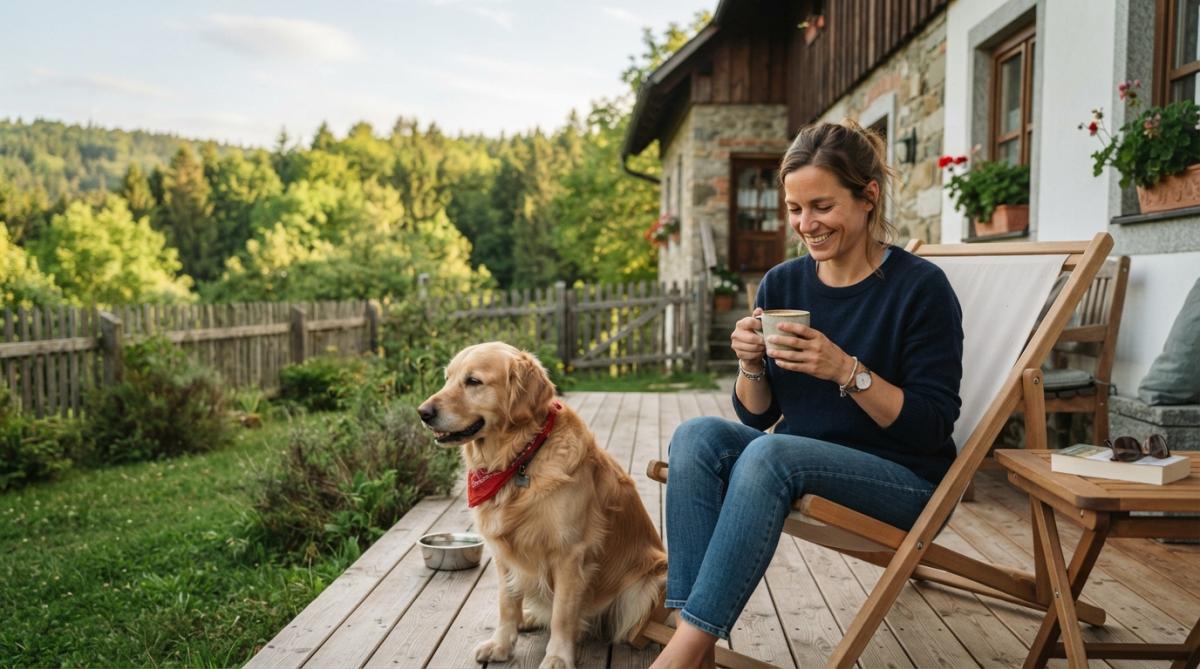
The Situation in the Waldviertel At Ferienwohnungen Gutenbrunn, this also means your dog has direct access to nature and hiking trails. No long walk to the nearest park, no hustle and bustle of the city center. Instead, peace and quiet, green spaces, and the opportunity to take long walks.
Amenities and Freedom in Everyday Life
Vacation rentals typically feature a kitchen-living room where you can cook for yourself. This is a major advantage for dog owners: you can prepare food, provide water, and be flexible with mealtimes. For dogs with food intolerances or special diets, this is invaluable.
Washing machines are also commonly found in vacation rentals. After a muddy walk, you can wash your dog’s towels, blankets, and even your own clothes right away—no need to wait for a laundry service.
The accommodations at Ferienwohnungen Gutenbrunn include a kitchen-dining area and a bedroom. This provides the space families with dogs need to truly relax.
Differences Between Vacation Apartments, Vacation Homes, and Hotels
The choice between these three types of accommodations directly affects cost, comfort, and dog-friendliness. An overview can help you make your decision.
| Type of Accommodation | Interior Design | Dog-Friendliness | Costs | Best suited for |
|---|---|---|---|---|
| Vacation Rental | Kitchen-living room, 1–2 bedrooms | Very dog-friendly | Medium Budget | Families, couples with dogs |
| Vacation Home | Several rooms, large garden | Very dog-friendly | Larger Budget | Large groups, dogs that need to run around |
| Hotel | Room service, no kitchen | Somewhat dog-friendly | Variable | Short stays, business travelers |
Vacation rentals strike a balance: They offer more privacy than hotels, but are more affordable and take up less space than vacation homes. For a vacation with a dog, this is often the best balance between comfort and cost.
Vacation homes are a great choice because they feature large gardens and fenced-in properties where dogs can run freely. This is ideal if your dog needs plenty of exercise or if you’re staying for an extended period. Hotels are only a good option if you’ll be spending very little time at the accommodation and your dog gets along well with other guests.
Legal Considerations and Insurance When Booking a Trip with a Dog
Before you book a vacation rental with your dog, you should familiarize yourself with the legal requirements. This will protect you from unpleasant surprises and clarify who is liable for any damage.
Leash Requirements and Securing the Property:
The leash law is mandated by law in many municipalities. This means that even on the property of a vacation rental, a leash law may apply if the property is not fenced in. Be sure to ask the rental owner specifically about local regulations and whether the property is fenced in. A fenced-in property is not only more comfortable for your dog but also has legal implications; depending on local ordinances, it may exempt you from the leash law.
Dog Liability Insurance: What You Need to Know:
Dog liability insurance isn't required by law everywhere, but it's strongly recommended, and many landlords require proof of coverage before booking. The insurance protects you if your dog causes damage. But here's the important thing: Not all liability insurance policies cover damage to rental properties in the same way.
Typical Scenarios and Insurance Coverage:
-
Damage to the accommodation (torn furniture, scratched floors, damaged doors): Most liability insurance policies cover this, but there are exceptions. Some policies exclude damage caused by scratches or wear and tear, treating them as „normal wear and tear.“ Check with your insurance company to see if scratches on wooden floors or furniture are covered.
-
Dirty carpets or furniture (Urine, vomit): This is where it gets complicated. Some insurance companies cover cleaning or replacement, while others do not. It depends on whether the stain is classified as „property damage“ or „cleaning costs.“ Read your policy carefully.
-
Injuries to Guests Caused by Your Dog: This is typically covered if your dog bites or injures another guest. But be careful: Some insurance companies exclude dogs known to be aggressive.
-
The Dog's Escape and Resulting Damage: If your dog runs away and, for example, damages a neighbor's property or causes an accident, this is usually covered—but only if the property was not left unsecured.
What landlords can require of you:
Some landlords require:
- A copy of your insurance certificate before booking
- A security deposit specifically for pets (in addition to the regular security deposit)
- A statement that the dog is not aggressive
- An agreement that damage must be reported immediately
This is legally permissible. Some landlords are stricter because they’ve had negative experiences in the past. Accept these requirements—they ultimately protect you, too, because they help avoid misunderstandings. Careful travel planning also includes choosing high-quality dog food, in order to ensure the animal's well-being in the long term, even in an unfamiliar environment.
Damages and Liability: Who Pays?
If your dog causes damage:
- Your liability insurance covers losses up to the insured amount (usually 1–3 million euros for property damage)
- If the insurance company doesn't pay (because the damage isn't covered), you'll have to pay for it yourself
- The landlord may withhold the security deposit or sue you for damages
That’s why it’s crucial that your insurance actually covers you. Contact your insurer before your trip and ask specifically: „Is damage to rental accommodations covered? Are there any exclusions for certain types of damage?“
Before booking, clarify the following: (1) whether dogs must be kept on a leash on the property and whether the property is fenced in, (2) whether your liability insurance covers damage to rental accommodations, (3) which scenarios are excluded, (4) whether the landlord requires proof of insurance, (5) cancellation policies regarding dogs, and (6) how damage is documented and billed.
Cancellation Policy and Dogs:
Ask whether the pet fee will be refunded if you have to cancel at the last minute. Some landlords are accommodating, while others are not. This should be put in writing to avoid misunderstandings.
Tips for Finding Dog-Friendly Properties
Finding the right vacation rental for you and your dog requires a targeted search. Not all accommodations advertised as dog-friendly actually are.
Look for specific details in the description. „Dogs welcome“ is vague. It’s better to include details such as „fenced-in property,“ „right on a forest trail,“ „near the lake,“ or „dog bed provided.“ These details show that the landlord has truly taken dogs into consideration.
Read reviews from other dog owners. Many booking platforms allow you to filter by guest reviews. Dog owners often give honest feedback about whether a dog truly feels comfortable there or if the accommodation is only dog-friendly in theory.
Contact the landlord directly. Ask about the size of the yard, the proximity to hiking trails, the local leash laws, and the landlord’s experience with dogs. At Ferienwohnungen Gutenbrunn, you can speak directly with Anna & Herbert—not with an anonymous hotline. This is a major advantage, as you’ll get honest answers from people who know the area.
Look for properties with fenced-in lots. This gives your dog a place to run around off-leash and gives you peace of mind that your four-legged friend won't run away.
Checklist for Vacationing with Your Dog: How to Prepare
Good preparation makes a vacation with your dog less stressful. This checklist will help you make sure you don't forget anything.
Before booking:
- Is the accommodation truly dog-friendly? (Garden, proximity to hiking trails, amenities)
- Is a leash required at this location?
- Is the pet fee listed clearly?
- What are the cancellation policies for dogs?
- Is dog liability insurance required?
Before departure:
- Health checkup at the vet (Are vaccinations up to date?)
- Dog Liability Insurance Purchased
- Packed a first-aid kit for dogs (bandages, stomach medicine)
- Standard equipment: leash, collar, dog bed
- Bring your pet's usual food and water (to avoid an upset stomach caused by a change in diet)
Upon arrival:
- Explore Accommodations That Allow Dogs
- Show the property boundaries
- Clarify contact information for the landlord (emergency numbers)
- Find a local veterinarian (if necessary)
While on vacation:
- Daily walks in nature
- Plenty of water and shade
- Regular Feeding
- Controlling Ticks and Fleas
Cost-Benefit Analysis: When Is a Vacation Rental Really Worth It?
The decision of whether a vacation rental that allows dogs is worth the price depends on your personal priorities. An honest assessment will help you make that decision.
A vacation rental is worth it if:
- If you stay for several days (the pet fee is spread over multiple nights)
- Your dog needs large amounts of food or a special diet (buying it yourself saves money)
- You enjoy cooking yourself (restaurant meals in vacation destinations are expensive)
- Your dog needs peace and privacy (less stress = a better vacation for everyone)
- You prefer a natural setting (the Waldviertel rather than a tourist hub)
A hotel or guesthouse may be a better choice if:
- If you're staying only 1–2 nights (the final cleaning fee is less of a factor)
- They spend little time at their lodging
- Your dog is very sociable and likes other dogs
- You prefer comprehensive service
For longer stays with your family and dog, a vacation rental is almost always the more economical choice. You'll save money on meals, have more space, and your dog will be more relaxed. This improves the quality of your entire vacation, and that, ultimately, is priceless.
The personalized service provided by Ferienwohnungen Gutenbrunn adds extra value. You’re not on your own when problems arise. Knowing that someone is available if something goes wrong is a big part of the comfort.
Conclusion: Making the Right Decision
For many dog owners, a vacation rental that allows dogs is the best choice—as long as you know what to look for. The flexibility, privacy, and closeness to nature make for a vacation that both people and pets can truly enjoy.
Transparency regarding costs is crucial. Be sure to compare not only the room rates but also pet fees and final cleaning charges. An honest breakdown of costs will help you avoid financial surprises.
Location plays a big role. A quiet, wooded area with hiking trails and opportunities to experience nature offers more for a vacation with your dog than a tourist hub. Your dog will benefit from the peace and quiet, and you’ll be able to truly unwind.
At Ferienwohnungen Gutenbrunn, you’ll find dog-friendly vacation rentals with personalized service from Anna & Herbert. The four lovingly furnished apartments offer space for families and their four-legged friends, with direct access to hiking trails and nature experiences in the Waldviertel region. Booking directly means: You speak with the hosts, not with a call center. Austrian Animal Welfare Laws and Dog Ownership These are the local requirements you should keep in mind when planning your trip. Book directly with Ferienwohnungen Gutenbrunn and enjoy a relaxing vacation with your dog in one of the most beautiful natural landscapes.
Frequently Asked Questions
How much does it cost to bring a dog to a vacation rental?
Pet fees vary depending on the accommodation and travel dates. Some hosts charge a flat-rate pet fee, while others charge a fee per night. Additionally, there may be costs for final cleaning, as pet hair and wear and tear can result in extra work. Be sure to ask about this directly when making your booking request to ensure full transparency regarding all additional costs.
Why is a vacation rental often a better option for dog owners than a hotel?
A vacation rental offers significantly more freedom: Your dog can enjoy its own yard, you can cook your own meals and save on restaurant costs, and there aren’t any strict pet policies like there are in hotels. You set the rules for your four-legged friend yourself. Especially on fenced-in properties, dogs can play safely without having to be on a leash all the time. This makes your vacation more relaxing and often more affordable.
What amenities should I look for in a dog-friendly place to stay?
Make sure there’s a yard or fenced-in property so your dog can play safely. It’s also important to have food bowls, a dog basket or bed, and good walking paths in the area. Ask about pet policies and whether leashes are required. Also find out how close the property is to dog-friendly destinations and whether the landlord can be reached if any problems arise.
Is renting a vacation home with a dog really worth it financially?
Yes, if you compare the total costs: Vacation rentals are often cheaper than several nights in a hotel; you save money by cooking for yourself; and your dog is allowed everywhere—no need for expensive dog sitters. The final cleaning fee is also usually more transparent than hidden hotel fees. Compare the cost of lodging plus the pet fee with hotels in the area—a vacation rental often works out cheaper.


Comments are closed, but trackbacks and pingbacks are open.