


Table of Contents
- Why the Waldviertel Is the Perfect Place for a Peaceful Vacation
- Quiet Accommodations in the Waldviertel: What Really Matters
- Hiking in the Waldviertel with Kids: Trails Even Little Legs Can Handle
- Swimming Spots in the Waldviertel: Lakes, Ponds, and Natural Areas
- Places to Visit in the Waldviertel When It Rains: What Works on Rainy Days
- Quiet walks and peaceful spots off the beaten path
- Traveling Without a Car: How to Get to the Waldviertel Stress-Free
- Best time to visit and seasonal variations for peaceful days
- Conclusion: Here's how to make your peaceful vacation in the Waldviertel truly relaxing
- Frequently Asked Questions
Last updated: October 12, 2026
Why the Waldviertel Is the Perfect Place for a Peaceful Vacation
A peaceful vacation in the Waldviertel begins where the noise of the road fades and the paths grow narrower. This region in northern Lower Austria is sparsely populated, densely forested, and has little through traffic—and that is precisely what makes it so appealing to those seeking relaxation. Anyone who Gutenbrunn Anyone who visits this neighborhood or the surrounding area will quickly realize that the quiet here isn’t just a marketing gimmick—it’s a matter of geography.
This guide from Apartments Gutenbrunn summarizes what a relaxing vacation in the Waldviertel is really like: which accommodations are suitable, which trails work well even with small children, what to do when it rains, and how to get there without a car. We know the area from everyday life, not from a brochure.
The Waldviertel is a granite plateau in northwestern Lower Austria, characterized by boulder heaths, bogs, ponds, and extensive spruce and beech forests. This landscape explains why a vacation in the Waldviertel is so often associated with hiking, biking, and taking time to unwind.
Lower Austria Tourism on Nature Parks and Hiking Trails
Quiet Accommodations in the Waldviertel: What Really Matters
The best quiet accommodations in the Waldviertel aren’t located on the outskirts of town, but rather in places where there’s at least one field or patch of forest between the bedroom window and the nearest street. Vacation rentals, guesthouses, and bed-and-breakfasts are the most common types of lodging in the region. There are also hotels and wellness hotels, but they’re usually located in the larger towns and tend to be busier as a result.
When making your choice, three things matter more than the list of amenities: the location, the actual noise level, and the surroundings. A vacation rental with a view of the countryside but located right on a state highway is noisier than a guesthouse in the heart of town with no through traffic.
There’s a second point that’s often overlooked: People looking for a peaceful vacation want not only a quiet night’s sleep, but also easy access to nature. A place to stay that’s just a five-minute walk from the forest saves you a drive every day.
Location, Noise, and Surroundings: A Comparison of the Three Factors Affecting Quietness
You can check these three factors before booking, even without seeing the accommodation in person. Ask specific questions instead of relying on photos.
| Peace-of-mind factor | How to Tell | Typical Source of Interference |
|---|---|---|
| Location | Distance from the street; location within or outside the town | Through traffic, traffic passing through town |
| Noise | No commercial businesses or construction sites nearby | Farm Equipment, Outdoor Dining Area |
| Surroundings | A forest, meadow, or pond right next door | Residential area with many vacation homes |
Before booking, be sure to ask specifically: „How far is the nearest bedroom window from the street?“ This one question distinguishes truly quiet accommodations from those that only appear to be quiet.
Comparing Relaxation Factors in Practice: A Checklist for Booking
Instead of relying on promotional photos, it’s worth doing a quick comparison based on five criteria. This checklist has proven effective in practice because it treats quietness not as a feeling, but as a verifiable characteristic:
- Solo position: Is the house detached, or does it share the lot and driveway with others? Detached houses with their own lot are usually the quietest option.
- Number of guests: How many residential units are there in total? A building with four apartments is easier to manage than a complex with twenty.
- Transportation: Is the driveway located on a through street or a dead-end street? Dead-end streets and farm roads are much quieter.
- Access to Nature: How far is it on foot to the nearest forest trail or pond? Less than ten minutes is a good guideline.
- Accommodation type: A vacation rental with its own kitchen allows for privacy and the freedom to plan your day as you wish; a guesthouse, on the other hand, offers breakfast and common areas.
If you ask about these five points before booking, you can directly compare two accommodations side by side instead of relying on general descriptions. Especially with vacation rentals, it’s worth asking about the number of units: The fewer guests in the building, the easier it is to plan for peace and quiet.
Accessible, dog-friendly, family-friendly: check the amenities
True accessibility isn't indicated by a symbol on the booking page, but by doors, bathrooms, and entryways. Anyone who uses a wheelchair should ask for specific measurements: door width, height of the bed edge, walk-in shower, and steps at the entrance.
Families with children have different needs: a kitchen-dining area, separate bedrooms, space for strollers, and a place where you can relax in the evening without waking the children. Ferienwohnungen Gutenbrunn is designed with exactly this combination in mind: four lovingly furnished apartments offer families, wheelchair users, and dog owners the perfect retreat to settle in, relax, and enjoy themselves. Surrounded by the tranquil natural beauty of Gutenbrunn, you’ll benefit from personalized hospitality from Anna & Herbert and an ideal base for numerous recreational activities such as hiking, biking, and excursions throughout the region.
Dog owners should also ask whether the dog is allowed to stay alone in the apartment and where the nearest walking trails begin. Large, active Dogs need more than just a rest stop along the roadside.
A place to stay that calls itself „accessible“ but doesn’t provide any measurements is a risk. Ask about door widths and steps before you book; otherwise, you’ll be in for a disappointment the very day you arrive.
Quiet Areas in the Region: How to Spot Them
The quietest spots aren't necessarily found at the most famous natural attractions, but rather in the side valleys and on the plateaus between the towns. Typical patterns that recur throughout the region:
- Highlands and plateaus: The undulating granite plateau dampens sound, and there are often vast, undeveloped areas between the villages.
- Side valleys off the main roads: Where there are no through roads, it remains quiet even in the afternoon.
- Outskirts of towns with access to farmland: A house on the outskirts of town, with a meadow right behind it, offers short distances and a quiet setting.
- Properties on the edge of the forest: If you have a forest right behind your property, you can set out early in the morning without having to drive first.
Anyone familiar with these patterns can tell just by looking at the map which accommodations are actually quiet and which only appear to be quiet. The combination of an open location, few residential units, and direct access to nature is the most reliable indicator.
Hiking in the Waldviertel with Kids: Trails Even Little Legs Can Handle
Short runs on soft ground with a finish line in sight work best with children. Long high-altitude trails are rare in the Waldviertel; the landscape is flat to gently rolling, which is ideal for families. For children between the ages of three and eight, plan on a hike of about two to three kilometers, including a break.
Popular destinations include the Blockheide near Gmünd, with its granite formations and short loop trails; the moorland area around Heidenreichstein; and the pond-dotted landscapes, which are perfect for taking a break by the water. What matters isn’t the distance, but that children can discover things along the way: rocks, roots, animals, and water.
- Short loop trails instead of long-distance hikes
- Sturdy shoes, even in dry weather
- A destination with seating and a view
- Always plan for the return trip; don't wait until you reach the turnaround point
Gutenbrunn Vacation Rentals offers an ideal base for numerous recreational activities such as hiking and biking. That's convenient when the kids have had enough after two hours.
Swimming Spots in the Waldviertel: Lakes, Ponds, and Natural Areas
In the Waldviertel, people go swimming at lakes, ponds, and designated natural areas—not at large outdoor pools. The Lake Edlesberg The best-known example is near Heidenreichstein: a swimming lake with a sunbathing area, a shallow shoreline, and plenty of space—even on warm days. In addition, are there Smaller ponds that are quieter but often lack infrastructure.
If you’re swimming with small children, make sure the entry is shallow and that you can keep them in sight. Natural ponds have uneven bottoms, which is the main difference from a traditional outdoor pool. Dog owners should check which shores allow dogs, as local regulations vary.
Austrian Red Cross on Swimming Accidents and Water Safety
Lake Edlesberg is the best choice for families because it combines shallow shores with good amenities. Smaller ponds are quieter, but require more supervision when swimming with children.
Places to Visit in the Waldviertel When It Rains: What Works on Rainy Days
On rainy days, there are three main activities to enjoy in the Waldviertel: caves, gorges, and guided tours of artisan workshops. The Waldviertel is known for its granite and gneiss landscape, and several show caves and gorges can be explored even in bad weather. This leisurely way of exploring also offers the ideal setting to discover your own Slow Living Lifestyle to deliberately expand on this in the coming year.
In addition, there are businesses that showcase their production processes: glassworks, stonemasons, and workshops where you can watch the work being done without getting wet. For Families with Short guided tours are better suited for children than long walking tours because their attention spans are limited.
A plan for bad weather should also include a place to retreat to. If you find yourself back at the vacation rental after two hours, you can spend the rest of the day relaxing instead of driving from one place to the next. That’s exactly what a kitchen-diner is great for.
- Tourist caves and gorges with short guided tours
- Artisanal Businesses with Tours
- Museums with child-friendly exhibits
- Plan to return to your lodging before the afternoon
Quiet walks and peaceful spots off the beaten path
The quietest trails in the Waldviertel are the ones not marked on any signposted route. Forest roads, farm roads, and old paths connecting two villages often wind through the woods for hours without a soul in sight. If you’re looking for peace and quiet, you should go early in the morning: Between 6 and 8 a.m., the forest belongs to almost no one.
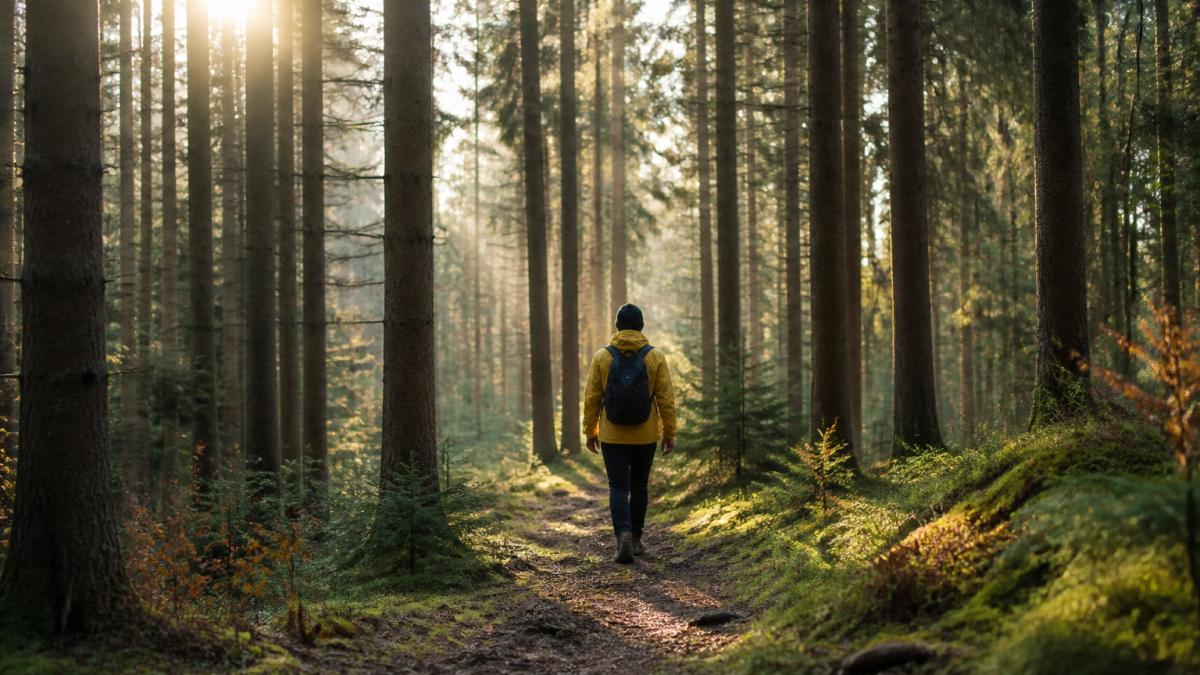
Specific routes that are ideal for quiet walks: a loop around one of the smaller ponds, a section along a disused railroad track, and the paths around the Blockheide outside the main entrances. These routes are short enough to take an hour and long enough to clear your head.
What most guidebooks leave out: The time of day has a greater impact on how quiet a place is than the location itself. A familiar path at seven in the morning is quieter than an unfamiliar one at eleven.
Traveling Without a Car: How to Get to the Waldviertel Stress-Free
It is possible to travel here without a car, but it requires some planning. The Waldviertel region is accessible by train via the Franz-Josefs-Bahn, with connections to Gmünd and onward into the region. Bus routes run from the train stations to the smaller towns, though service is limited, especially on weekends.
If you're traveling without a car, you should choose accommodations based on whether they're within walking or biking distance of the nearest transit stop. A pickup service provided by the hosts is a convenient solution if the train station isn’t directly accessible. Ferienwohnungen Gutenbrunn offers personalized assistance from the hosts, which helps with travel planning.
ÖBB Schedule and Connections to the Region
Train and Bus: An Overview of the Key Stages
Travel by train usually involves taking the Franz-Josefs-Bahn from Vienna toward Gmünd. The train line ends there, and to continue on to the smaller towns, you’ll need to take a bus or arrange for a ride. If you’re coming from the direction of St. Pölten, take the train line through the Kamptal valley and transfer in Krems or Hadersdorf am Kamp.
When it comes to detailed planning, it helps to think of the trip in three stages:
- Stage 1 – Getting to the train station: Take the Franz-Josefs-Bahn to Gmünd, or alternatively via Krems and Hadersdorf am Kamp from the direction of St. Pölten.
- Stage 2 – Continuing on into the region: Bus routes from Gmünd to surrounding towns; service is limited, especially on weekends.
- Stage 3 – The Last Mile: On foot, by bike, or by getting a ride from your hosts if the bus stop isn't right next to your lodging.
A common scenario: The train takes you reliably to Gmünd, but getting to the villages from there is the tricky part. If you know this in advance, you can plan the final leg with some extra time built in.
Schedules, Service Intervals, and Weekends
The train line operates regularly, whereas bus routes to smaller towns often run only a few times a day. On Sundays in particular, many routes run only once or twice, and service ends early in the evening. Anyone arriving on the weekend should therefore check the schedule in advance and not count on being able to continue their journey on the spur of the moment.
- Weekdays: More connections, but here, too, it's worth checking the last bus of the evening.
- Saturday: More limited than on weekdays, especially in the afternoon.
- Sunday: The sparsest service, often with only one or two trips per line.
- Holidays: Similar to Sunday, with special schedules in some cases.
Book bus tickets to smaller towns early, and check the weekend schedules separately. On Sundays, many routes run only once or twice.
Local Mobility Without a Car of Your Own
If you're traveling without a car, you should realistically assess the distances involved. The villages are often several kilometers apart, and not every route is served by a bus. Three options have proven to be reliable:
- On foot: Short trips within town and to nearby natural attractions are feasible, but not so much for longer distances.
- By bike: A rental bike or your own bike makes the distances feel much shorter; many of the routes are flat to slightly hilly and easy to ride.
- Pickup by the hosts: A handy option for arrivals and individual trips when there are no buses running.
When planning your trip, it helps to figure out the distances between your lodging, the nearest bus stop, and your main destinations in advance. If you know that the next bus only runs twice a day, plan your day accordingly and stay flexible.
Traveling by Bike
The Waldviertel is also accessible by bike, especially via the bike paths along the rivers and regional routes. If you’re traveling by bike, you should plan your stages so that your lodging is at the end of each day’s ride and you don’t need to take a bus. For the final leg to your lodging, it’s worth asking about a secure place to park your bike.
So a relaxing vacation starts right from the moment you set out: If you plan your train and bus trips—and the final leg of your journey—in advance, you’ll arrive feeling relaxed and can start your getaway right away without any detours.
Best time to visit and seasonal variations for peaceful days
The quietest time in the Waldviertel is between late September and mid-November, as well as in late spring. During these weeks, the region is less crowded, the forests are quiet, and lodging rates are generally lower than in the height of summer. Fall also brings the changing colors of the leaves, which make many hiking trails particularly attractive.
Midsummer is the busiest time of year, especially around the swimming lakes. If you're looking for some peace and quiet, you should head to smaller ponds Plan your trip for the early morning hours. Winter is quiet but cold and snowy; some trails are impassable then. For a peaceful vacation in the Waldviertel, fall is the safest bet, followed by early summer.
| Season | Silence | Weather | Best for |
|---|---|---|---|
| Spring | High | Changeable, cool | Hikes, not very busy |
| Summer | Low | Warm, dry | Swimming, Family Outings |
| Fall | Very high | Cool, clear | Quiet Paths, Fall Foliage |
| Winter | High | Cold, snow | Quiet days, limited outings |
Conclusion: Here's how to make your peaceful vacation in the Waldviertel truly relaxing
Peace and quiet don’t come from staying in a particularly secluded place, but from a few simple choices: a location without through traffic, easy access to nature, the right time of day for walks, and accommodations that suit your travel group. If you clarify these four points before booking, you’ll spend your vacation relaxing instead of searching.
For families, wheelchair users, and dog owners looking for just that, the accessible vacation rentals at Ferienwohnungen Gutenbrunn are the perfect starting point: four lovingly furnished apartments in a quiet location, with personalized service from Anna and Herbert, and a setting that makes hiking, trips to the beach, and peaceful walks possible without a long drive. Book directly with us and start your getaway without any time pressure.
Frequently Asked Questions
Where in the Waldviertel is it particularly quiet and beautiful?
It’s especially quiet away from the well-known tourist attractions—for example, in the forests around Gutenbrunn, along tranquil moorlands and pondscapes, or on little-traveled hiking trails in the nature park. If you’re out and about early in the morning, you’ll have many trails almost all to yourself. Even small towns with limited lodging options offer more peace and quiet than larger tourist centers. The location of your lodging is key: secluded vacation rentals with direct access to nature ensure that the tranquility doesn’t have to wait until after a car ride to begin.
Which hiking trails in the Waldviertel are suitable for families?
For families with children, short loop trails with minimal elevation gain are ideal, as they can be completed in two to three hours. Trails with stops along the way—such as a pond, a playground, or a rest area—are perfect so that children can take breaks. Be sure to choose well-marked trails and wear sturdy shoes. If you’re traveling with a stroller or wheelchair, you should check with your lodging in advance to find out which paths are paved and free of steps.
What can you do in the Waldviertel when the weather is bad?
When it rains, consider visiting small regional museums, demonstration cheese dairies, glassworks, or exhibitions on the natural and cultural history of the Waldviertel. A trip to one of the historic small towns with covered walkways is also well worth it. For families, indoor playgrounds or a swimming pool are good options. Many hosts are happy to offer personal tips for rainy days that you won’t find in every travel guide. That way, even a rainy day can be full of variety.
How many days should you plan for a vacation in the Waldviertel?
Three to four nights are enough to get a first impression—enough time for two to three leisurely hikes, a day at the beach, and an outing. If you really want to unwind, it’s better to plan for a week. That leaves time for spontaneous decisions, leisurely walks, and a stress-free rainy day. Families with children benefit from longer stays because the travel to and from the destination is less of a hassle, and the children get used to their new surroundings more quickly.
Comments are closed, but trackbacks and pingbacks are open.