


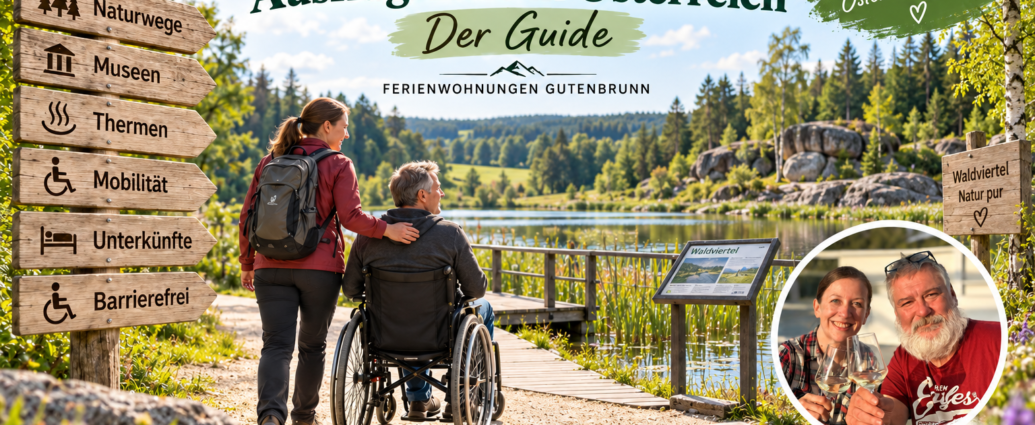
Accessible Tourist Destinations in Austria: An Overview
Anyone looking for accessible travel destinations will quickly run into a fundamental problem: There are many options, but very little reliable information about their actual accessibility. This guide brings together the key factors to consider when making a choice—from museum visits to wheelchair-accessible hiking trails to accessible transportation.
Accessible Tourist Attractions These are places and routes that are accessible—without steps, with sufficiently wide passageways, and with clearly marked restroom facilities. What matters isn’t the „accessible“ label, but the actual infrastructure on site: ramps, elevators, wayfinding systems, and trained staff. If you check in advance instead of relying on marketing claims, you’ll save yourself a lot of trouble once you’re there.
This overview organizes the most important categories and shows how to plan a stress-free trip.
| Category | What to Look For | Common Pitfalls |
|---|---|---|
| Museums and Exhibitions | Ramps, elevators, tactile guidance systems | Steps at the back entrance |
| Hiking Trails and Nature | Flooring, Slope, Seating | Gravel Instead of Asphalt |
| Travel and Transportation | Low-floor bus, station elevators | Missing transfer information |
| Accommodations | Door Widths, Plumbing, Certification | „accessible“ without proof |
| Dining | Entrance, table height, restroom | Step at the entrance to the restaurant |
Accessible Museums and Exhibitions
Museums are among the most accessible destinations for people with limited mobility. The major federal museums in Vienna—the Kunsthistorisches Museum, the Albertina, the Belvedere, and the Haus der Geschichte Österreich—feature step-free main entrances, elevators to all exhibition levels, and designated accessible restrooms. However, the quality varies considerably from one museum to another, and the „accessible“ label alone doesn’t tell the whole story.
Be sure to ask about three specific figures, which you can inquire about by phone or email:
- Clear door width: A standard wheelchair requires at least 80 cm of space; 90 cm or more is considered comfortable. Many historic houses have narrower doors at side entrances than at the main entrance.
- Take the elevator to the top exhibition level: Be sure to ask specifically whether special and rotating exhibitions are also accessible—this is where accessibility most often falls short in practice.
- Tactile Wayfinding Systems and Hearing Aids: Museums such as the Belvedere and the Albertina offer tactile tours, audio guides in simple language, and, in some cases, induction loops for hearing aid users upon request.
A common misconception is the assumption that a museum advertised as accessible is fully accessible throughout. In practice, accessibility often ends at the special exhibition on the upper floor or at a step between two wings. Therefore, be sure to ask not only about the entrance but also about the entire tour route.
An often-overlooked point: Admission for companions of people with a documented disability is free or at a reduced rate at many federal museums, provided the disability card includes a corresponding notation. Be sure to check this in advance by phone, as the rules vary from museum to museum.
People with visual impairments may want to check out the Austrian UNESCO Commission’s program on accessible cultural heritage, as well as the offerings from individual institutions, which are increasingly providing guided tours featuring tactile exhibits and simple language.
Austrian National Commission for UNESCO on Accessible Cultural Heritage
When making a reservation, always ask about the clear width of the bathroom door and the number of accessible restrooms in the building. In practice, a single accessible restroom for an entire museum is often overused.
Accessible Hiking Trails and Nature Experiences
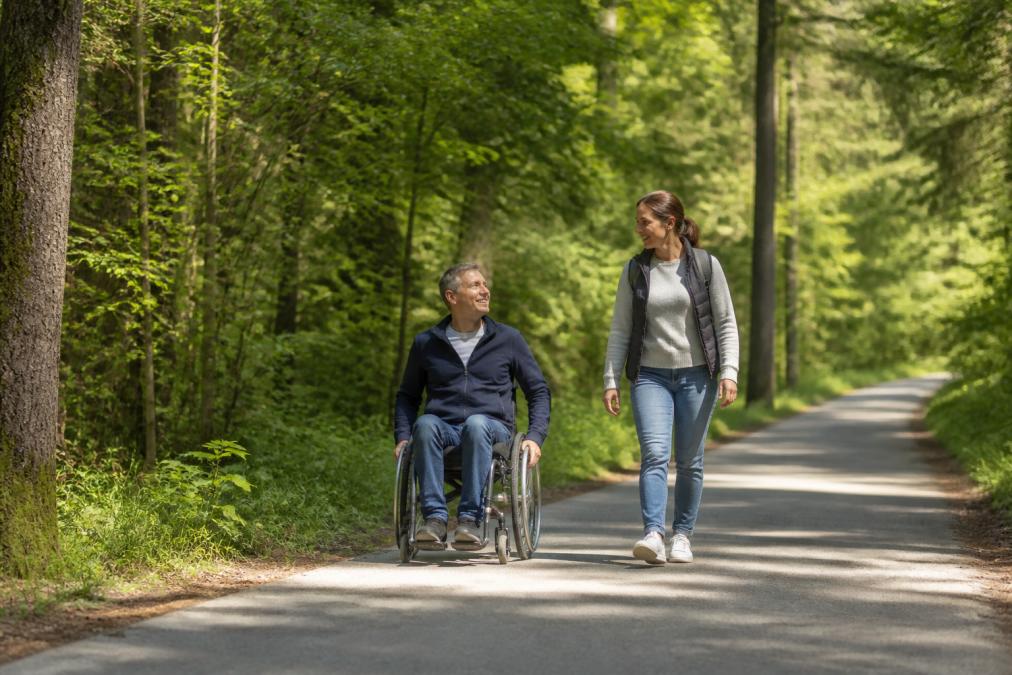
Accessible hiking trails are wide, paved paths with a gentle incline that are also accessible to people using wheelchairs or walkers. Nature parks and many regions now clearly mark such routes, often providing details on the surface, width, and elevation gain.
The key difference lies in the surface. Asphalt and finely compacted gravel work well, but coarse gravel or tree roots do not. Check in advance to see if there are places to sit at regular intervals; for many people with mobility impairments, this is more important than the sheer length of the path.
What many guidebooks fail to mention: Accessibility varies by season. A trail that’s passable in the summer may be muddy after rain or cleared but icy in the winter. Check with the local municipality or the tourism association for the current conditions.
Accessible Travel and Mobility on Site
Accessible travel is the most frequently underestimated part of trip planning—and the point where most guidebooks stop. Low-floor buses, elevators at train stations, and designated parking spaces determine whether a trip goes smoothly or falls apart before you even arrive.
Rail: ÖBB provides step-free access and elevators to the platforms at all major train stations. If you’re traveling with a wheelchair or plan to use the mobile lift, we recommend making a reservation in advance with ÖBB’s Customer Service for Accessible Travel—ideally at least 24 hours before departure. When making your reservation, please specify the station, train number, and the type of boarding assistance you require. Lifts may not be available at smaller regional stations; please check with station information in advance.
Bus and Regional Transit: The regional transit authorities—such as the Verkehrsverbund Ost-Region (VOR), the Oberösterreichische Verkehrsverbund (OÖVV), and the Verkehrsverbund Tirol (VVT)—are increasingly operating low-floor buses with fold-out ramps. Not every route is accessible, and some routes are served only by advance reservation. A call to the respective transit authority will clarify whether the desired connection wheelchair accessible and whether a ramp is available and in working order.
Car: Designated parking spaces for people with disabilities, with sufficiently wide parking spots, can be found at most major tourist destinations. In rural areas, it’s worth asking for a parking spot right in front of the entrance, since public transportation is often limited there.
Please clarify the following points in advance:
- Are all transfer stations wheelchair-accessible, and is there an elevator?
- Is a low-floor bus in service, and is the ramp in working order?
- Does the railroad require advance notice for the lift?
- Are there designated parking areas with parking spaces that are wide enough?
For the final leg of your trip, it’s worth calling the public transportation authority. Some routes are accessible only with advance notice—a detail you’ll hardly find in any travel guide.
The greatest impact comes from combining options: If you plan your train, bus, and the final leg to your destination in advance as a seamless chain, you’ll avoid the most common reason for canceled trips—a gap between two modes of transportation.
Certified Accommodations for People with Disabilities
Certification is more than just a logo. It means that an independent body has inspected door widths, restroom facilities, and accessibility, rather than relying on the business’s own self-reporting.
This is precisely where the difference lies—one that many travelers only notice once they arrive. A lodging facility can call itself „accessible“ without anyone ever having measured the clear width of a bathroom door. Certified establishments disclose these measurements.
The Vacation Rentals Gutenbrunn In the Waldviertel region, they emphasize exactly this kind of transparency: four lovingly furnished, barrier-free, and wheelchair-accessible vacation apartments with personalized service from the hosts, Anna and Herbert. If you want to know in advance whether the apartment is really a good fit, you’ll get specific answers here, and your vacation with a dog is expressly permitted.
For each accommodation, ask about the clear width of the bathroom door and the height of the bed's edge. In practice, these two measurements often determine comfort more than any certification.
Accessible Spas and Wellness Services
Spa facilities are among the most popular destinations for day trips, and many have been retrofitted in recent years. Key features include step-free access to the pools, handrails, and restroom facilities with ample space to move around.
Before booking, check to see if a pool lift is available. Not every spa offers one, and without it, many guests are unable to get into the water. Also, ask about quieter times when the paths are less crowded.
This is especially true for families with children and for those seeking relaxation who want a peaceful getaway without the crowds. A quiet morning during the week is often more pleasant than the hustle and bustle of the weekend.
Tips for Accessible Travel: Planning Without Stress
Tips for accessible travel can be summed up in one basic principle: It’s better to plan ahead than to improvise once you’re there. If you take care of the key details before you leave, you’ll run into far fewer surprises.
A handy checklist for planning:
- Request written confirmation of the door widths and plumbing layout of the accommodation
- Check with the public transit authority in advance regarding accessible rail and bus connections
- Check with the local municipality for the current condition of the hiking trail
- Compare opening hours, admission prices, and days closed for the attractions
- Write down emergency contacts and on-site contacts who can be reached
- At spas, ask about pool lifts and quieter times
These six points cover the most common issues. The most important tip from real-world experience: Book directly with the host. That way, specific questions about accessibility and assistance can be clarified in a conversation rather than through a form.
Ministry of Social Affairs on Accessibility and Equality
Accessible Dining and Culinary Experiences
The restaurant industry is the sector where accessibility is least often documented. A step-free entrance, sufficiently wide aisles between tables, and an accessible restroom are the three criteria that matter.
Call ahead. Many restaurant owners don’t even know how wide their doors are, but they’re willing to take a quick measurement. Asking this one question will save you from disappointment when you get to the door.
In rural areas, it’s also worth checking to see if there’s parking available right in front of the restaurant. Where public transportation is limited, the availability of parking determines whether a visit is feasible.
Conclusion: How to Plan an Accessible Outing
The biggest hurdle is rarely the location itself, but rather the lack of reliable information beforehand. If you check door widths, access, and the seasonal condition of trails in advance, you can turn an uncertain venture into a relaxing outing.
That's exactly why the Gutenbrunn vacation rentals are the perfect place to stay: barrier-free and wheelchair-accessible apartments, personalized service from Anna and Herbert, Vacation with Your Dog possible, and a quiet location in the Waldviertel region near natural highlights such as the Lake Edlesberg. Here, you have a direct line to people who know the region.
Book directly with Ferienwohnungen Gutenbrunn and start your getaway without any time pressure in one of Austria’s most beautiful natural landscapes.
Frequently Asked Questions
How can I tell if a destination is truly accessible?
Don’t rely solely on advertising claims. Check whether the destination has received a certification such as the Austrian Ecolabel for accessible tourism. Ask specific questions about door widths, ramps, elevators, and wheelchair-accessible restrooms. Many businesses provide detailed information on their websites or upon request. A phone call before your trip can often clear up any questions and give you peace of mind when planning.
Which accessible hiking trails are suitable for wheelchair users?
In Austria, there are an increasing number of accessible hiking trails that are also wheelchair-accessible. Look for trails with a solid surface, a gentle slope, and sufficient width. Nature parks and national parks are increasingly marking accessible routes. Check with the regional tourist office in advance to find out the exact route, the condition of the trail, and where rest areas are located. This will help you avoid any surprises once you’re there.
Are there any specific certifications for accessible tourism businesses?
Yes, in Austria there is the Austrian Ecolabel for tourism businesses, which also includes accessibility criteria. In addition, many regions designate accessible businesses with their own seals of approval. These certifications are regularly reviewed and provide a certain level of assurance. However, be sure to ask specifically about the criteria that are important to you—such as door widths, elevators, or assistance services—since requirements may vary depending on the certification.
How can I plan a stress-free, accessible day trip?
Start by making a clear list of your needs: mobility, assistance, and restroom facilities. Then, do targeted research to find suitable destinations and check for access to public transportation, such as low-floor buses or train stations with elevators. If possible, book in advance and ask about special offers. Plan for breaks and have alternatives ready. A well-prepared trip with tips for accessible travel in hand will be much more relaxing.

Comments are closed, but trackbacks and pingbacks are open.