


Last updated: October 26, 2026
Quick Overview
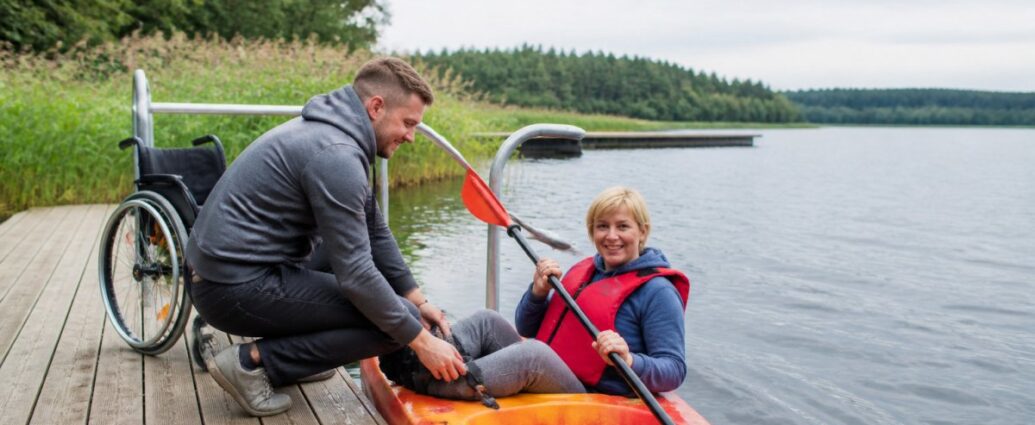
Today, accessible water sports come in many forms, such as sailing, kayaking, pedal boating, and stand-up paddleboarding, often featuring adapted seating systems and boarding aids. The best way to find out if a sport is right for you is to take a short trial lesson with the provider.
- Sailing, kayaking, pedal boating, and stand-up paddleboarding are common types of water sports.
- Many clubs lend out flotation devices and life jackets free of charge as part of a trial lesson.
- A slope of no more than 6 percent is considered easily navigable for wheelchairs.
- You should clarify with your health insurance provider whether the cost of assistive devices will be covered before purchasing them.
- Water sports put less strain on the joints because the body experiences buoyancy in the water.
Table of Contents
- An Overview of Accessible Water Sports
- Inclusion in Water Sports: What Has Changed
- Water Sports Equipment and Accessories
- Identifying Accessible Swimming Areas: Access Points, Entry Points, and Infrastructure
- Assisted Water Sports: Guidance and Safety
- Benefits of Water Sports for People with Disabilities
- Checklist for Accessible Sports Facilities and Travel
- Plan Your First Accessible Water Sports Day
- Frequently Asked Questions
An Overview of Accessible Water Sports
Water sports are far more accessible to people with disabilities than many realize, and inclusive water sports programs in particular demonstrate just how diverse the options are today. Most programs start with a simple goal: getting out on the water safely and having fun. This is exactly where a good guide comes in, because the right sport depends heavily on mobility, vision, and personal interests.
Popular activities include sailing, kayaking, stand-up paddleboarding, and pedal boating. If you're looking for suitable nearby destinations, you'll find them at Accessible tourist destinations for wheelchair users. Adaptive options, such as special seating systems or modified boards, are making these activities increasingly accessible.
- Sailing: Often accompanied by a caregiver; suitable for wheelchair users with a seating system
- Kayaking and Canoeing: Sturdy models with a step-in aid
- Pedal boat: Easy to use, ideal for beginners
- Stand-up Paddleboarding: Customized boards for greater stability
A short trial class will quickly show you which sport is the best fit.
Inclusion in Water Sports: What Has Changed
Inclusion in water sports is no longer a niche topic, as more and more clubs are expanding their accessible water sports programs to include anyone interested. Clubs and initiatives are increasingly integrating people with various disabilities into their regular programs. One example is Sail United, where people in wheelchairs, those with Down syndrome, and those with visual impairments come together to take up active sailing.
According to Silta.ai (2026), about 16 percent of the world's population lives with a significant disability (the WHO). This figure shows just how great the need is for accessible services.
The main change is that programs are no longer intended solely for specific groups. More and more clubs are opening their programs to everyone.
Water Sports Equipment and Accessories
Having the right gear determines whether a day of water sports will be relaxing or frustrating. Above all, it’s important that the equipment fits the person—not the other way around. If you’re a beginner, you shouldn’t buy everything at once; instead, start by trying out rental gear from a provider.
Common tools and their functions:
- Seating Systems and Bucket Seats: They secure the torso in the boat and prevent it from tilting to the side. It’s important to adjust them to fit your height and torso stability—a seat that’s too large won’t provide support, while one that’s too tight will restrict movement.
- Boarding aids and transfer boards: They bridge the height difference between the dock and the boat. Non-slip mats and a securely mounted handrail that the accompanying person can hold onto have proven effective.
- Swimming aids and flotation devices: Life jackets must fit the person and be appropriate for their weight; there are different sizes for children and adults. For people with limited trunk control, additional buoyancy cushions help stabilize the upper body.
- Custom Paddle: Ergonomic handles, shorter shafts, and adjustable blades reduce strain on the shoulders and wrists. For people with limited hand function, there are mounts that secure the paddle to the forearm.
- Non-slip mats and gripping aids: They make it easier to get on board and prevent slipping on wet docks.
When making a selection, it helps to take a look at the Rehacare trade show, which showcases new assistive devices every year. The Rehacare Report 2026 points out that while the provision of assistive devices promotes independence, it continues to be hampered by bureaucratic hurdles. Here’s what you should keep in mind when planning: If you need an assistive device on a long-term basis, it’s best to clarify coverage with your health insurance provider or social security agency before making the purchase.
Swimwear also plays a role. Well-fitting, quick-drying clothing makes the outing more enjoyable, especially in cold weather. For people with limited mobility, one-piece wetsuits—which are easier to put on and take off—and neoprene shoes for a secure grip on slippery surfaces are highly recommended.
Check with the provider in advance to find out what equipment is provided and what you need to bring yourself. Many clubs lend out seat systems and life jackets free of charge as part of a trial lesson.
An overview of the most important tools, including their functions and what you should keep in mind:
| Resources | Function | What to Look For |
|---|---|---|
| Seating Systems and Bucket Seats | Securing the Torso in the Boat | Customization Based on Body Height |
| Boarding Aids and Transfer Boards | Bridge the height difference to the pier and the boat | Non-slip pads, sturdy handle |
| Swimming Aids and Buoyancy Devices | Stabilize the Upper Body | Based on the person and their weight |
| Custom Paddle | Relieves strain on the shoulders and wrists | Ergonomic handles, adjustable blades |
| Non-slip mats and gripping aids | Make it easier to get started | Protection against slipping on wet walkways |
Identifying Accessible Swimming Areas: Access Points, Entry Points, and Infrastructure
You can recognize an accessible swimming area by its distinct features. Before you arrive, it’s worth taking a quick look at the access points. Is there a flat path to the water, a sturdy ramp, or an entry aid? On accessible hiking trails for people with mobility impairments You'll find information on safe, easily accessible routes.
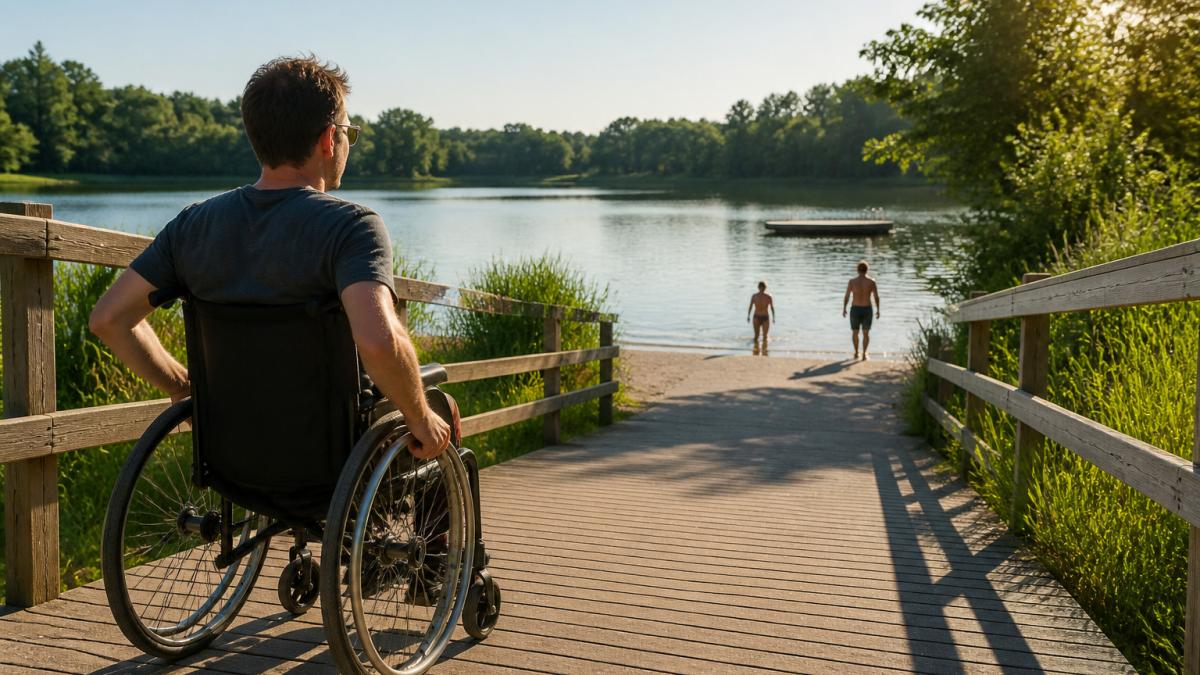
Please keep the following points in mind:
- Paved paths without loose stones or sand
- Wide entrances for wheelchairs
- Restroom facilities with grab bars
- Parking spaces in the immediate vicinity
Many swimming spots offer only some of these facilities. Therefore, it’s a good idea to check in advance by email or phone.
Wheelchair-accessible access points to the water
Wheelchair-accessible entrances are the most important criterion. A slope of no more than 6 percent is considered easily navigable. If you’re using a wheelchair yourself, you should also check whether the surface is firm enough.
An accompanying person can help you get from the path into the water. Be sure to allow enough time for this.
Services for People with Visual Impairments
For people with visual impairments, orientation and safety are key. More details on accessible recreational activities for the visually impaired can be found on a separate page. Tactile guidance systems, clear instructions from staff, and a quiet environment help immensely. Some providers use tandem boats, in which a sighted person sits in the front and steers the course.
Assisted Water Sports: Guidance and Safety
When it comes to water sports, having someone there to assist is often the key to a safe experience. An accompanying person doesn’t have to be an expert themselves, but should know the basic rules: wear a life jacket, check the weather, and stay in contact with the shore. In addition to expert support, functional gear also plays a crucial role, which is why the choice should be including swimwear for water sports enthusiasts should fit properly to provide optimal support for freedom of movement and safety in the water.
Before you start, it’s a good idea to have a brief conversation with the provider. Ask about training, emergency plans, and the number of supervisors per group.
The support provided can take many different forms:
- A person who helps with boarding
- A crew member steering the boat
- A group that works together
This type of support is especially helpful for families because it allows everyone to travel together.
Benefits of Water Sports for People with Disabilities
Water sports offer many benefits that go beyond just having fun. The water takes the pressure off the joints because the body is buoyed. Exercising in water strengthens muscles and improves coordination without putting excessive strain on the body.
The social aspect is also important. Group activities help reduce social isolation and promote independence. Many participants report feeling more confident after a day of water sports.
Water sports associations and initiatives emphasize that participation in sports is a key goal. The experience on the water creates moments that will be remembered for a long time.
Checklist for Accessible Sports Facilities and Travel
Good planning saves you a lot of stress. This checklist helps with preparation and covers the points that are often overlooked on site:
- Check access to the water (ramp, path, surface, slope)
- Ask about restroom facilities equipped with grab bars and sufficient space to move around
- Confirm the availability of parking spaces in the immediate vicinity that are wide enough
- Check travel options by public transportation (accessible entry, ramp, assistance service)
- Plan for an accompanying person, if necessary
- Bring your own equipment and supplies, or arrange rentals in advance
- Check the weather and water temperature
- Provide an emergency contact and note the on-site contact person
Travel and Logistics: The Underestimated Pain Point
Most guidebooks stop at the swimming area—but the real challenge often begins on the way there. Anyone who relies on a wheelchair or a walking aid should carefully plan the entire route from home to the water’s edge: train platform, transfers, bus, final walk, and dock.
The following procedure has proven effective:
- Rail: With the Austrian Federal Railways, you can usually request assistance at the station in advance; please check whether the station you’re visiting is accessible without steps and whether a mobile lift is available.
- Bus and Regional Transit: Not every line is accessible; check with the transit authority about low-floor vehicles and whether wheelchairs are allowed on board.
- Last mile: The walk from the parking lot or the bus stop to the water is often the most difficult part. Ask the provider if they can arrange a shuttle or someone to accompany you from the parking lot.
- Time buffer: Allow significantly more time for transfers and assistance services than you would for a trip without any limitations.
A look at the Accessible Travel to the Waldviertel by Public Transportation can help you here if you select the region as your starting point.
Legal Framework and Incentives
You should contact the relevant authorities directly to find out what assistance is available for assistive devices or sports programs. In Austria, the federal states and social insurance agencies are responsible for many benefits; the exact eligibility requirements vary depending on the type of disability and your place of residence.
Keep these starting points in mind:
- Provision of Assistive Devices: It is best to check with your health insurance provider or social security office regarding coverage for assistive devices, such as seating systems or custom paddles, before making a purchase.
- Personal Assistance: Depending on the state, there are personal assistance programs available for people with disabilities that may also cover recreational activities. Please check with the relevant state office.
- Sports Promotion: Clubs and organizations can apply for grants for inclusive programs; as a participant, it’s best to ask the provider directly whether such funding is available.
- Disability ID Card and Benefits: Depending on the degree of disability, a disability ID card may entitle you to discounts on public transportation or admission fees—check with the relevant authority for the current regulations.
The specific requirements and responsibilities are subject to change. Do not rely on outdated information; instead, check with the appropriate authority before beginning your planning.
Information on Financial Assistance and Rights for People with Disabilities
Plan Your First Accessible Water Sports Day
Your first outing should be kept simple. Choose a quiet swimming spot, sign up for a trial lesson, and make sure to plan plenty of breaks. Many families also like to wrap up the day at an accessible restaurant.
Here in Gutenbrunn, in the heart of the Waldviertel, you’ll find accessible vacation apartments for your getaway, with personalized service from Anna & Herbert.
The first time you try it, go at your own pace. Water sports are meant to be fun, not stressful. With each outing, you’ll gain more confidence, and you’ll often discover a sport you hadn’t even considered before.
Frequently Asked Questions
What water sports are suitable for people with physical disabilities?
Many water sports can be adapted to physical limitations. Sailing, paddling, and stand-up paddleboarding are particularly popular options, as they allow for the use of seating positions and assistive devices. Pedal boats and motorboats are suitable for beginners because they require little physical strength. It’s crucial that the provider understands your individual needs and clarifies before the first session which entry aids, seating options, and assistance are required. A trial session helps you find the right sport before deciding on equipment.
How can I find accessible entry aids at lakes?
The best way to identify accessible entry aids is to check directly with the operator or the local municipality before your visit. Key features include a step-free access route, a paved path to the water, and an entry aid, such as a dock or ramp. Also, check whether restrooms and changing rooms are accessible. A quick inquiry specifying your needs will help you avoid unpleasant surprises once you arrive and will reveal whether the provider has experience with guests with disabilities.
Is there any special equipment for accessible water sports?
Yes, there is specialized equipment available for accessible water sports, such as flotation devices, seating systems for boats, paddles with extended handles, and special stand-up paddleboards. Boarding aids and wheelchair transport systems also help with access to the water. The right equipment depends on the nature of the disability and the chosen sport. Ask the provider specifically which assistive devices are available, and clarify whether you’re allowed to bring your own.
How do I prepare for an accessible water sports day?
Plan your day with plenty of time and check in advance about travel arrangements, parking, and changing facilities. Pack your swimwear, goggles, sunscreen, and any personal assistive devices in waterproof bags. Let the provider know about any health concerns you may have and whether you’ll be bringing a companion. Talking with them beforehand helps manage expectations and ensures a relaxed start to the activity.



Comments are closed, but trackbacks and pingbacks are open.