


Table of Contents
- Accessible Recreational Activities for People with Visual Impairments: What Really Matters?
- Cultural Activities Accessible to Everyone
- Tactile Experiences in Nature: Hiking with All the Senses
- Accessible Vacation Rental Amenities: What to Look For
- Sports and Exercise Without Visual Orientation
- Tips for Accessible Travel: Planning and Preparation
- Discover Accessible Recreational Activities in the Waldviertel Region
- Conclusion: Enjoying Leisure Time Without Barriers
- Frequently Asked Questions
Last updated: September 30, 2026
Accessible Recreational Activities for People with Visual Impairments: What Really Matters?
Many people with visual impairments are familiar with this problem: recreational activities are advertised as accessible, but once there, there is a lack of tactile models, tactile paving, or trained staff. This guide addresses exactly that issue. At Ferienwohnungen Gutenbrunn, we hear time and again from our guests how important it is to have reliable information before arriving. That’s why we’ve put together a guide on what really matters when it comes to truly accessible recreational activities for people with visual impairments.
Accessible recreational activities are activities, destinations, and recreational opportunities that people with visual impairments can enjoy without assistance or with targeted support. These include tactile exhibitions, tactile hiking trails, audio tours, and accessible accommodations.
The good news: There are more opportunities like this in the Waldviertel than many people expect. You just have to know where to look. The following sections show what kinds of opportunities are available and how you can find them.
True accessibility means more than just a ramp-free entrance. For people with visual impairments, tactile cues, auditory cues, and reliable wayfinding are essential.
Cultural Activities Accessible to Everyone
Cultural institutions with tactile elements are particularly valuable for people with visual impairments. They make art and history literally tangible. Many museums in the region have made improvements in this area in recent years.
Museums and Exhibitions with Tactile Elements
A good tactile museum offers more than just a single tactile model at the entrance. What matters is:
- Tactile Replicas sculptures, tools, or everyday objects
- Audio Guides with detailed descriptions, not just dates
- Braille on labels and in accompanying booklets
- Floor Guidance Systems with grooves or bumps for orientation
- Trained Staff, which addresses questions
A common mistake: Museums advertise themselves as „accessible,“ but they only mean step-free access. Before your visit, be sure to ask specifically about tactile guides and audio tours.
When planning, it's worth taking a look at the Information from the Federal Ministry of Social Affairs on Accessibility, where basic standards are explained.
Tactile Experiences in Nature: Hiking with All the Senses
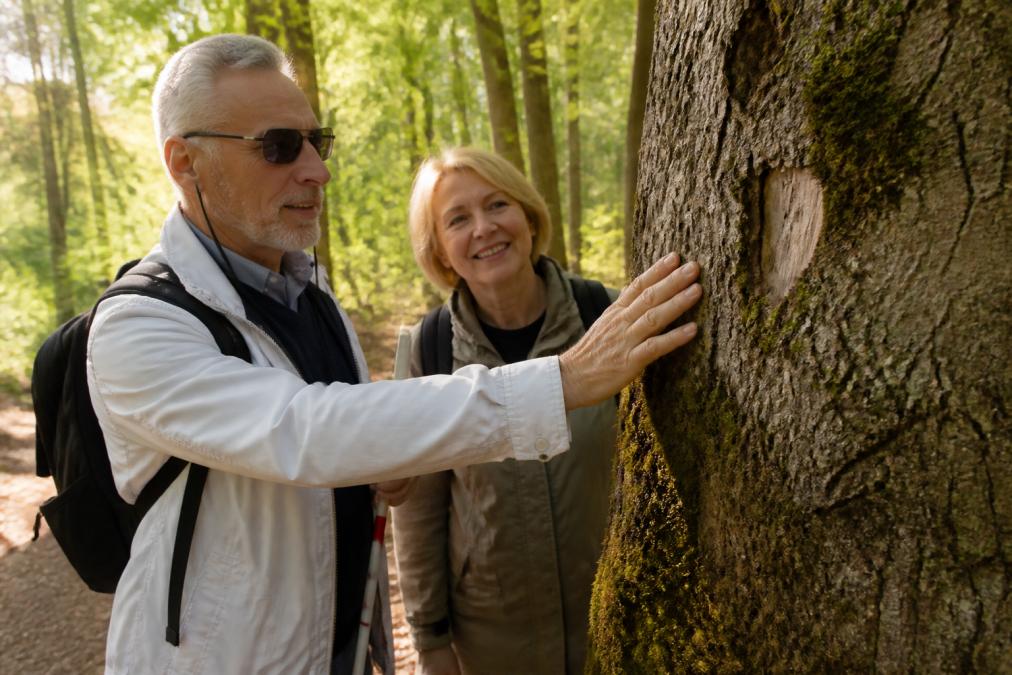
Tactile experiences in nature make hikes a truly memorable experience for people with visual impairments. Instead of just walking, the trail itself becomes an experience. Bark, moss, gravel, and water can be explored with the hands and feet.
Barefoot Trails and Sensory Trails in the Region
Barefoot trails and sensory paths are particularly well-suited. They wind through various types of terrain:
- Logs and bark mulch
- Gravel, Sand, and Clay
- Moss and meadows
- Waterways and Stepping Stones
Many of these trails are short and flat, so they are manageable even for less experienced hikers. It is recommended to have a companion, but it is often not absolutely necessary.
Here's a helpful tip: Ask the local municipality or the tourism office about trails with handrails or ropes to help you find your way. These trails are rarely marked, but they do exist.
Be sure to bring a towel and a change of socks for the sensory trails. After it rains, some sections can be slippery, and keeping your feet dry will make the outing much more enjoyable.
Accessible Vacation Rental Amenities: What to Look For
Whether a trip is relaxing or turns into an ordeal often depends on whether the vacation rental is accessible. Anyone who has ever booked a place to stay that was accessible only on paper knows this.
Look for these characteristics:
- Barrier-free access About the apartment and all the rooms
- Wide Doors (at least 80 cm clear width)
- Activity Areas next to the bed and bathroom
- High-contrast markings on light switches and door frames
- Tactile labels on devices and switches
- Good Lighting without glare
Before booking, be sure to ask specific questions about these points. A reputable accommodation provider will be happy to answer such questions in detail.
At Ferienwohnungen Gutenbrunn, we make it a priority to ensure that our guests know exactly what to expect in advance. Our four apartments are barrier-free and wheelchair-accessible, and we provide personalized assistance as your hosts.
| Characteristic | What to Look For | Why It's Important |
|---|---|---|
| Access | Stepless, wide doors | Independent Mobility |
| Lighting | Bright, glare-free | Spatial Orientation |
| Labeling | Tactile, high-contrast | Operate the devices yourself |
| Paths | Short and to the point | Less risk of tripping |
| Contact Person | Available in person | Quick On-Site Assistance |
Sports and Exercise Without Visual Orientation
Exercising without visual cues works better than many people think. The key is choosing the right activity and having the right support. Many sports can be practiced with just a few minor adjustments.
The following are particularly suitable:
- Swimming in calm waters or indoor pools with rope barriers
- Riding in Tandem with a sighted person
- Yoga and Gymnastics with audio instructions
- Blind Soccer in special groups
- Nordic Walking on familiar, flat routes
The common thread: clear instructions, a familiar setting, and a leisurely pace. The region also offers guided hikes with a guide provided.
A call to the local sports club or to the Austrian Association for the Blind and Visually Impaired helps you find suitable groups nearby.
Tips for Accessible Travel: Planning and Preparation
Tips for Accessible Travel save time and stress. If you plan well in advance, you’ll encounter far fewer surprises along the way. This is especially true for travelers with visual impairments.
Proven Steps:
- Call the lodging in advance and ask specific questions
- Plan Your Trip: Arrange in advance whether you'll be picked up at the train station, by taxi, or elsewhere
- Bring your assistive devices: White cane, Braille display, spare batteries
- Write down emergency contacts and keep it within reach
- Keep Your Daily Routine Flexible, so that there are still enough breaks
A common mistake is planning too tightly. It's better to have fewer activities and more downtime. This is especially true for families with children.
Don't rely solely on online descriptions. A quick phone call often reveals details that aren't mentioned in any brochure, such as missing handrails or unclear pathways.
Discover Accessible Recreational Activities in the Waldviertel Region
Accessible recreational activities in the Waldviertel region are more diverse than many people realize. The Waldviertel is peaceful, green, and offers exactly the kind of natural environment that can be experienced with all the senses. This is a particular advantage for people with visual impairments.
Why it's worth the trip:
- Few crowds, resulting in smoother rides
- Clear, flat hiking trails in many parts of the region
- Nature You Can Touch: Moss, bark, water, rocks
- Short distances between accommodations and tourist attractions
At Ferienwohnungen Gutenbrunn, our four apartments are located in a quiet area and serve as a great starting point for excursions. Lake Edlesberg and numerous hiking trails are just a short distance away. If you're traveling with a dog, will find great walking trails right outside the door.
Additional regional offers are listed in the Lower Austrian Tourism Association on.
Families, people who use wheelchairs, and dog owners looking for a quiet, accessible base for outings in nature.
Conclusion: Enjoying Leisure Time Without Barriers
Barrier-free leisure activities aren’t a matter of luck, but of good preparation. If you know what to look for, you can find suitable options even with a visual impairment: tactile museums, sensory trails, accessible accommodations, and guided sports activities.
That’s exactly where we come in. At Ferienwohnungen Gutenbrunn, we offer barrier-free and wheelchair-accessible apartments with personalized service from Anna and Herbert. You can bring your dog on vacation, and our peaceful location in the Waldviertel makes it easy to explore nature. Instead of calling a hotline, you’ll speak directly with one of our staff members.
Book directly with us and start your getaway without any time pressure in one of Austria's most beautiful natural landscapes.
Frequently Asked Questions
What criteria make a recreational activity attractive to people with visual impairments?
Key elements include tactile features for exploration, auditory cues, and clearly marked paths. An attraction is appealing when it engages multiple senses: tactile trails, audio stations, or models that can be felt. Clearly communicated accessibility information, trained staff, and the opportunity to get information in advance also play a major role. Ultimately, what matters is that visitors feel safe and welcome.
How can I find accessible accommodations that are tailored to the needs of visually impaired guests?
Look for detailed descriptions of the accessible features in the vacation rental, such as high-contrast markings, tactile labels, and light switches that are easy to feel. Before booking, ask specifically which features are available. Personal assistance on-site is helpful because hosts are familiar with individual needs and can provide information that goes beyond a simple online description.
What role do tactile wayfinding systems play in recreational activities?
Tactile wayfinding systems, such as floor indicators, handrails with Braille, or tactile signs, provide orientation and enhance safety. They enable people with visual impairments to move more independently in unfamiliar surroundings. They are particularly valuable for recreational activities because they facilitate access to paths, buildings, and attractions, thereby promoting participation in activities.
How can you check accessibility in advance when planning trips?
Call the providers directly and ask about specific details rather than just the term “accessible.” Ask for a detailed description of paths, entrances, and wayfinding aids. Check to see if there are tactile experiences in nature or special guided tours. These tips for accessible travel will help you avoid surprises once you arrive and ensure a relaxing trip.

Comments are closed, but trackbacks and pingbacks are open.