


Table of Contents
- Why the Waldviertel is a Great Place to Fish Off the Beaten Path
- Fish Species and Stocking: Carp, Trout, Pike, and Zander in the Waldviertel
- Waldviertel Fishing Map: Fishing License, Fishing Areas, and Legal Regulations
- Best Fishing Spots in the Waldviertel: Reservoirs, Ponds, and Hidden Shores
- Fishing Spots for Families: A Beginner's Guide for Kids and Quiet Shores
- Fishing Gear and Equipment: What You Really Need for Each Type of Body of Water
- Fishing Vacations in Lower Austria: Accommodations, Travel, and Route Planning
- Fish-Catching Festivals, Culinary Delights, and Waldviertel Carp: Experience Tradition
- Sustainability and Ethical Hunting: Protecting Fish Populations and Aquatic Ecology
- Conclusion: Experience nature with calm, respect, and the right preparation
- Frequently Asked Questions
Last updated: September 29, 2026
Why the Waldviertel is a Great Place to Fish Off the Beaten Path
Fishing in the Waldviertel means: quiet ponds shrouded in morning mist, no lines of people on the shore, and no crowds at the dock. When you cast a line here, all you usually hear is the wind, the water, and birdsong. That’s exactly what makes the region so appealing to families, those seeking relaxation, and active vacationers.
This guide from Ferienwohnungen Gutenbrunn summarizes which bodies of water are worth visiting, which fishing license you’ll need, and what equipment is truly useful depending on the fishing area. The region isn’t a mass-tourism destination, and that’s its biggest advantage.
Anyone planning to go fishing in the Waldviertel should keep two things in mind: Fishing in Lower Austria is clearly regulated, and the most beautiful spots are almost never where most people go. Taken together, these two factors explain why the trip is worth it.
In the Waldviertel, tranquility is no accident, but rather a result of the landscape’s structure: many small, scattered bodies of water instead of a single overcrowded lake.
Fish Species and Stocking: Carp, Trout, Pike, and Zander in the Waldviertel
The Waldviertel carp is the region’s flagship fish, but there’s more to choose from. Carp and other non-predatory fish dominate the ponds, while flowing waters and deeper reservoirs are home to trout, pike, and walleye.
Roughly speaking, it can be categorized as follows:
- Carp and non-predatory fish: conventional pond farming, often in traditionally managed facilities
- Trout: cool, oxygen-rich streams and tributaries
- Pike: weedy shorelines of larger ponds and reservoirs
- Zander: deeper, murkier areas with a solid bottom
What many guides don't mention: Fish stocks are actively managed in these fishing areas. If you do your research beforehand, you can fish more effectively while also helping to preserve fish populations.
The Waldviertel carp embodies a centuries-old tradition of pond farming that continues to this day to combine regional economic development with landscape conservation (Office of the Lower Austrian Provincial Government, 2026).
Waldviertel Fishing Map: Fishing License, Fishing Areas, and Legal Regulations
You can obtain the Waldviertel fishing license from the respective fishing area owner or leaseholder; it is not issued by a central office. In Lower Austria, fishing is regulated by the State Fishing Law, and each fishing area is managed independently.
In practice, this means there is no single day pass valid for the entire region. You always purchase a pass for a specific hunting area, often directly from the leaseholder, the tourism association, or a local specialty store.
Lower Austria State Fisheries Act and Fisheries Information
Important for planning:
- Carry a valid certificate of completion of the fishing exam with you if the fishing area requires it
- Check in advance whether shore fishing, boat fishing, or both are permitted
- Please observe closed seasons and minimum size limits, which may vary by fishing area
Where and how to get a fishing license for your preferred fishing area
The quickest way is to contact them directly: Call the owner of the fishing area or ask the local municipality who holds the fishing rights. Many vendors offer day and weekly permits.
A common mistake: waiting until you’re at the water to get a map. In sparsely populated areas, distribution points are rare, and without a valid license, you risk an administrative fine. Make sure to take care of this before you arrive.
Anyone who fishes without a valid fishing permit risks being charged under the Lower Austrian Fisheries Act. The fine costs more than any day pass and can ruin your entire vacation.
Best Fishing Spots in the Waldviertel: Reservoirs, Ponds, and Hidden Shores
The best fishing spots in the Waldviertel are rarely located along the well-known main roads. If you set out early, you’ll often have the entire shore to yourself at ponds and reservoirs. The key is to choose a body of water that matches the type of fish you’re after and your own level of experience—not the largest one, but the right one.
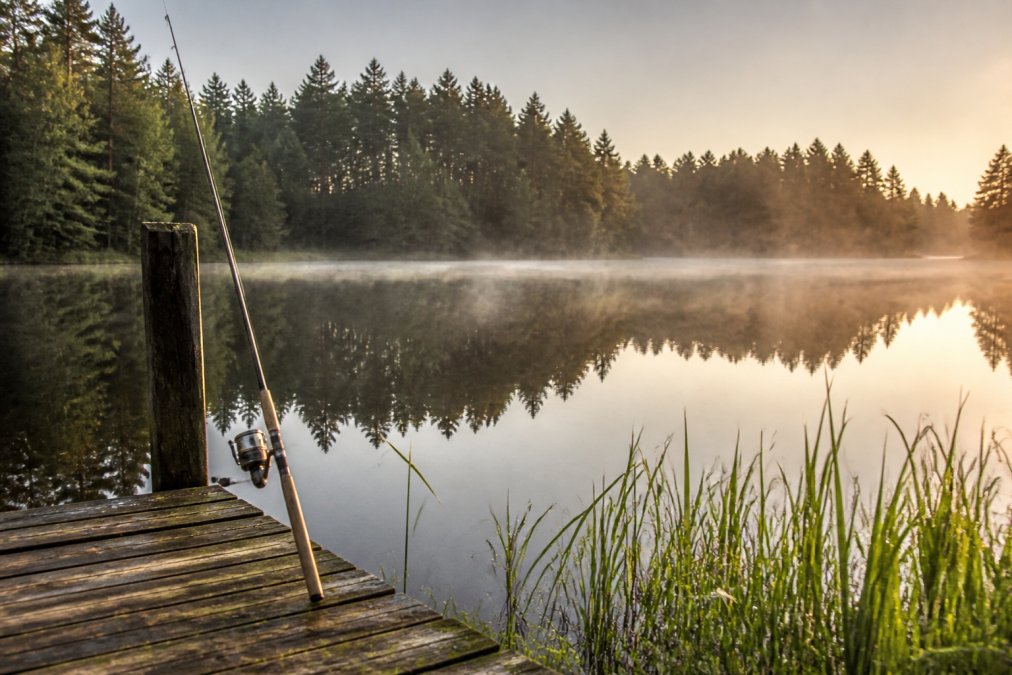
Three types of water bodies cover almost all preferences, but differ significantly in terms of technique, accessibility, and likelihood of success:
- Reservoirs and larger bodies of standing water: Wide bodies of water with shore trails, good chances of catching pike and zander. The Ottenstein Reservoir and the Thurnberg Reservoir are typical examples of this category—deep, murky in places, with a solid bottom in the deeper areas. Advantage: accessible year-round, often with boating options. Disadvantage: crowded on summer weekends, and you can’t fish without a fishing permit.
- Traditional Pond Farms: Managed, often small-scale ponds that have been in operation for generations, with dense populations of carp and non-predatory fish. Here you’ll find the classic Waldviertel pond landscape that has defined the region for centuries. Advantage: reliable bites, great for beginners and families. Disadvantage: usually subject to fixed opening hours and day passes.
- Hidden spots along the banks of streams and tributaries: Small, cool-flowing streams such as the upper reaches of the Lainsitz or numerous forest streams. Ideal for trout, but technically challenging—tight casts, obstacles in the water, and shy fish. To be successful here, you’ll need lightweight gear and patience.
The difference between a good and a great fishing experience in the Waldviertel usually comes down to timing. In the early morning hours, the water is calm, the fish are active, and the trails are still empty. A second prime time is during the last two hours before dusk, especially at ponds stocked with carp.
If you’re looking off the beaten path, you should specifically ask about smaller ponds owned by local municipalities or managed by cooperatives—they’re less crowded than the well-known reservoirs, and the pond owners are often happy to provide information about the fish stock and the best spots.
A common mistake: If you look only for the largest bodies of water, you’ll miss the small ponds where true tranquility lies. An afternoon at a forest pond with twenty other anglers at a reservoir isn’t a nature experience—a morning by a quiet tributary, on the other hand, certainly is.
Fishing Spots for Families: A Beginner's Guide for Kids and Quiet Shores
Family-friendly fishing spots are characterized by three things: safe banks, short distances, and quick success. A pond with a good population of non-predatory fish is much better suited for children than a deep, fast-flowing reservoir.
For those just starting out with children, we recommend:
- Flat, paved banks without steep slopes
- Bodies of water with a high population of non-predatory fish that are easy to catch
- Areas with seating and shade
- Short fishing trips lasting one to two hours
What most parents underestimate is that children quickly lose interest if they don't catch anything. A body of water with a reliable fish population keeps them motivated, and a picnic on the shore can turn even a quiet day into an adventure.
For children, bring a simple handline without a reel. It’s easier to handle, more forgiving of mistakes, and makes it more likely they’ll experience their first sense of accomplishment.
Fishing Gear and Equipment: What You Really Need for Each Type of Body of Water
Fishing gear and accessories should be suited to the body of water, not to the widest selection in the catalog. If you’re fishing for carp in a pond, you’ll need different gear than if you’re fishing for trout in a stream. The following overview summarizes the basic gear for each type of fishing spot—as a checklist for your travel bag.
| Water Body Type | Tail | Main line | Bait | Typical target fish |
|---|---|---|---|---|
| Pond Management | Match rod or feeder rod | 0.20–0.25 mm | Corn, dough, boilies | Carp, non-predatory fish |
| Reservoir | Spinning or bottom-fishing rod | 0.25–0.30 mm | Spinnerbaits, soft plastic lures | Pike, Zander |
| Stream and tributary | light spinning rod | 0.18–0.22 mm | Spinner, Fly | Trout |
Checklist for Pond Management: A float or feeder rod with a sensitive tip, a float or feed basket, corn and dough as standard bait, a landing net with a rubberized mesh (to protect the fish’s mucous membranes), a chair or bench, and a bucket for feeding. If you’re fishing for carp, you should also pack boilies and a bite indicator.
Checklist for the Reservoir: A spinning rod with a casting weight of up to about 60 grams or a bottom-fishing rod, braided line with a fluorocarbon leader (pike bite through monofilament line), wobblers and soft plastic lures in natural colors, hook-removal pliers, and waders for the shoreline. A boat is only practical if the fishing area allows it—check with the area owner in advance.
Checklist for the stream and its tributary: A light spinning rod or fly rod, thin line, small spinners and flies, waders for wading in shallow water, and polarized sunglasses for spotting fish in clear water. Trout are shy—if you move along the shore, you’ll only see them once.
The rule of thumb: It’s better to have one good rod for a specific fishing spot than three mediocre ones for every spot. If you’re unsure, ask the owner of the fishing spot which method is commonly used there—this will save you from making bad purchases and feeling frustrated out on the water.
Having the right gear isn’t a matter of budget, but of suitability: A spot with a dense carp population can tolerate heavy-duty tackle, but a clear trout stream cannot. If you know in advance what type of water you’ll be fishing, you can pack your gear accordingly and fish more relaxed.
Fishing Vacations in Lower Austria: Accommodations, Travel, and Route Planning
A fishing vacation in Lower Austria stands or falls on the location of your lodging. If you stay far from the water, you’ll waste the best part of the morning on the road.
It makes sense to choose a base from which several bodies of water can be reached quickly. That way, the route remains flexible in case a fishing spot is already taken or the weather changes.
A simple structure can help with planning:
- Short trip: a body of water, a day pass, less than an hour's travel
- Weekend: two to three territories, a permanent shelter as a base
- Extended stay: A combination of fishing, hiking, and biking
The Gutenbrunn vacation apartments are situated in a quiet location in the Waldviertel region and serve as an ideal starting point for excursions to various bodies of water. The apartments are barrier-free and wheelchair-accessible, Vacations with your dog are possible, and the hosts, Anna and Herbert, personally take care of everything. If you book directly, you’ll save yourself the hassle of going through a platform.
Fish-Catching Festivals, Culinary Delights, and Waldviertel Carp: Experience Tradition
The fish-draining festival is one of the region's oldest traditions. When the ponds are drained in the fall, the village community and guests gather, and the freshly caught carp goes straight to the table.
From a culinary perspective, the Waldviertel carp is more than just a dish. It represents seasonal cuisine, locally sourced ingredients, and a pond-farming tradition that has shaped the landscape for centuries. Many restaurants offer the fish baked, smoked, or as part of a regional menu.
If you visit at the right time, you'll experience both: the festival and the cuisine. Here, the seasons dictate the calendar, not the other way around.
Information on Pond Farming and the Carp Tradition in Lower Austria
Sustainability and Ethical Hunting: Protecting Fish Populations and Aquatic Ecology
When it comes to fishing, sustainability isn't just a marketing buzzword—it's a prerequisite. Anyone who overfishes the stock destroys the very experience that brought them there in the first place.
In practical terms, fair hunting means:
- Observe closed seasons and minimum size limits
- Take only as many fish as you actually need
- Handle released fish gently
- Do not trample the shore or the vegetation
- Don't leave any trash or cigarette butts behind
Aquatic ecology works only when all elements work together: clean water, intact riparian zones, and a fish stock that is suited to the area. Those who follow the rules help ensure fish populations for the next generation.
A fishing area is only as good as the anglers who use it. Being considerate on the shore is a form of nature conservation in action and helps keep the waters attractive in the long run.
Conclusion: Experience nature with calm, respect, and the right preparation
The biggest challenge when fishing in the Waldviertel isn't catching fish, but planning. If you take care of your fishing license, fishing area, and gear in advance, you'll spend the day by the water instead of on the phone.
Gutenbrunn Vacation Rentals is the perfect base for this: four accessible apartments with a kitchen-diner and bedrooms, a quiet location near natural highlights such as Lake Edlesberg, dog-friendly stays, and personalized service from Anna and Herbert. This leaves plenty of time after fishing for hiking, biking, and truly unwinding. For those who want to explore the region’s diverse bodies of water, the Find the right fishing gear ...will benefit from careful preparation before the first ejection.
Book directly with Ferienwohnungen Gutenbrunn and start your getaway without any time pressure in one of Austria’s most peaceful natural landscapes.
Frequently Asked Questions
What kinds of fish can you catch in the Waldviertel?
In the Waldviertel region, anglers will find mainly carp, trout, pike, and walleye. Carp and other non-predatory fish dominate the ponds, while predatory fish such as pike and walleye are found in rivers and reservoirs. Fish populations vary depending on the season and type of body of water, so it’s worth checking the fishing regulations before you arrive.
Do I need a fishing license to fish in the Waldviertel?
Yes, to fish in the Waldviertel, you need a valid fishing license for the specific fishing district. You can obtain one from the district owners or local fishing clubs. The Waldviertel fishing license is usually tied to a specific body of water, so you should determine in advance which fishing district you’d like to fish in. Fishing is not permitted without a valid license.
Where can I find quiet fishing spots off the beaten path?
You’ll find quiet fishing spots off the beaten path at smaller ponds and side streams that aren’t listed in every travel guide. Ask your lodging provider for local tips, since locals often know spots that are rarely visited. Well-known bodies of water are also much quieter early in the morning or during the week. Be sure to fish only in designated areas and to respect nature.
Is fishing in the Waldviertel also suitable for families with children?
Yes, fishing in the Waldviertel is great for families. Shallow shorelines along ponds and quiet fishing spots make it safe for children to get started. A short rod, a simple rig, and patience are more important than expensive gear. Plan breaks and combine fishing with nature exploration and relaxation to keep the outing exciting for children. You should set a good example of good sportsmanship right from the start.


Comments are closed, but trackbacks and pingbacks are open.