



Table of Contents
- Nature Destinations for Families: Why Choosing the Right One Matters
- Family-Friendly Destinations in the Waldviertel Region
- Vacations in Lower Austria with Kids: Activities and Adventures
- Accessible Family Vacations in Nature
- Museums and Exhibitions for All Ages
- Climbing, Bouldering, and Outdoor Adventures
- Budget-Friendly Indoor Activities for Rainy Days
- Psychological Tips for Dealing with Cabin Fever and Boredom
- The best place to stay for your family vacation
- Frequently Asked Questions
Last updated: September 27, 2026
Nature Destinations for Families: Why Choosing the Right One Matters
The best nature destinations for families in Austria offer much more than just beautiful views. They combine safety, accessibility, and genuine adventures for people of all ages. Parents know that a successful family vacation in nature depends on the region actually delivering what it promises—from well-maintained hiking trails to kid-friendly attractions in case of bad weather.
The Waldviertel and the surrounding natural regions of Lower Austria are particularly appealing to families because they combine tranquility with outdoor activities. There are no crowded tourist areas here—just unspoiled nature where children can explore freely. At the same time, museums, water parks, and climbing gyms are all within easy reach—perfect for days when the weather isn’t cooperating.
At Apartments Gutenbrunn In our experience, families who stay here appreciate exactly this combination: nature where they can breathe deeply, personalized on-site service, and a central location for excursions in the region. The right natural settings make all the difference between a stressful vacation and a true break.
The best natural setting for your family isn't necessarily the most spectacular one, but rather the one that suits your children—their age, energy level, and interests.
Family-Friendly Destinations in the Waldviertel Region
The Waldviertel is one of the most underrated family vacation destinations in Austria. The region offers places to visit for families in the Waldviertel region, ranging from gentle hiking trails to exciting exploration tours. The Lake Edlesberg It's a classic destination: the water is warm, the beach slopes gently into the water, and there are picnic areas right on the shore. Ideal for children ages five and up.
The Thaya Floodplains in the north of the Waldviertel are perfect for older children and teens who enjoy immersing themselves in nature. Here, families can spot beavers, go birdwatching, and learn how an ecosystem works along nature trails. The trails are well-marked and not too challenging—a family hike typically takes two to three hours.
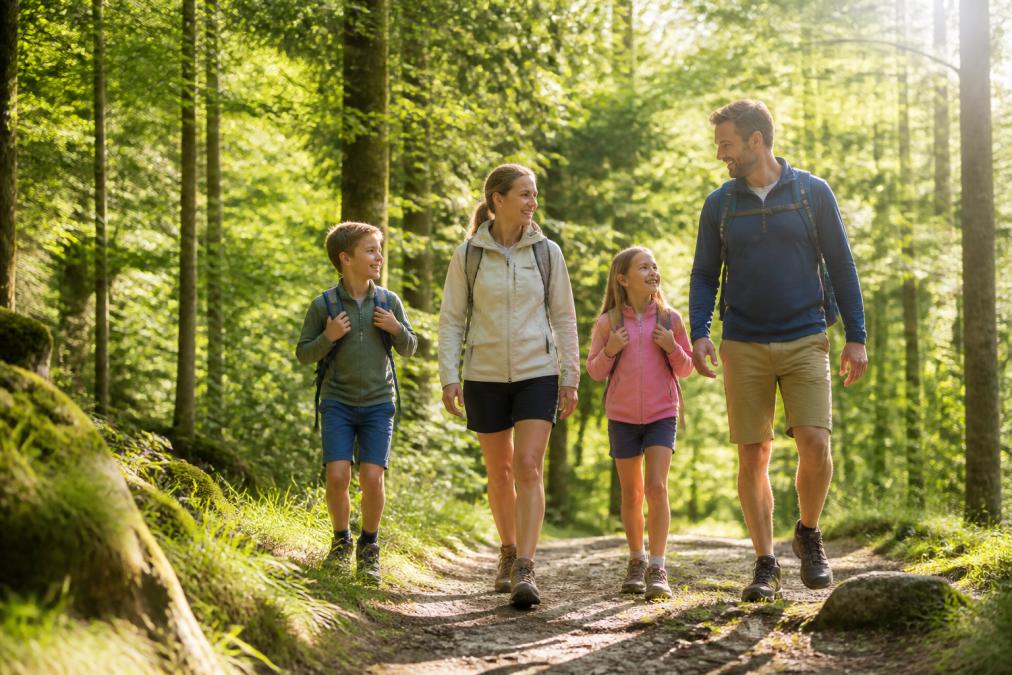
The Thayatal National Park is exciting for older children ages ten and up. The gorge hikes are dramatic—steep rock faces, narrow trails—and offer a real sense of adventure without being truly dangerous. For younger children, the flatter trails along the banks of the Thaya River are more suitable.
Here’s an insider tip: The Weitra ruins aren’t just interesting for history buffs. Kids love climbing through the old walls and making up stories about knights. The hike up takes about 20 minutes and is manageable even for four-year-old hikers.
Plan your outings in the Waldviertel for the morning. Most attractions are less crowded then, and the kids will still have enough energy to really explore instead of just wanting to go back to the car.
Vacations in Lower Austria with Kids: Activities and Adventures
A vacation in Lower Austria with children offers plenty of flexibility: There are activities for every day and every kind of weather. The Region It offers not only opportunities to experience nature, but also the amenities parents need—museums, swimming pools, and restaurants with children's menus.
For active families, the bike routes around the Waldviertel are perfect. The Thaya Bike Route is flat, scenic, and winds through small towns where you can take a break along the way. With children, a day’s ride takes about four to five hours, including breaks. Many families go on multi-day tours and stay overnight in different places—vacation rentals Gutenbrunn This is an ideal starting point for such tours.
Water sports enthusiasts will find several options when vacationing in Lower Austria with children. In addition to Lake Edlesberg, there are smaller lakes and swimming ponds that are less crowded. The water is cooler than in thermal baths, but perfectly suitable for children ages five and up.
For rainy days: The Waldviertel Local History Museum in Schrems is surprisingly engaging for children. It shows how people used to live here—not as a dry exhibition, but with real objects and rooms you can explore firsthand. About two hours is a good amount of time for families with younger children.
Accessible Family Vacations in Nature
An accessible Family Vacation in Nature It's possible—but it requires planning. Not every forest trail is wheelchair accessible, but many attractions and accommodations have improved their accessibility.
The vacation rentals in Gutenbrunn are fully accessible. This means: ground-level entrances, wide doors, wheelchair-accessible bathrooms, and no hidden steps. For people with limited mobility, this isn’t a given—many vacation rentals promise accessibility but then present surprises like stairs right at the front door or doors that are too narrow.
For wheelchair users: Lake Edlesberg has barrier-free access to the water. Parking is nearby, and the paths to the beach are paved. The Schrems Natural Swimming Area also has ramps and wheelchair-accessible restrooms. The Botanical Garden in Schrems is fully accessible and ideal for a half-day visit.
Hiking during an accessible family vacation in nature is possible, but requires realistic expectations. Not all forest trails are wheelchair-accessible. However, the Thaya Bike Route is paved and flat—perfect for hand bikes or electric wheelchairs. Many families with mobility challenges combine biking with car rides to scenic overlooks.
The personalized service provided by Anna & Herbert at Ferienwohnungen Gutenbrunn is a major advantage. They know the region well and can offer specific advice on which paths are actually wheelchair-accessible—not just in theory, but based on practical experience.
Many websites promise accessibility without actually providing it. Ask directly: Are there steps at the entrance? How wide are the doors? What amenities does the bathroom have? Personal answers are more reliable than checkboxes on a website.
Museums and Exhibitions for All Ages
Museums and exhibitions are the perfect plan for bad weather—and they actually work. Good family-friendly museums aren't just places to look at things; they're places to touch and explore.
The Waldviertler Kunsthofmuseum in Schrems is surprisingly kid-friendly. It features contemporary art, but also has areas where children can get creative themselves. A visit of about two to three hours is a good length of time. Children ages six and up will really enjoy themselves here, while younger children will need more supervision.
The Toy Museum in Schrems is the classic rainy-day activity. Old toys, dolls, model trains—it’s very exciting for children up to about ten years old. Parents can often relax here and simply watch as their children explore the exhibits.
The Großmugl Open-Air Museum showcases rural architecture and crafts. In the summer, it’s an outdoor adventure; when the weather is bad, there are covered areas. For families with children Interesting for children ages five and up, because it's not just an exhibition—it's also an exploration.
For older children and teens: The Eggenburg Museum displays prehistoric artifacts from the region. It’s small, but fascinating for children interested in history. An hour is usually enough.
| Museum | Best Age Group | Duration | Distinctive Feature |
|---|---|---|---|
| Waldviertel Art Farm Museum | 6+ years | 2–3 hours. | Interactive Art Spaces |
| Schrems Toy Museum | 3–10 years | 1–2 hours. | Vintage Toys You Can Touch |
| Großmugl Open-Air Museum | 5+ years | 2–3 hours. | Outdoors + Undercover |
| Eggenburg Museum | 10+ years | 1 hour. | Prehistoric Artifacts |
Climbing, Bouldering, and Outdoor Adventures
Climbing and bouldering are perfect for families because they combine courage, strength, and problem-solving. Children who sometimes have too much energy at home can find a great outlet here. The key is to choose the right activity for their age and experience level.
For toddlers (ages 3–5): Climbing at this age usually means outdoor jungle gyms or very low climbing walls in special children's areas. The climbing gym in Schrems has a Beginner area with walls up to about two meters high. Children this age need to be in close proximity to a parent—not for safety reasons (the walls are low), but for psychological reasons. They need the reassurance that an adult is right there. One hour is the maximum duration; after that, their concentration begins to wane.
For elementary school children (ages 6–9): This is where real climbing begins. Children can learn basic belaying techniques and climb higher walls (up to about four meters). The climbing gym in Schrems offers courses specifically for this age group—two hours a week, over several weeks. This is better than one-off visits because children see progress and build confidence. What to bring: Comfortable clothing, no jeans (too stiff), non-slip shoes or climbing shoes (can be rented on-site). Parents should expect that children may feel scared during the first few sessions—this is normal and no reason to stop.
For older children and teenagers (ages 10 and up): Here, you can do real bouldering—climbing without a rope on lower walls (up to about 4.5 meters) with mats below. It’s more technical and requires problem-solving: Which hold is next? How do I shift my weight? Teens often find this more exciting than rope climbing because it’s faster and involves less waiting. Outdoor bouldering is possible in the Waldviertel, but it requires experience. The rock formations around the Thaya River are interesting for experienced boulderers; for beginners, an indoor gym is safer and less frustrating.
High-Rope Course and Adventure Course: The high ropes course program in the region offers age-appropriate courses. Children ages eight and up can gain their first experience with safety equipment and heights here—under professional guidance, with a real sense of adventure. A typical course lasts two to three hours and includes instruction on safety equipment, several high-altitude stations (ranging from easy to difficult), and rappelling. Children need to trust the equipment—and that trust comes from good instruction and seeing other children succeed.
Practical Preparation: Many parents make the mistake of taking their children to a climbing gym without any preparation. A better approach: practice at home—on playground climbing structures, climbing trees (safely), and climbing stairs. This builds confidence in their own abilities. Also important: Children should know that fear is normal and that it’s okay to turn back. A child who is forced to climb won’t enjoy it.
Equipment: Beginners don't need their own gear—climbing gyms provide shoes and safety equipment. Later, when children start climbing regularly, it's worth getting their own gear. It's a sensible purchase—it's an investment—but children who love climbing will get plenty of use out of it.
Climbing isn’t for every child—and that’s perfectly normal. Some children love it right away, while others need time to get used to it or simply don’t find it exciting. Taking your first lessons at a climbing gym with professionals is safer and less frustrating than climbing on your own. And if it’s not the right fit, there are plenty of other adventures to explore.
Budget-Friendly Indoor Activities for Rainy Days
Rainy days are inevitable on vacation. The good news: There are plenty of budget-friendly options to keep kids entertained without parents having to spend a lot of money or rely on screens.
DIY Activities in the Vacation Rental (Free to Minimal Cost): That's the key to relaxing rainy days. The vacation rentals in Gutenbrunn feature a kitchen-dining area and plenty of space—ideal for activities that don't cost much.
- Crafts and Painting: Paper, pencils, and glue are inexpensive. Children can make collages from magazines, create window decorations, or paint with watercolors. For younger children (ages 3–6), this is often an exciting activity that keeps them busy for hours. Tip: Bring old magazines and flyers with you or collect them on site—they’re free and you can use them endlessly.
- Cooking and Baking: Baking cookies or making simple pizzas with kids is both an activity and a treat. Children as young as four can help out. Two to three hours fly by, and at the end, there’s something to eat.
- Reading Aloud and Storytelling: Don't underestimate this. Read a story aloud, then let the children continue the story on their own. For older children (6+), parents can also play audiobooks and listen together. It's quiet, costs nothing, and helps build concentration.
- Board games and card games: For families with children ages five and up. Classic games such as Kniffelblock, Kniffel, or simple card games keep children engaged and help them develop their concentration. A game typically lasts 30 to 60 minutes.
- Puzzle: Age-appropriate puzzles (starting at about 100 pieces for six-year-olds, up to 500+ for older children) are a focused activity. Advantage: Parents can relax while still spending time together.
- Dance Party and Exercise: When it rains, kids need to move around. Turn on some music, dance, play hide-and-seek around the house—it helps them burn off energy and is fun. For children under ten, this is often more effective than any commercial activity.
Commercial budget options (10–30 euros per family):
- Creative Workshops: Local art schools and community centers offer painting, clay, and hands-on workshops. Children get to be creative with their hands, focus on their work, and parents get a break. The advantage: professional instruction and new materials that aren't available at home.
- Escape Rooms: Exciting for families with children ages ten and up. The puzzles are solvable (if the organizers do their job well), and children feel like real detectives. Preparation: Children should know that it’s not about speed, but about working together. Parents who solve everything themselves take away the fun for the children.
- Swimming pools: The Schrems Natural Swimming Pool has areas for both younger and older children. On rainy days, the outdoor pools are less crowded—many families think it’s not worth the trip. In fact, a rainy day at the outdoor pool is often more relaxing than a sunny one. The water is warm enough, and the children play for hours.
- Libraries: Free. Many communities have small libraries with children's sections. It's nothing exciting, but on very rainy days, it's a quiet activity that offers a nice change of pace. Children can pick out books and read them at home.
- Hikes in light rain: Underestimated. With the right gear (rain jackets, waterproof shoes), a walk in the woods is enjoyable even in a light drizzle. Kids find puddles interesting, and the trails are less crowded. Short walks (30 to 60 minutes) are better than long hikes—kids quickly lose interest when they get wet and cold.
Strategies for Dealing with Cabin Fever and Screen Time:
The key is variety and structure. Don’t do the same thing every day. One day in nature, one day at a creative workshop, one day at the pool, one day doing DIY at home—variety keeps kids engaged. Also important: breaks aren’t laziness. Children need time to process what they’ve experienced. An afternoon at the vacation rental spent drawing, reading, or playing freely isn’t wasted time—it’s necessary. Parents who try to fill every moment end up creating more stress than joy.
Screen time is tempting, but children who stay active all day sleep better and are more well-adjusted. A combination of physical activity (hiking, swimming), creativity (crafts, baking), and quiet time (reading aloud, games) is the recipe for relaxing rainy days.
Pack thoughtfully before your vacation: sketchbooks, pencils, craft glue, a few new books (buy them used at a bargain price), and dice games. These don’t cost much, but they provide structure for rainy days. Plus: Kids who know there are activities for rainy days are less frustrated when the weather doesn’t cooperate.
Psychological Tips for Dealing with Cabin Fever and Boredom
Cabin fever is real. When children stay in one place for too long or spend too much time indoors, conflicts arise. This isn’t a failure on the parents’ part—it’s part of their development. Here are some practical strategies.
Structure helps. Children don’t need a big adventure every day. A set routine—activity in the morning, rest at noon, and light activities in the afternoon—provides a sense of security and reduces conflicts. It may sound paradoxical, but structure creates freedom.
Variety is important. Don’t visit the same museum or the same lake every day. One day in nature, one day at a museum, one day of adventure—this variety keeps kids engaged. The Gutenbrunn vacation rentals are centrally located enough to reach various destinations without long drives taking up the whole day.
Taking breaks isn't laziness. Children need time to process what they've experienced. An afternoon at the vacation rental spent drawing, reading, or playing freely isn't wasted time—it's necessary. Parents who try to fill every moment create more stress than joy.
Set small goals. Instead of „Let’s go on a big outing,“ try „Today we’ll go to the lake and see what birds we can spot.“ Specific, achievable goals lead to a sense of accomplishment.
Sharing decision-making reduces conflicts. When children are allowed to have a say (within limits), they become more engaged. „Which lake would you rather visit today—the one in Edlesberg or the swimming pond?“ fosters a sense of personal responsibility.
The best place to stay for your family vacation
The best nature destination for families in Austria is only as good as the accommodations from which you explore it. A central location, good amenities, and reliable service make all the difference between a stressful vacation and a relaxing one.
Gutenbrunn vacation rentals offer exactly that. Their location in the The Waldviertel is A central starting point for day trips to the best nature destinations for families in Austria—whether to Lake Edlesberg, the Thayatal National Park, or the museums in Schrems. All attractions are within a 30- to 45-minute drive.
The apartments feature a kitchen-dining area and several bedrooms. For families who want to do more than just stay overnight—they want to live there—that makes a big difference.
The personal guidance provided by Anna & Herbert is a huge advantage. They really know the region and can offer specific tips on which trails are best for kids and which museums are currently worth visiting. This isn’t just a hotline—it’s local people who are available if something goes wrong.
For families with dogs: The vacation rentals in Gutenbrunn allow pets, and the location is perfect for walking your dog. The forest trails around Gutenbrunn are ideal—quiet, safe, and surrounded by nature.
For people with limited mobility: Full accessibility is not a given. Here, it’s possible to plan effectively, without any surprises.
Book directly with Anna & Herbert. This ensures your reservation is secure, and you can ask specific questions before booking—not just an automated response, but real answers from people who understand your needs.
Frequently Asked Questions
Which regions in Austria are particularly family-friendly?
The Waldviertel and the surrounding natural regions in Lower Austria offer ideal conditions for families. With lakes, forests, castles, and child-friendly museums, you’ll find plenty of indoor activities and outdoor adventures for any weather. These regions are easily accessible, less crowded than Alpine areas, and offer peaceful destinations for all age groups.
Is a vacation in nature suitable for toddlers as well?
Yes, natural areas are ideal for young children. Gentle hiking trails, lakes for splashing around, and playgrounds offer age-appropriate activities. It’s important to choose family-friendly accommodations with good amenities and short travel times to activities. Rainy days can be spent at indoor playgrounds and museums.
What should you look for when choosing family-friendly accommodations?
Look for accessibility, enough space for your family, and a central location for day trips. Personal attention from your hosts is invaluable—they know the best local spots and are available to answer any questions. Check whether the accommodation is pet-friendly if you’re traveling with a dog, and whether it has a kitchen-dining area and bedrooms.
What outdoor activities are suitable for families?
Hikes on child-friendly trails, bike rides, visits to castles and palaces, trips to climbing gyms, and swimming in lakes are among the most popular activities. Creative workshops, treasure hunts, and museum visits offer a change of pace.
Enjoy a relaxing vacation in Anna & Herbert’s accessible vacation apartments in the heart of the Waldviertel. With personalized service, an ideal location for excursions, and comfortable amenities for families, Ferienwohnungen Gutenbrunn is the perfect base for your family vacation in nature. Contact us directly to plan your getaway.


Comments are closed, but trackbacks and pingbacks are open.