


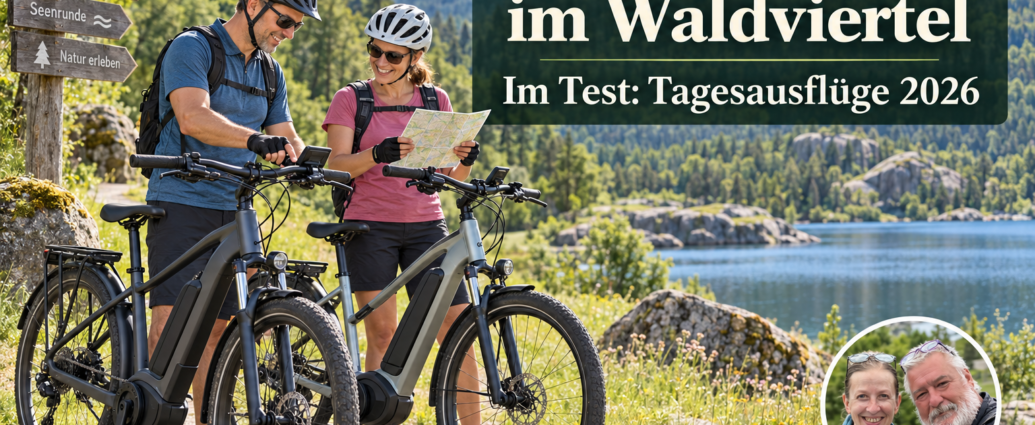
E-Bike Rentals in the Waldviertel: An Overview of Our Review Results
The Waldviertel region features a gently rolling landscape, ideal for e-bike tours.
However, the quality of the rental stations varies significantly.
We took a close look at the leading e-bike rental providers in the Waldviertel region for day trips.
An e-bike rental service in the Waldviertel is especially worthwhile for visitors who want to explore the region without their own transportation. Prices range from about 25 to 40 euros per day, depending on the provider, with the equipment and location having a significant impact on the price. One particularly positive aspect is that almost all of the stations tested are integrated into the official bike path network and provide specific tour suggestions.
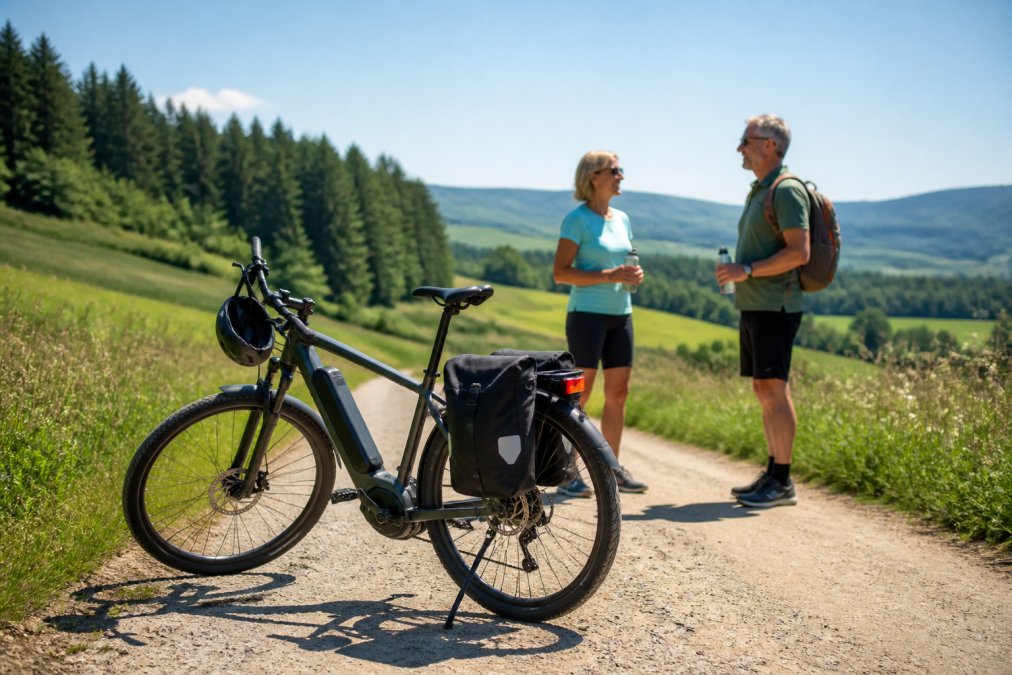
What really stands out in our test of e-bike rentals in the Waldviertel for day trips is the combination of technical equipment and the operators’ knowledge of the region. The best providers not only explain how to operate the motor but also recommend routes suited to your fitness level. For families and casual riders, a day-tour e-bike with comfortable geometry and a long range is the best choice.
Waldviertel Bike Rental Prices: How much does a day trip cost?
A price comparison of bike rentals in the Waldviertel reveals a wide range. Basic trekking e-bikes start at around 25 euros per day, while specialized providers of e-mountain bikes and high-end models charge up to 40 euros. The average price for a day trip is about 30 euros. Many rental locations offer discounts for rentals lasting several days.
When evaluating prices, we considered not only the rental rate itself but also the services included. Some providers charge extra for helmets, locks, or navigation systems, while others have this safety equipment already included in the price. The municipal rental stations in Zwettl and Waidhofen an der Thaya offer the best value for money, while specialty sports retailers that provide professional advice are at the higher end of the price range.
| Provider | Price per day | Included Features | Best suited for |
|---|---|---|---|
| E-Bike Rental in Zwettl | about 25 euros | Helmet, lock, touring bike | Budget-conscious day-trippers |
| Bike Rental in the Thaya Valley | about 30 euros | Helmet, safety equipment | Nature Lovers in the National Park |
| E-Bike Rental in Ottenstein | about 32 euros | Comfort Geometry, Route Tips | Families at the reservoirs |
| Sport 2000 Partner | about 40 euros | E-MTB, professional advice | Drivers with a passion for sports |
When booking, always ask about the battery condition and range of the specific model. Many rental companies list the theoretical range, which is significantly lower under real-world conditions involving hills and luggage. A fully charged battery should be sufficient for a day trip of 60 to 80 kilometers in hilly terrain.
The Best Rental Locations for Your E-Bike Test Ride in the Waldviertel
Choosing the right rental station is key to the success of your day trip. We’ve evaluated providers based on accessibility, bike quality, and connections to the bike path network, and we’re presenting the best options for various starting points.
E-Bike Rental in Zwettl: The Central Starting Point
The municipality of Zwettl operates a rental service that serves as the ideal starting point for tours into the heart of the Waldviertel. The station is centrally located and directly connected to the Kamp-Thaya-March bike path network. The modern e-bikes impress with their long range and ease of use, making this e-bike rental in the Waldviertel the top choice for day trips, according to our test, especially for casual riders.
Last-minute bookings are no problem here, and the value for money is among the best in the region. The focus is primarily on trekking bikes, which are perfectly adequate for most day trips on the well-maintained bike paths. If you’re looking for a specific mountain bike, you’re better off checking with specialized retailers.
E-Bike Rentals in Ottenstein: Around the Reservoirs
Located right on the shore of the Ottenstein Reservoir, this rental shop offers the perfect base for tours through the Waldviertel lake region. The e-bikes feature a comfortable design that ensures a relaxed riding experience even for less experienced riders. A particularly convenient feature: combining your rental with a boat rental allows for varied excursions where you can switch between cycling and water activities.
The location is breathtakingly beautiful, but you should expect large crowds during peak season. It’s especially important to make your reservation well in advance. Families appreciate the relaxed atmosphere and the short distances to the recreational activities around the lake.
Bike Rentals in the Thaya Valley & Gmünd: For Nature Lovers
In the northern part of the Waldviertel, two rental stations offer special benefits for nature lovers. The Thayatal Bike Rental is located right on the Thayatal Bike Trail and is the ideal starting point for tours in the national park. The high-quality e-trekking bikes are well-maintained and come with a helmet and safety gear included. Capacity is limited during peak season, so advance reservations are essential.
The bike rental shop in Gmünd, near the Czech border, stands out for one special feature: this is the starting point for cross-border tours along the Iron Curtain Trail. The low-maintenance rental bikes are designed for longer distances, and the rental process is straightforward. The selection of e-mountain bikes is limited, though; for tours on the well-maintained border trail, the selection is more than sufficient.
The Best Bicycle Trails in the Waldviertel for Leisurely Rides
The Waldviertel bike trails are among the most varied routes in Austria and combine cultural highlights with unspoiled nature. The well-developed network includes several interregional routes that are ideal for day trips on an e-bike. Most of the trails run on paved or finely graveled surfaces and are easy to navigate even for less experienced riders.
What’s missing from most guides, however, are specific daily route combinations that link rental stations, route profiles, and charging infrastructure. We’ve put together three tried-and-true combinations based on real-world conditions in the Waldviertel region and specifically tailored to the battery range of typical rental e-bikes (500–625 Wh).
Option 1: The Thaya Loop as a half-day stage with a rest stop in Raabs
The Thaya Loop Bike Trail runs for about 106 kilometers on flat, mostly car-free terrain along the Thaya River (niederoesterreich.at). For a day trip, we recommend the route from Waidhofen an der Thaya to Raabs an der Thaya (about 35 kilometers one way). This route is ideal for beginners, as it has only minimal inclines and the battery easily lasts in Eco mode, even when riding into a headwind.
The most important tip for the return trip: In Raabs an der Thaya, there’s an inn right on the main square with a publicly accessible e-bike charging station. Take advantage of your lunch break there to recharge your battery while you enjoy a snack. After about 60 to 90 minutes of charging, you’ll have enough power for the ride back to Waidhofen—even if you decide to make a spontaneous detour to Raabs Castle along the way.
Option 2: The Reservoir Loop with a stop in Krumau
The loop around the Ottenstein, Dobra, and Krumau reservoirs—about 45 kilometers long—is the region’s most popular day trip. This classic route starts in Ottenstein and initially follows the southern shore to the Dobra Reservoir. Here you’ll encounter the first climb, which is easy to tackle in Turbo mode—but expect battery consumption of up to 15 percent on this section.
The critical point: There are no public charging stations between Dobra and Krumau. Plan your battery level so that you have at least 40 percent battery remaining when you reach Krumau, 18 kilometers away. In Krumau itself, the Gasthaus zur Post offers a charging station for e-bike batteries—ideal for a leisurely lunch break with a view of the reservoir.
The return trip along the northern shore of Lake Ottenstein is more technically challenging, as it features several shorter but steeper inclines. In Eco mode, you can complete this route even with a half-full battery, provided you reduce the assistance level on the flat sections between the inclines.
Combination 3: Cross-border tour from Gmünd with return trip by train
For ambitious day-trippers, a cross-border tour starting in Gmünd along the Iron Curtain Trail is a great option. On the Austrian side, the route leads to Litschau (approx. 30 kilometers) and on to the Czech border town of Nová Bystřice. The advantage of this route is that you don’t have to take the same route back.
Logistics Tip: On weekends, a train that allows bicycles runs from the Czech border station in Nová Bystřice back to Gmünd. The trip takes about 40 minutes and costs around 5 euros per person, including the bicycle (oebb.at). Check with the rental station in Gmünd in advance for the current schedules—the staff there are familiar with the route and can provide you with reliable information.
This combination of cycling and taking the train back is still relatively unknown in the Waldviertel region and allows for a one-day loop tour without a long return trip along the same route. The battery must have a range of at least 70 kilometers for this tour, as there are no charging stations between Litschau and Nová Bystřice.
When you visit the rental station, don't just ask about the theoretical range—ask about the actual range on the specific route you're planning. Experienced operators are familiar with the inclines and can tell you exactly whether your model is sufficient for your planned route or if you should choose a battery with a higher capacity.
Planning a Day Trip by E-Bike: Step by Step
Planning a day trip on an e-bike involves more than just reserving a bike. Proper preparation determines whether the day will be relaxing or turn into a stressful experience. We recommend including the following steps in your planning:
- Rental Station Book early: Popular models book up quickly, especially on weekends and during peak season. Making a reservation online or by phone will ensure you get what you want.
- Choose a route based on your fitness level: Take into account the length of the route and the expected elevation gain. For beginners, flat routes such as the Thayarunde Bike Trail are recommended.
- Realistically Assessing Battery Capacity: Plan your range conservatively and keep in mind that assistance on inclines drains the battery faster.
- Plan for rest and charging stops: Many inns along the bike paths offer charging stations for e-bike batteries. A lunch break with a chance to recharge will significantly extend the distance you can cover.
- Check the weather forecast and dress appropriately: The weather in the Waldviertel can be unpredictable. Even in the summer, you should pack a waterproof jacket in your backpack.
The most common miscalculation when planning e-bike tours involves battery range. In Eco mode, most models can travel 60 to 80 kilometers; in Turbo mode, especially on routes with many hills, the range can drop to less than 40 kilometers. If you’re planning a long tour, select Eco mode and turn off the assist on flat stretches.
Tech Review: These Features Make All the Difference
Not every e-bike is suitable for every ride, and the technical specifications vary considerably from one rental station to another. At e-bike rental shops in the Waldviertel region for day trips, the motors, batteries, and control systems are thoroughly inspected. The Bosch Performance CX motor dominates the fleets of most professional providers and impresses with its powerful assistance even on steeper terrain (bosch-ebike.com).
Battery capacity is the most important factor in determining the range of your ride. Models with 500 to 625 watt-hours are standard today and allow for extended day trips. Make sure the battery is removable so you can charge it at charging stations in inns without having to park the entire bike.
Spoiled for Choice: Which Type of E-Bike Is Best Suited for the Topography of the Waldviertel?
Most bike-sharing stations offer a variety of bike types, but without clear guidance, it can be hard to decide. The topography of the Waldviertel is characterized by gentle hills, long, gradual climbs, and well-maintained, mostly paved bike paths. Only a few routes run along rough gravel or forest trails. These conditions have clear implications for choosing the right type of e-bike.
Trekking e-bike—the safe choice for 80 percent of all day trips:
For most day trips on the Kamp-Thaya-March Bike Trail, the Thaya Loop, or the connecting trails between the reservoirs, a trekking e-bike is the best choice. It offers an upright riding position that is easy on the back during longer stages and features a suspension fork that absorbs vibrations on sections with fine gravel. The wide, treaded tires provide sufficient grip on unpaved trails without creating unnecessary rolling resistance on asphalt.
E-mountain bikes—only practical for true off-road riding:
A full-suspension e-mountain bike is only the right choice in the Waldviertel if you specifically want to ride singletrack or challenging forest trails. On paved main roads, the heavier weight—ranging from 24 to 27 kilograms—becomes a drawback: the battery drains faster, and the ride feels sluggish. A hardtail e-MTB (front suspension only) is a good compromise if you’re planning a mix of bike paths and easy off-road sections.
City e-bike – for short distances and casual riders:
City e-bikes, with their comfortable yet sporty geometry, are suitable for short trips of up to about 30 kilometers and for riders who primarily ride on flat terrain. However, for the hilly sections between Zwettl and Ottenstein, they lack the gear ratio needed for brisk riding uphill. If you’re unsure whether a day trip on a city bike is feasible, ask the rental company about the specific gear ratio—many city models have a 7- or 8-speed hub gear system that reaches its limits on longer climbs.
The key difference: engine position and torque
In addition to the type of bike, the motor’s position plays a bigger role than many people realize. Mid-drive motors (Bosch, Yamaha, Shimano) are located between the pedals and offer a natural riding experience because the weight is centered and low. They are the top choice for tours with hills because they transfer torque directly to the crankset. Rear motors are less expensive and lighter, but they deliver their power less efficiently on climbs.
When picking up your bike, pay attention to the motor’s torque: Models with 75 Newton-meters or more handle the Waldviertel’s hills with ease, while motors with 50 to 60 Newton-meters noticeably lose power on longer inclines. Most rental stations in the Waldviertel use motors with 75 to 85 Newton-meters—if in doubt, ask for the specific model.
The Reality of Range: What the Manufacturer's Specifications Don't Tell You
The manufacturer's range specifications are based on ideal conditions: flat terrain, light winds, a low assistance level, and a lightweight rider. In the Waldviertel with With its hills and often changeable winds, the reality is quite different. A 625-Wh battery, which according to the manufacturer’s specifications has a range of 100 kilometers, realistically covers 60 to 70 kilometers on a day trip with 800 meters of elevation gain in Touring mode. In Turbo mode, the range drops to 40 to 50 kilometers.
Our recommendation for planning your tour:
- Plan your route with a 20 percent battery reserve to account for unexpected detours or headwinds
- Use Eco Mode on flat stretches and shift up only when going uphill
- Ask the rental company about the actual range that other guests have achieved on the planned route
- For long trips, choose a model with a removable battery and plan to stop at an inn to recharge
A common mistake is assuming that a fully charged battery will last for an entire day’s ride simply because the manufacturer’s specifications suggest so. The topography of the Waldviertel, with its long, gradual climbs between the river valleys, places significantly more strain on the battery than flat terrain does. If you’re planning a ride longer than 70 kilometers, choose a model with 625 Wh or more—or plan to stop to recharge.
Choosing the right type of bike depends on your planned route:
- Trekking e-bike: The best choice for most bike trails in the Waldviertel region, offering comfort and all-around performance
- City Bike: Suitable for short, flat hikes and trips to a rest stop, but less so for extended excursions
- E-mountain bike: Recommended for challenging off-road trails, but unnecessarily heavy on paved roads
Safety Checklist for Your E-Bike Day Trip
Safety on your e-bike day trip doesn’t begin once you’re on the bike—it starts the moment you pick up the bike. In Austria, helmets are mandatory for children up to age 12; for adults, wearing a helmet is strongly recommended, even though it is not required by law. Most rental stations provide helmets free of charge.
Before you leave the station, you should check the following:
- The front and rear brakes are working perfectly
- Tire pressure is adequate; there is no visible damage to the tires
- Front and rear lights are working; reflectors are present
- The battery is fully charged and properly inserted
- The seat height is adjusted to your height
- The gearshift shifts smoothly through all gears
- The doorbell and, if applicable, the mirror have been installed
Well-equipped safety gear isn't a luxury—it's the foundation for a worry-free day. Take five minutes to check your bike when you pick it up, because a broken brake lever or a dead battery can cut a promising ride short.
Conclusion: Is renting an e-bike worth it for your trip?
The region offers excellent infrastructure for cyclists, and the rental stations are generally well-located. For visitors who arrive without their own bicycles, renting one is the easiest way to explore the diverse landscape between Zwettl, Ottenstein, and the Thaya Valley. The investment of about 30 euros per day pays for itself through the experience of a guided or self-planned tour through one of Austria’s most beautiful natural landscapes.
Choosing the right lodging is also key to a successful cycling vacation in the Waldviertel. A central location with easy access to bike trails and the chance to relax upon returning from a strenuous ride makes all the difference. The starting point for bike tours in the surrounding area is from Gutenbrunn It's perfect, and after your outing, a relaxing break in nature awaits you.
Choosing the right e-bike rental service and suitable accommodations will determine the quality of your day trip in the Waldviertel. At Ferienwohnungen Gutenbrunn, you’ll find barrier-free and wheelchair-accessible accommodations with personalized service from Anna & Herbert, which are also suitable for dog owners and families. The quiet location near the Lake Edlesberg And our central location—perfect for exploring the region—makes us the ideal starting point for your bike tours. Book directly with us and set out on your next e-bike tour feeling relaxed and well-prepared.
Frequently Asked Questions
How much does it cost to rent an e-bike per day in the Waldviertel?
Prices for bike rentals in the Waldviertel range from about 25 to 40 euros per day, depending on the rental station. Municipal rental services, such as those in Zwettl or Waidhofen an der Thaya, are often cheaper than specialized rental companies offering e-mountain bikes. The daily rental rate usually includes a helmet and battery. It’s worth comparing prices, as many stations offer discounts for multi-day rentals or for guests visiting the region.
Which bike trails in the Waldviertel are suitable for a day trip on an e-bike?
The Thayarunde Bike Trail near Waidhofen is flat and paved, making it ideal for leisure cyclists. Around the Ottenstein reservoir Well-marked trails wind through the lake landscape. The Iron Curtain Trail near Gmünd offers cross-border tours. For mountain bikers, there are more challenging routes in the north. The Waldviertel bike trails are generally well-developed and equipped with e-bike charging stations at popular rest stops.
Do you have to reserve e-bikes in the Waldviertel in advance?
We strongly recommend making a reservation online or by phone, especially on weekends and during peak season. Many rental locations have only a limited number of e-bikes. Some providers allow you to book directly online. Smaller providers appreciate a quick phone call to ensure they can provide the right model.
Are there charging stations for e-bikes along the routes in the Waldviertel?
Yes, you’ll find more and more public charging stations along the main bike paths and in town centers. Many restaurants and rental shops also offer the option to charge your battery during a break. Most touring e-bikes have a range of 60 to 100 kilometers, which is more than enough for an average day trip. For longer distances, plan your route to include well-known charging stations.
Comments are closed, but trackbacks and pingbacks are open.