


Table of Contents
- Wheelchair-Accessible Nature Experiences in the Waldviertel: What Are the Options?
- Find and Use Accessible Hiking Trails by the Lake
- Wheelchair-Accessible Hiking Trails: Requirements and Features
- Explore Accessible Destinations in the Waldviertel
- Step-by-Step Planning: Preparations Before the Trip
- Checklist for an Accessible Nature Outing
- Accommodations and a base for your nature excursions
- Frequently Asked Questions About Wheelchair-Accessible Nature Experiences
- Frequently Asked Questions
Last updated: October 15, 2026
Wheelchair-Accessible Nature Experiences in the Waldviertel: What Are the Options?
Planning wheelchair-accessible nature experiences in the Waldviertel means finding the right balance between accessibility and truly enjoying nature. The region offers a surprising number of options for people with limited mobility, from flat lakeside paths to well-equipped cultural sites. At Ferienwohnungen Gutenbrunn, we understand that a true vacation in nature shouldn’t be ruined by steps or unpaved paths.
The good news: Wheelchair-accessible nature experiences in the Waldviertel are possible. However, they require preparation and realistic expectations. Not every hiking trail is accessible, but the ones that are offer authentic nature experiences without compromise. We’ll show you how to plan your outings, which destinations are truly barrier-free, and how to structure your stay so that relaxation and activity go hand in hand.
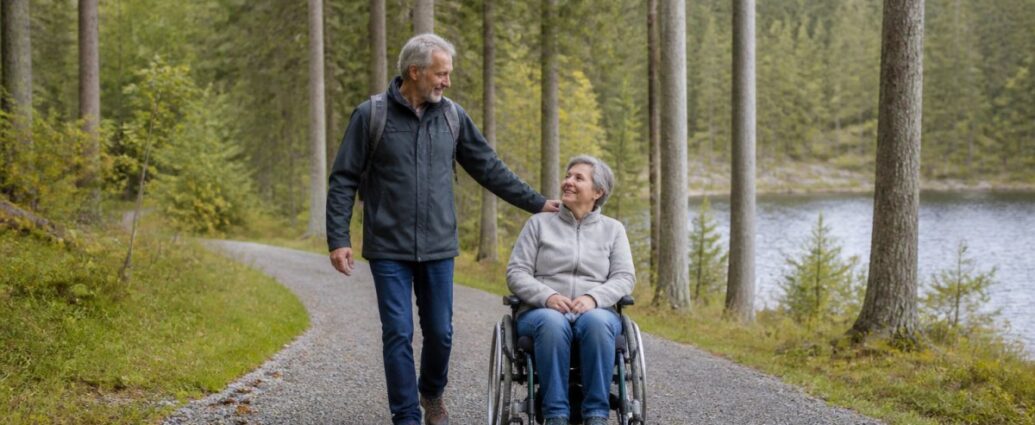
Lake Edlesberg is the best starting point for wheelchair-accessible nature experiences in the Waldviertel. The path to the lake is wide, flat, and well-maintained—perfect for your first outing after arriving.
Find and Use Accessible Hiking Trails by the Lake
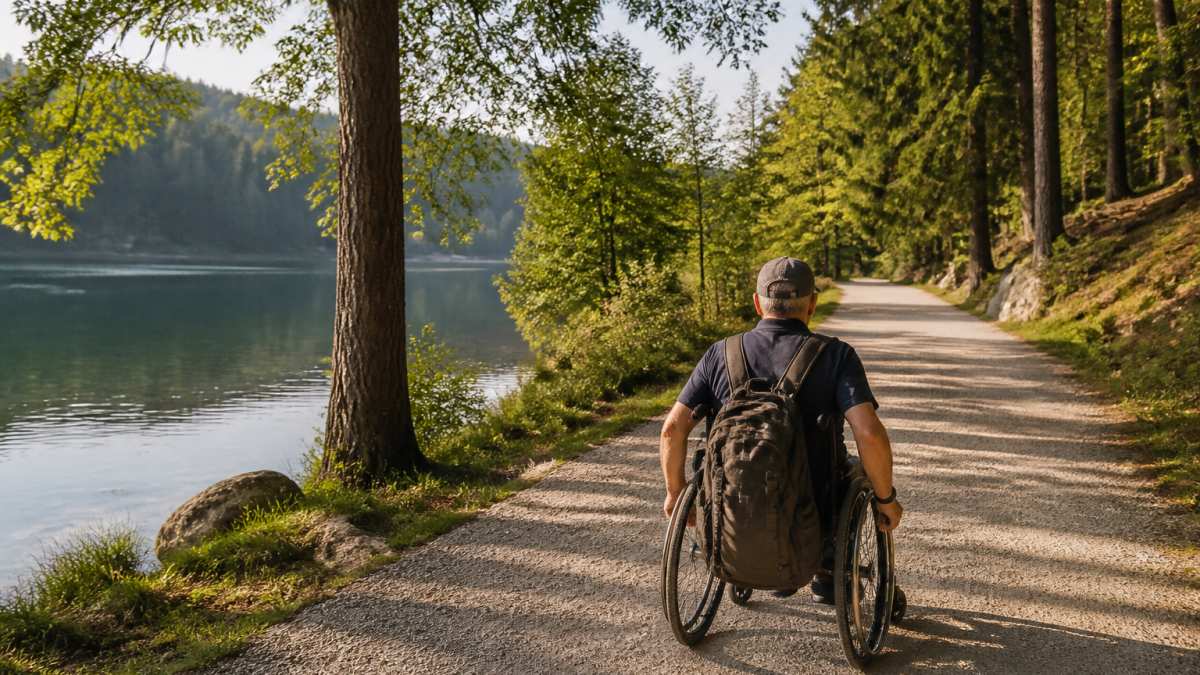
Accessible hiking trails along the lake are the key to authentic nature experiences. They offer the right balance of accessibility and fresh forest air. But not every trail described as „accessible“ meets the same standards.
Lake Edlesberg and Other Access Points to the Lake
Edlesberger Lake has direct, level access from the parking lot. The path is paved, about 2 to 3 meters wide, and leads straight to the water. Benches invite you to linger—ideal for enjoying nature without having to keep moving.
Finding other lake access points in the region requires further research. Many smaller lakes have access points that appear accessible at first glance but have uneven terrain or lack trails. That is why preliminary research is so important.
Get information before you leave
Before you plan a trip, get specific information. Ask about:
- Width and surface of the trail (paved, gravel, forest floor)
- Uphill or downhill
- Available parking spaces and their proximity to the trail
- Restrooms and Rest Areas
- Current trail conditions (especially after rain or snow)
The town of Gutenbrunn and local tourist offices can provide specific information. Online reviews and forums are also helpful, but firsthand accounts are the most reliable.
Many trails marked as „accessible“ online were described years ago. Conditions change due to weather and maintenance. Always check for the current status; don’t rely on outdated information.
Wheelchair-Accessible Hiking Trails: Requirements and Features
Wheelchair-accessible hiking trails must meet certain standards. A flat path is not automatically wheelchair-accessible; it depends on the details.
What makes a path truly wheelchair-accessible:
- Width of at least 1.5 to 2 meters (for two-way traffic)
- Paved surface (asphalt, concrete slabs, compacted gravel)
- Maximum grade: 6 percent (that's noticeable, but manageable)
- No sudden changes in elevation or steps
- Safe pathways without deep trenches or steps
- Regular rest areas with benches
Many forest trails do not meet these criteria. They are narrow, uneven, or have natural obstacles. That’s not a bad thing; it just means they are not wheelchair-accessible. Having realistic expectations helps prevent frustration once you’re there.
Explore Accessible Destinations in the Waldviertel
In addition to hiking trails, there are destinations that are wheelchair-accessible and offer truly memorable experiences. The key difference from standard hiking guides: What matters here isn’t the length of the trail, but whether the access route, entrance, interior, and restroom are all accessible. You should check exactly this sequence of factors before every outing.
Museums and Cultural Sites
Several museums in the region have elevators, wide hallways, and accessible restrooms. They're good alternatives for days when the weather is bad or when you need a break from nature trails.
Before your visit, be sure to check the following:
- Input: Steps or a ramp? If a ramp: what is the slope and length?
- Doors: At least 80 cm of clear width so that a wheelchair can pass through without bumping into anything.
- Elevator: Cabin size and button operating height.
- Restroom: Wheelchair accessible in accordance with ÖNORM B 1600 (door width, turning radius, handrails).
- Flooring: Non-slip and without carpet edges that slow down the wheelchair.
Nature Reserves and Viewpoints
Some nature reserves have special observation trails that are accessible to everyone. These trails lead through a variety of habitats and allow visitors to observe nature—birds, plants, and insects—without any technical barriers. Viewpoints with parking lots nearby are also a good option.
The real challenge is usually not the viewpoint itself, but the final stretch leading up to it. So always ask:
- Distance from the parking lot to the lookout point (not just „nearby“)
- Surface of the last section of the trail (asphalt, gravel, grass)
- Presence of handrails on steep edges
- Seating within sight
The Accommodation Check as a Starting Point
Before you choose places to visit, first check whether your vacation rental is a suitable base. After all, even the most accessible outing is of little use if the path from the bedroom to the bathroom or from the parking lot to the front door isn’t suitable. You should ask for these measurements before booking:
| Checkpoint | Why It's Important |
|---|---|
| Interior door width (at least 80 cm) | The wheelchair must be able to pass through without bumping into anything |
| Turning radius in the bathroom (approx. 150 cm) | For transfers to the toilet and shower |
| Steps at the entrance | Stepless or a ramp with a fixed slope |
| Flooring | Non-slip, without raised carpet edges |
| Storage space for assistive devices | Space for a wheelchair, walker, or shower chair |
| Power outlet within reach | For an electric wheelchair or charger |
Once these points are clarified, choosing destinations for your outings becomes much easier—you'll then know which distances and routes work best for your base.
The best strategy is to take several short trips instead of planning one long day. That way, you'll stay flexible and can react on the spot if a route doesn't work out.
Step-by-Step Planning: Preparations Before the Trip
Good planning makes the difference between a successful trip and frustration. The part that most travel and lodging websites leave out is the question: What resources will I need once I'm there, and how do I arrange them in advance?
Step 1: Determine Specific Needs
Before you rent or buy anything, write down what you really need:
- Mobility: Is your own wheelchair sufficient, or will you need an electric wheelchair on site for longer distances?
- Bathroom: Shower chair, toilet chair, grab bars—what is available in the accommodation, and what is missing?
- Transfer: Do you need a transfer lift, or is a slide board enough?
- Everyday Life: Rollator, walking aid, or reaching tongs for hard-to-reach places?
This list is the basis for all further steps. Without it, you'll either rent too much or too little.
Step 2: Confirm availability and delivery
Call medical supply stores or assistive device rental companies in the area well in advance—at least two to three weeks before your arrival. Ask specific questions:
- Will the desired device be available on the arrival date?
- Does the provider deliver to the vacation rental, or do you have to pick it up yourself?
- Is there a specific delivery window, and does it work with your arrival time?
- Who will set up the device and show you how to use it?
- How does pickup work on the day of departure—is there a set time, or is it flexible?
Also clarify how to access the accommodation: Does the delivery person have a key, or do you need to be there? Are there steps at the entrance that make transport difficult?
Step 3: Categorize Costs and Security Deposits
Before booking, ask for a complete breakdown of costs:
- Rental Price per day or week (in EUR)
- Security Deposit, Amount and Repayment Terms
- Delivery and Pickup Fee, often separately
- Cleaning Fee Upon return
- Insurance, Is the damage covered, or are you personally liable?
Step 4: Evaluate the route and distance
Calculate realistic distances. A 3-kilometer route accessible to wheelchair users is not the same as a walk for pedestrians. Keep the following in mind:
- Personal Strength and Endurance
- Weather and Time of Day
- Guidance and Support
- The return trip (often more exhausting than the trip there)
Start with shorter distances and work your way up. This will help you get a sense of your limits and prevent overexertion.
Step 5: Plan for Breaks and Refreshments
Breaks aren't optional—they're part of the plan. Look for spots with benches, restrooms, and places to get drinking water. Many forest trails have rest areas, but not all of them. Bring water and some small snacks with you.
Restrooms are often a problem. Many public restrooms aren't wheelchair-accessible or aren't located near hiking trails. Find out in advance where the nearest accessible restrooms are.
| Planning aspect | What's Important | How You Should Proceed |
|---|---|---|
| Resources | Availability and Shipping | Call 2–3 weeks in advance to schedule a delivery time slot |
| Route | Length and Elevation Changes | A maximum of 3–5 km for beginners, with reasonable breaks |
| Weather | Safety and Comfort | Check the weather forecast; have a place to take shelter |
| Supply | Water, snacks, restrooms | Do some research first, pack your backpack |
| Support | Safety in Emergencies | Bring at least one accompanying person |
| Return | Strength for the Journey Home | Don't start too late; allow for a buffer |
Rental equipment is cleaned and inspected before being handed over. When you pick it up, ask when it was last serviced, and check the brakes, tires, and seat yourself before you set off.
Checklist for an Accessible Nature Outing
Before every outing, you should go over these points:
- Route and trail conditions researched
- Checked the parking lot near the trail
- Restrooms and rest areas located
- Weather report verified
- Accompanying person informs and confirms
- Packed water and snacks
- Cell phone charged and emergency numbers on hand
- Return trip planned and travel time realistically estimated
- Wheelchair or mobility aid inspected (tires, brakes)
- Prepared for sun or rain
This checklist will help you avoid forgetting anything important and maximize your chances of having a relaxing day.
Accommodations and a base for your nature excursions
Finding the right accommodations is the first step toward planning wheelchair-accessible nature experiences in the Waldviertel. Ferienwohnungen Gutenbrunn offers accessible apartments with direct access, wide doors, and wheelchair-accessible bathrooms. This means you don’t have to worry about finding a place to stay—you can focus on your excursions instead.
The central location makes it easy to take short trips to the best attractions. After a day spent in nature, you can quickly head back, relax, and plan the next day. The personalized attention from Anna and Herbert also means you’ll get specific, on-the-ground tips—not just from a website, but from people who know the region.
Frequently Asked Questions About Wheelchair-Accessible Nature Experiences
How can I tell if a path is truly accessible?
Ask the local community or the tourist office directly. Online descriptions are often out of date. Firsthand accounts from other wheelchair users are more reliable than general reviews.
Can I go on excursions by myself?
That depends on your skills and the route. Some people like to ride alone, while others need someone to ride with them. Having a riding partner also provides peace of mind in case of unexpected problems.
What if the weather turns bad?
Have some alternatives ready—museums, cafés, or simply spending a day at your lodging. A vacation in the Waldviertel isn't just about hiking; it's about relaxation.
How long should an outing last?
Start with 2 to 3 hours and work your way up. Many people underestimate how tiring it is to use a wheelchair. It’s better to take several short trips than one that’s too long.
Is there any equipment or gear I can rent?
That's a good question—you should check with your lodging or local providers. Some places offer equipment rentals, but not all of them.
Wheelchair-accessible nature experiences in the Waldviertel are a reality and well worth it. With good planning, realistic expectations, and the right accommodations, you can enjoy true relaxation and the beauty of nature. Ferienwohnungen Gutenbrunn offers you an accessible base from which to explore the region, with personalized support and the assurance that your accommodations are truly accessible. Book directly with us and enjoy a vacation in one of Austria’s most beautiful natural landscapes.
Frequently Asked Questions
How can I find out if a forest trail is accessible by wheelchair?
Before setting out on a hike, you should check the trail conditions: Is the trail paved or cobblestone? What is its minimum width? Are there any steep inclines or steps? Contact local tourism offices or nature conservation organizations, which often have up-to-date information on accessible hiking trails. Many municipalities list wheelchair-accessible routes online. Be sure to ask your lodging provider as well—experienced hosts know the best and safest local options.
What should I check before going on a wheelchair-accessible nature outing?
Check the route, surface conditions, and inclines. Check for accessible restrooms and rest areas. Check the weather and plan your clothing accordingly. Make sure your wheelchair is suitable for the planned route—an electric wheelchair is often more practical for longer distances. Fully charge the batteries and bring spare batteries with you. Let someone know your planned route and estimated return time.
How do I plan for rest stops and accessible restrooms during a trip?
Break your planned route down into segments—ideally no longer than 1 to 1.5 hours per segment. Identify in advance where accessible restrooms and rest areas are located. Many lakes and nature reserves have such facilities. Plan to take breaks, even if you feel fit—regular breaks prevent fatigue and pressure sores. Bring water, snacks, and any necessary medication. Good planning makes the outing more relaxing and safer.
What information should I ask for regarding accessibility when booking accommodations?
Ask about the exact width of doors, hallways, and bathrooms. Inquire about ramps, elevators, or thresholds at the entrance. Find out if the shower or bathtub is equipped with grab bars. Ask about the height of beds, toilets, and sinks. Ask about parking spaces in the immediate vicinity and their accessibility. Ask whether the hosts can be reached in case of problems and whether they have experience with guests who use wheelchairs.


Comments are closed, but trackbacks and pingbacks are open.