


Quick Overview
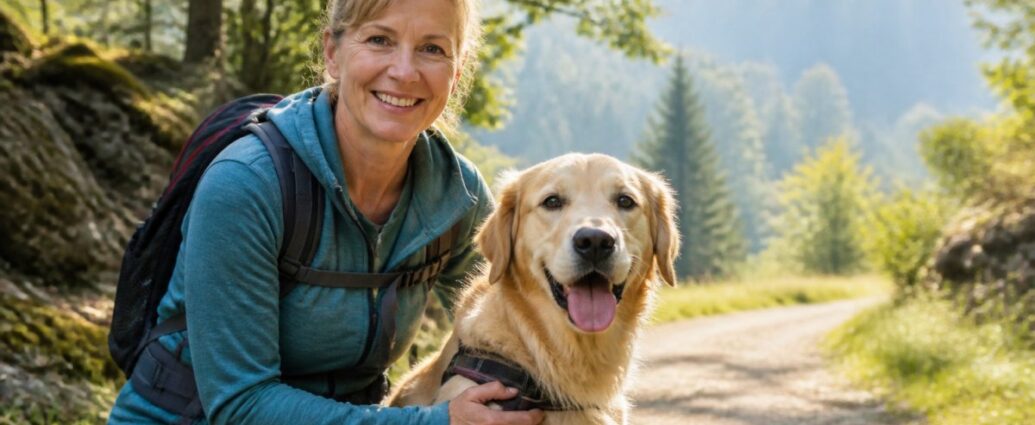
Hiking with your dog in Gutenbrunn works best when you tailor the route and distance to your dog’s age and fitness level. Plan for plenty of walking time with regular breaks, and follow the signs indicating where leashes are required.
- Keep your first few rides shorter than planned, and cut the route short if you start to feel tired early on.
- Always pack water and snacks for both you and your dog.
- Take breaks about every 30 to 45 minutes, or more frequently in hot weather.
- In wildlife quiet zones and around grazing animals, dogs must generally be kept on a leash.
- A tow line that's 5 to 10 meters long offers a good compromise.
Table of Contents
- Hiking with Your Dog in Gutenbrunn: What You Should Know Beforehand
- Planning a Hike with Your Dog: Route, Distance, and Difficulty Level
- Hiking with Your Dog: What to Pack in Your Backpack
- Walking Your Dog on a Leash: Rules and Consideration in the Woods
- Breaks While Hiking with Your Dog: When and How Often They're a Good Idea
- Exercise and Fitness: Take It Easy on Your Dog Before and During the Hike
- Take the weather, season, and trail conditions into account
- Safety on the Road and Emergency Care
- Start the next hike with your dog
- Frequently Asked Questions
If you're out and about with your dog in the Waldviertel, there's one thing you need above all else: trails that are suitable for your dog and enough breaks to ensure the day remains relaxing for both of you. This guide from Ferienwohnungen Gutenbrunn offers nine practical tips for relaxing hikes with your dog, from choosing a route to selecting the right gear.
Last updated: October 30, 2026
Hiking with Your Dog in Gutenbrunn: What You Should Know Beforehand
Most problems that arise when hiking with a dog don't come from the terrain itself, but from unrealistic expectations. A young, energetic dog needs different trails than a calm, older dog. So plan your hike based on your dog first, and then on the trail.
Many dog owners underestimate how much energy a dog needs when walking on gravel, over roots, and up hills. Shorter walks with more breaks are usually the better choice.
- Honestly assess your dog's age, fitness level, and weight
- Keep your first runs shorter than planned
- Always pack water and snacks for both of them
Planning a Hike with Your Dog: Route, Distance, and Difficulty Level
Good planning saves you a lot of stress. Check the distance, elevation gain, and trail conditions in advance. A route that seems easy for people can be exhausting for dogs if it includes scree or steep sections.
Dog-Friendly Trails and Walking Paths Around Gutenbrunn
Be sure to stick to marked trails, as they are usually easier to navigate and help reduce conflicts with other forest users. You can find practical route and hiking tips for the area in our article Hiking from Your Vacation Rental: Tips & Routes. For the most up-to-date information on trails, it's best to check the Ferienwohnungen Gutenbrunn website directly.
Realistically estimate walking time, inclines, and trail length
When walking dogs, expect the walk to take a little longer than it would for people. While you're out, it's also worth the most beautiful viewpoints in the Waldviertel as milestones. Frequent stops, sniffing breaks, and detours are all part of the experience. A rule of thumb for many owners: Plan plenty of time for the walk and shorten the route if your dog gets tired early.
- Check the gradients on the map in advance
- Long descents can put a strain on joints, especially in young dogs
- During hot summer weather, choose the early morning hours
Hiking with Your Dog: What to Pack in Your Backpack
A well-packed backpack makes all the difference. Be sure to bring enough water, a collapsible bowl, and poop bags. A first-aid kit for dogs, including bandages and paw pads, is also a good idea.
If you're planning a trip of several days, it's worth checking out Guidelines from the Austrian Alpine Club for Planning Hikes. There you'll find tips on how to prepare for hikes with service animals. A suitable Dog-friendly vacation rental in Lower Austria You can also find starting points for multi-day tours on our website.
Walking Your Dog on a Leash: Rules and Consideration in the Woods
The leash issue is the one thing that can quickly turn a relaxing hike into a source of conflict. Here’s a concise, practical overview to help you make the right decision when you’re out on the trail.
When Leash Laws Apply—and Why
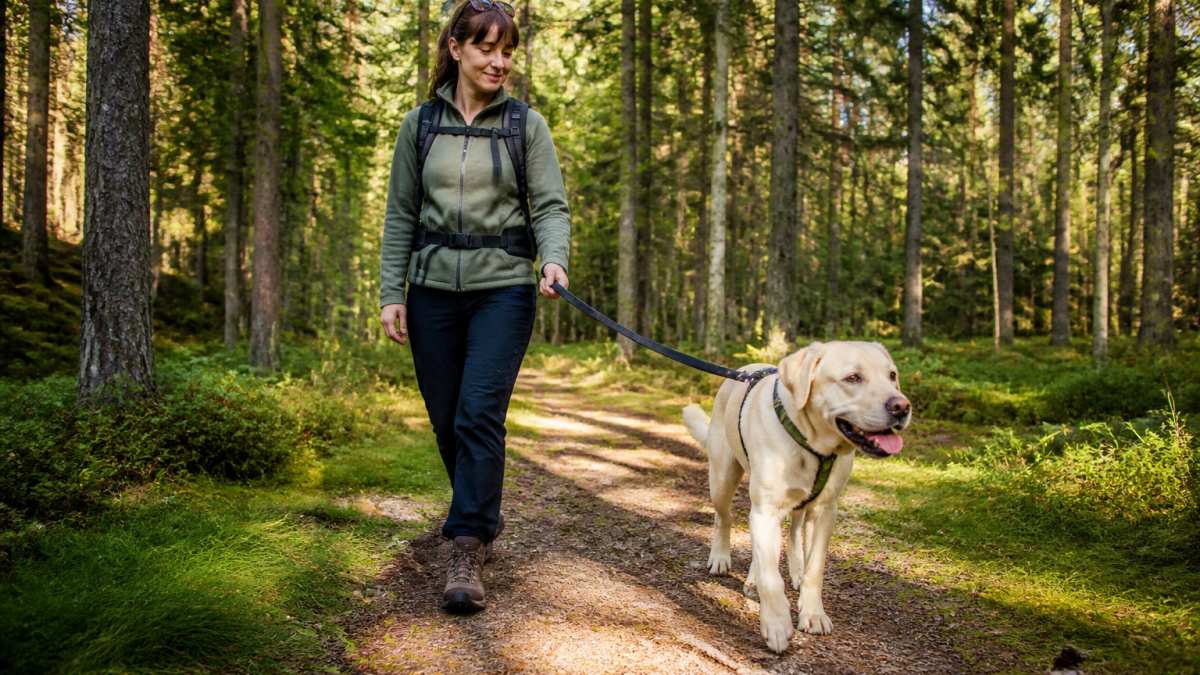
In Austria, the general rule in forests is that dogs must be kept on a leash so that they do not disturb wildlife or endanger other people. This results in different specific regulations depending on the state and municipality. Depending on the area, additional rules may apply, which you can identify on-site by looking at the signs. On-site, the signs along the trail are the most reliable source of information—they take precedence over general guidelines.
- In wildlife protection and quiet zones, dogs must generally be kept on a leash
- When around grazing animals, a short leash is required, even if the dog „just wants to take a look“
- On paths with heavy foot traffic, consideration for others is more important than the question of legal obligation
Exceptions and Gray Areas
There are areas where dogs are allowed to run off-leash, provided they can be reliably recalled and do not disturb anyone. However, do not rely on exceptions that have not been confirmed in writing or by a sign. Particular caution is needed in the spring, especially near young wildlife: wild animals are much more sensitive to dogs running free.
Even a dog with good hearing must be kept on a leash in wildlife quiet zones and around grazing animals. This rule is intended to protect wildlife and grazing animals—not to ensure the dog’s obedience.
A Long Leash Instead of Off-Leash: The Practical Solution
A 5-10-meter leash is the best compromise for many owners. It gives the dog freedom of movement without allowing it to harass wildlife or other hikers. Make sure the leash is easy to handle: It shouldn’t drag on the ground, where it can get tangled, and you should keep it short in narrow passages. If you’re walking two dogs at the same time, you’ll need a Relaxed Walking with Dogs even more precise line control to consistently prevent tangles in rough terrain.
- Use a tow line only on sections with good visibility
- Immediately shorten your stride when going around corners or when there is oncoming traffic
- After the walk, check the leash and harness for signs of chafing
Consideration in the Woods: The Unwritten Rules
Enjoyable hiking with your dog depends less on the rules and more on your behavior. More Romantic Hiking Trails in the Waldviertel offer additional route ideas for walks with your dog. If you greet other hikers early on, keep your dog on a short leash when you encounter others, and always carry poop bags, you’ll avoid most conflicts. Especially on narrow forest trails, the rule is: whoever is going uphill usually has the right of way—if you’re walking a dog, it’s best to step aside briefly and have your dog sit down.
- When cyclists and horseback riders approach, keep the dog on a short leash and stand still
- Always carry a poop bag with you and pick up after your dog
- Do not let your dog run free on busy paths, even if it is permitted
Information on Protected Areas and Leash Rules in Lower Austria
An overview of the most important leash rules:
| Situation | Rule | Note |
|---|---|---|
| Wildlife Protection and Quiet Zones | Leash Requirement | Generally applies |
| Grazing animals nearby | Short Leash | Even if the dog just wants to look |
| Heavy foot traffic | Consideration Before Legal Issues | Get a dog early on |
| Narrow Sections and Curves | Shorten the leash | Immediately when there is oncoming traffic |
| Towing line | 5–10 meters | Only on sections with good visibility |
| Encounters with Cyclists and Horseback Riders | Keep the dog on a short leash | Stand still |
Breaks While Hiking with Your Dog: When and How Often They're a Good Idea
Breaks aren't a sign of weakness. A dog that gets regular water and rest will stay active longer. Take a short break about every 30 to 45 minutes—or longer in hot weather. The overview at [link] shows where to find suitable spots to cool off or rest. Dog-Friendly Lakes and Swimming Spots in the Waldviertel.
Watch for warning signs such as heavy panting, slow steps, or stopping. When you see these, it's time for a break in the shade with some water.
Exercise and Fitness: Take It Easy on Your Dog Before and During the Hike
A dog that only goes hiking on the weekends needs some training beforehand. Gradually increase the distance over several weeks instead of going on a long hike right away. This is easier on the dog's muscles and joints.
During the hike, a slow, steady pace downhill is better than running fast. Don't let your dog jump or climb over rocks if it isn't used to doing so.
Take the weather, season, and trail conditions into account
In the spring and fall, wet ground can be slippery, and in the summer, it gets hot quickly. Check the weather in the morning and plan alternative routes. Damp forest trails require sturdy footwear and proper paw care after the hike.
After the hike, check your dog's paws for thorns, ticks, and injuries. A quick check afterward doesn't take long.
Safety on the Road and Emergency Care
Always carry the phone number of a local veterinarian, and save the emergency number 112 on your cell phone. A microchip or tag with your address will help if your dog gets lost.
If you're unsure how far away the next place to get supplies is, you should check before you set out. That way, the trip will stay relaxed, even if something unexpected happens.
Start the next hike with your dog
With good planning, the right gear, and plenty of breaks, hiking with your dog in Gutenbrunn will be a truly memorable experience for both of you. If you have any questions about the area or places to visit, please feel free to contact your hosts, Anna and Herbert, directly.
Frequently Asked Questions
What should I pack for a hike with my dog?
Essential gear includes plenty of water and a collapsible water bowl, poop bags, a leash and a spare, a first-aid kit specifically for dogs, and a towel for wet paws. On longer hikes, a blanket for breaks and a small, energy-boosting snack come in handy. Check the weather conditions before setting out and adjust your gear to the length and difficulty of the route. Packing your gear in advance helps you avoid unnecessary stress along the way.
How long can a dog hike at a time?
This depends heavily on age, breed, fitness level, and overall health. Well-trained, young dogs can often handle several hours, while older or short-legged dogs should take significantly shorter walks. Keep an eye on your dog: If he’s panting heavily, falling behind, or seems exhausted, it’s time for a break. Increase the distance gradually so that your dog’s muscles and endurance can build up.
How often should a dog take a break while hiking?
As a general guideline, take short breaks every 30 to 45 minutes, or more frequently in extreme heat. Use these breaks to drink water, rest briefly in the shade, and check your dog’s paws. It’s also a good idea to take a breather on uphill stretches. Watch for warning signs such as heavy panting, restlessness, or limping, and take a break sooner if you notice them.
What should you keep in mind when hiking with a dog on a leash?
Before your hike, find out about the leash laws in effect in the respective protected areas and wildlife habitats. A leash about two meters long gives your dog freedom of movement while allowing you to maintain control. Be considerate of other hikers, cyclists, and wildlife by keeping your dog close when you encounter them. A reliable recall makes it easier to maintain control, even when your dog is on a leash.
If you're looking for a starting point for your hikes, we at Ferienwohnungen Gutenbrunn would be happy to assist you. Ask us about dog-friendly accommodations and the best trails so your next hike gets off to a relaxing start.


Comments are closed, but trackbacks and pingbacks are open.