


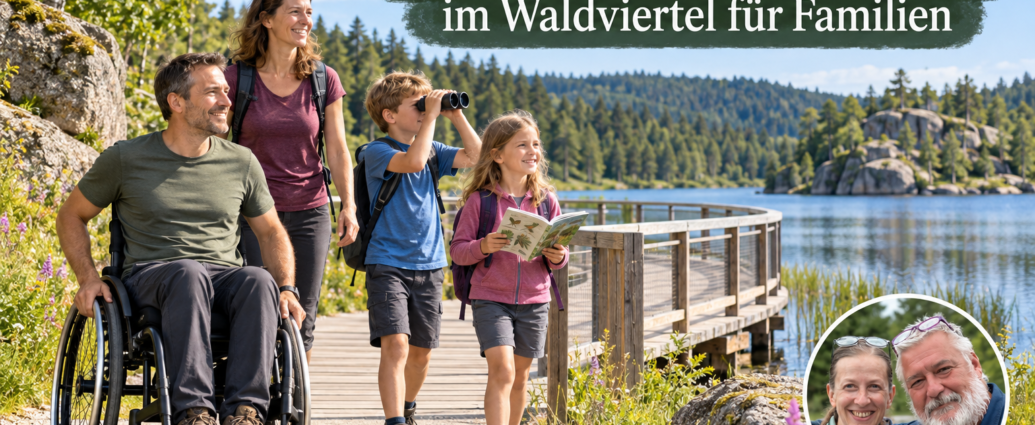
Accessibility in the Waldviertel: What Families Can Really Expect
Families with a child in a wheelchair are familiar with this problem. Many tourist destinations advertise their accessibility, but once you arrive, you’re met with steps, narrow doors, or uneven paths. The good news is that the Waldviertel region is one of the pioneers in Lower Austria. In this guide to vacation rentals Gutenbrunn We’ll introduce you to wheelchair-accessible family-friendly destinations in the Waldviertel region.
In the Waldviertel, accessibility means more than just a ramp at the entrance. Many facilities have made significant investments in recent years to create seamless, barrier-free experiences. These include wide paths with solid surfaces, elevators in historic buildings, and restroom facilities that meet the standards for people with limited mobility. The region has come to understand that inclusion is not a luxury, but a mark of quality.
Families with wheelchairs or strollers can expect an impressive array of accessible options. Among the favorites are wheelchair-accessible family-friendly destinations in the Waldviertel region. From nature experiences and show gardens to Baroque monastery complexes, the selection is vast; we offer planning tips.
Criteria for Wheelchair-Accessible Destinations in the Waldviertel Region
Before choosing a destination, you should check a few technical details. Wheelchair-accessible family destinations in the Waldviertel region must have ground-level entrances, a paved, non-slip surface, and a 6 percent gradient (ada.gov). These specifications support independent mobility with manual wheelchairs.
An Overview of the Most Important Technical Inspection Points
Most websites are content with simply being labeled “accessible.”.
To ensure reliable planning, you should check details that take into account wheelchair-accessible family-friendly destinations in the Waldviertel region.
Please clarify these details by phone or email before booking or departure.
- Door widths: A standard wheelchair requires a clear width of at least 80 centimeters; electric wheelchairs often require 90 centimeters or more (peer-reviewed Research). Don't just ask about the entrance; also ask about doors leading to exhibition halls, restaurants, and restrooms.
- Grades of incline: A maximum gradient of six percent is considered a guideline for independent travel. Check to see if ramps are longer than six meters—in that case, an intermediate landing is often required, but these are not always available.
- Soil conditions: A solid, level surface such as asphalt, concrete, or compacted fine gravel is ideal. Gravel, loose sand, or wooden planks with wide gaps can pose a challenge for narrow wheelchair tires.
- Accessible restrooms: Check whether the restroom stall provides a clear space of at least 150 × 150 centimeters and whether grab bars are installed on both sides. Very few establishments voluntarily provide this information—asking specifically will clarify the situation.
- Parking lot to the entrance: Parking spaces for people with disabilities should be no more than 30 meters from the accessible main entrance. Ask whether the path leading to it is also accessible, because often the parking space is close by but located behind a curb.
How to Effectively Verify Accessibility Information
A common mistake is to rely on the operators“ self-assessment. A pragmatic approach is to ask about the two most critical issues. These include the door width of the accessible restroom and the slope of the main path. If these two questions are answered precisely, the facility is generally well-prepared. Vague answers such as “actually, no problem” are a red flag.
It's also helpful to check the latest reviews on Google Maps or Wheelmap.
Here, users share their specific experiences.
This information is no substitute for a face-to-face conversation, but it does provide a realistic picture of the actual situation on the ground.
The NÖ-CARD as a Planning Tool
Admission prices and hours of operation are usually no problem, but the NÖ-CARD can be worth it. With the NÖ-CARD Annual Pass Starting at 79 euros for adults, you’ll receive free admission to many accessible partner venues in the region, including several of the destinations featured here. For families planning multiple outings, the card quickly pays for itself. Please note, however, that the NÖ-CARD does not make any claims regarding actual accessibility—it is a discount tool, not a seal of quality. Therefore, always combine the card with the technical checkpoints listed above.
Pure Nature: Accessible Attractions and Parks
For many people, the natural landscape of the Waldviertel is the main reason to visit. Fortunately, the operators of the major natural attractions have recognized that nature experiences must be accessible to everyone. The following three destinations set the standard when it comes to accessible trails and the overall experience.
Schrems Underwater Kingdom: Experience the Marsh Without Barriers
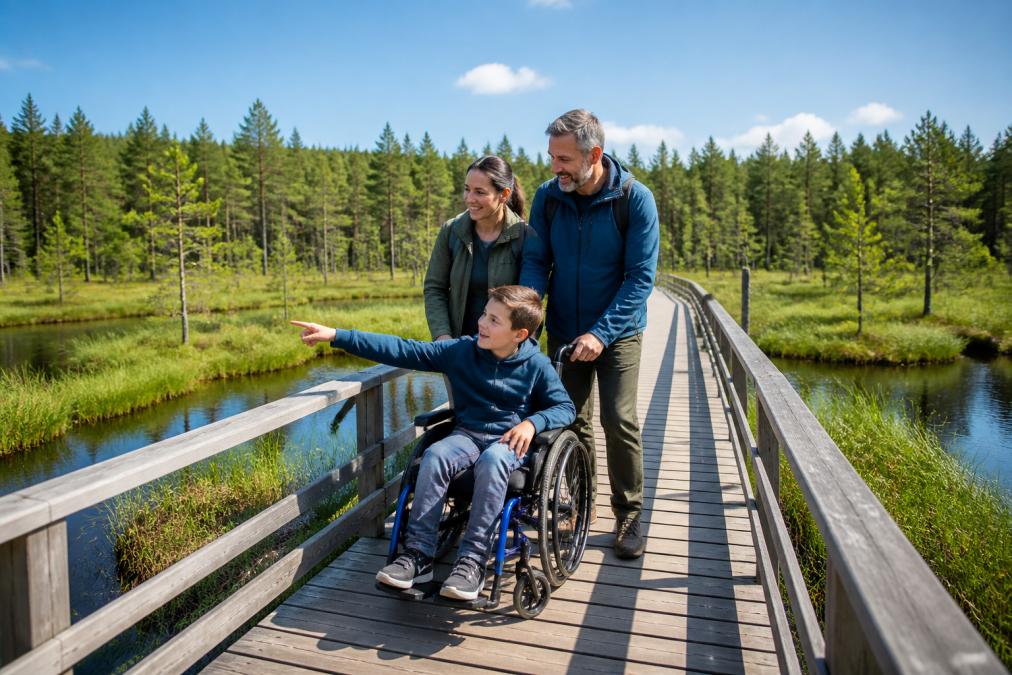
The The Underwater Kingdom of Schrems is a prime example of successful accessibility in nature. The wooden boardwalk through the raised bog is designed to be fully accessible and offers wheelchair users a unique experience of nature. The paths are level, safe, and lead directly to the main attractions, including level access to the otter enclosure.
The exhibition areas inside are also wheelchair accessible, and the wheelchair-accessible restrooms round out the amenities. The admission price of 10.50 euros for adults is reasonable for such an educational experience. A tip: Visit the marsh in the morning, when the trails are still quiet and the animals are active.
Kittenberger Adventure Gardens: Demonstration gardens with flat paths
The Kittenberger Erlebnisgärten are among the most beautiful show gardens in Austria and are fully accessible to wheelchair users and families with strollers. Wide, paved paths lead through the various themed areas, and the level entrances ensure a seamless experience throughout the grounds. The on-site accessible restaurant is the perfect place to take a break. For anyone looking for wheelchair-accessible destinations in the Waldviertel region, the Kittenberg Experience Gardens are an excellent choice.
What makes this attraction special is its combination of well-maintained aesthetics and practical infrastructure. The 12-euro admission fee for adults is well worth it, and as a NÖ-CARD partner, a visit here can be particularly affordable. However, if you want to see everything, you should allow plenty of time to explore the sprawling grounds.
Arbesbach Bear Forest: Experience Animal Welfare in an Accessible Way
The Arbesbach Bear Forest combines an ethical mission with accessible design. The loop trail through the grounds is easily navigable and offers a clear view of the bears from the paved paths. The informative display boards are positioned so that they are easily readable even from a wheelchair.
With an admission fee of 8 euros for adults, this is one of the more affordable places to visit. Please note, however, that the grounds are hilly, and manual wheelchairs may require some effort on certain sections. An accompanying person is recommended here, even though the paths themselves do not have any obstacles.
Culture and History: Accessible Museums in the Waldviertel Region
If you're interested in experiencing culture and history, you'll find in the Waldviertel also offer excellent accessibility options. The region is home to some of Lower Austria’s most significant cultural landmarks, and many have invested in modern elevators and wheelchair-accessible routes. These museums and abbeys prove that historical heritage and accessibility need not be at odds with one another.
Altenburg Benedictine Abbey: Baroque Splendor Accessible by Elevator
The Altenburg Benedictine Abbey is a masterpiece of Baroque architecture and impresses with its well-designed accessibility features. An elevator conveniently takes visitors to the museum galleries, and the wheelchair-accessible tour routes provide access to the main attractions. The gardens are also accessible and invite visitors to linger.
The 14-euro admission fee for adults reflects the cultural richness of the museum. When booking a guided tour, please let the staff know if you use a wheelchair so they can plan the route accordingly. The historic architecture occasionally requires taking detours, but it’s well worth the effort.
Amethyst World Maissau: Hands-On Geology
The Amethyst World Maissau offers a unique experience: barrier-free access to a real exhibition tunnel. The gemstone house is wheelchair-accessible, and the spacious outdoor grounds with paved paths invite visitors to explore. The admission fee of 13 euros for adults is reasonable for this special experience.
It stays cool in the tunnel all year round, around 8 degrees Celsius. Be sure to pack warm clothes even in the summer so that the visit isn't an unpleasant experience for the children.
The good transportation links and ample parking make it easy to get there. For families with children who love geology, the Amethyst World is a highlight that’s enjoyable even in bad weather.
Cuisine and Indulgence: Accessible Destinations for Any Weather
Not every day in the Waldviertel is a sunny one, which is exactly why you need places to visit that are enjoyable even when it rains. The region’s culinary experiences are all designed to be accessible and offer both entertainment and enjoyment for the whole family. These destinations are sure to save any rainy day on vacation.
The Heidenreichstein Cheese-Making World
The Heidenreichstein Cheese-Making World is a weather-independent destination that stands out for its ground-level access to the entire grounds. The wheelchair-accessible demonstration production area offers insights into cheese-making, and the accessible restaurant invites visitors to enjoy a tasting. Accessible parking spaces right in front of the building make it easy to get there.
This destination is particularly appealing to families because the dining options are very family-friendly and children can experience the production processes up close. You should reserve guided tours in advance, as group capacity is limited. Please contact the provider directly for pricing, as rates vary depending on the tour option.
LOISIUM Wine World: Architecture and Indulgence
LOISIUM WeinWelt impresses not only with its modern architecture but also with its exemplary accessible infrastructure. Elevators provide access to all levels, and the wheelchair-accessible tour through the cellars is a truly unique experience. The accessible restrooms meet the latest standards.
With an admission fee of 16 euros for adults, WeinWelt is the most expensive of the featured destinations. It caters primarily to adults and wine culture; there are fewer activities specifically for young children. Nevertheless, the architecture alone makes it worth a visit.
Wheelchair-Accessible Hiking Trails in Lower Austria: Tips for Planning Your Route
Wheelchair-accessible hiking trails in Lower Austria are not uncommon, but they require careful planning. Many of the marked trails are also suitable for wheelchair users, provided you pay attention to the trail conditions and gradients. The region’s official hiking maps usually mark accessible sections with a specific symbol.
When planning a route for wheelchair users, I recommend paying attention to the length and elevation profile. A route of three to five kilometers with minimal incline is easily manageable for most families. Check in advance to see if there are benches to rest on and places to stop for refreshments along the route, since dining is part of the experience.
Don’t rely solely on the description „accessible“ on online portals. Call the tourist information office and ask specifically about slopes, trail surfaces, and any current closures. The reality on the ground sometimes differs from what the advertisements promise.
Practical Tips for Getting There and for the Day of the Trip
Traveling to the Waldviertel is usually straightforward for families with wheelchair users if they drive. The region is easily accessible via state highways, and most attractions have ample parking, often right at the entrance. Accessible parking spaces are generally marked and reserved.
Getting There by Public Transportation: What Really Works
Public transportation is better than its reputation, but it requires careful planning. On the Franz-Josefs-Bahn line from Vienna’s Franz-Josefs-Bahnhof station toward Gmünd, ÖBB offers accessible trains with wheelchair-accessible cars. The trains are equipped with a lift or a retractable boarding ramp, which you should request at least 24 hours in advance by calling the ÖBB accessibility hotline. From the Schrems or Gmünd station, you’ll then continue by bus—however, service is infrequent outside of peak hours, often only every two hours.
A helpful tip: The Schrems Underwater Kingdom provides detailed directions for getting there by public transportation on its website, including specific bus routes and walking times from the bus stop to the entrance. You can find similar information for Altenburg Abbey, which is accessible by bus from Horn. Always allow for a 15- to 20-minute buffer for the last leg of your journey, as not all bus stops have lowered curbs.
Two tried-and-true routes for a relaxing half-day
Instead of considering individual destinations in isolation, it’s worth planning a combined route. Here are two suggestions that make logistical sense for wheelchair users and have proven effective in practice:
Route 1: Nature and Culinary Delights in the Northern Waldviertel – Start in the morning at the Schrems Underwater Kingdom, where the paths are the quietest. After the roughly two-hour tour, drive the short distance to the Heidenreichstein Cheese-Making World, where you can stop for lunch at the wheelchair-accessible restaurant and tour the demonstration production facility. The total driving distance between the destinations is about 15 kilometers; parking is available directly at each entrance.
Route 2: Culture and Culinary Delights in the Central Waldviertel Region – Combine a visit to the Altenburg Benedictine Abbey in the morning with a visit to the Amethyst World in Maissau in the afternoon. The drive of about 25 kilometers is easily manageable, and both destinations have plenty of accessible parking spaces. Be sure to schedule a guided tour of the Abbey in advance, as the accessible route through the building is only available with a guide.
The Key Tip for Your Day Trip
A key tip for your day trip: Start early. The trails are less crowded in the morning, the parking lots are empty, and you’ll have plenty of time to spare for unexpected discoveries. Pack weather-appropriate clothing and plenty of food, since there aren’t always places to stop for a bite to eat nearby. A small repair kit for your wheelchair—such as an Allen wrench and a spare inner tube—can also make the difference between a cut-short day trip and one that’s saved.
The Perfect Choice: Find an Accessible Vacation Rental in the Waldviertel
A successful vacation depends entirely on the accommodations. An accessible vacation rental in the Waldviertel should offer more than just a ground-floor location: doorways wide enough for a wheelchair to pass through easily, a walk-in shower, and sufficient space to move around in all rooms are essential. Our vacation rentals in Gutenbrunn are equipped to meet these requirements.
Anna and Herbert's four apartments feature ground-level entrances and wheelchair-accessible amenities. The quiet location in Gutenbrunn, near the Lake Edlesberg makes this accommodation the ideal starting point for the day trips featured here. The personalized attention from the hosts ensures that your questions about accessibility will be answered before you book.
The central location makes it easy to explore the Waldviertel region and its many recreational activities without having to travel long distances. Whether you’re hiking, biking, or visiting accessible attractions, you can easily reach all your destinations from Gutenbrunn. Book directly with the hosts and benefit from personalized advice.
Conclusion: Carefree family days in the Waldviertel
In recent years, the Waldviertel has become one of the most accessible vacation regions in Lower Austria. The combination of nature experiences, cultural landmarks, and culinary offerings makes the region an ideal destination for families with mobility challenges. The attractions featured here have been carefully selected and tested in practice.
The biggest hurdle is often not accessibility at the destination itself, but rather uncertainty during the planning stage. With the detailed information in this guide, you can plan your days out in the Waldviertel with peace of mind, knowing exactly what to expect. The combination of suitable accommodations and well-chosen destinations makes all the difference between a stressful vacation and a carefree one.
We invite you to discover the Waldviertel for yourself. Our Gutenbrunn vacation apartments offer you a barrier-free base for unforgettable family days in nature. Enjoy a break free from the pressures of a tight schedule in one of Austria’s most beautiful natural landscapes.
Frequently Asked Questions
Which wheelchair-accessible attractions in the Waldviertel are particularly suitable for families?
The Schrems Underwater Kingdom offers a particularly enjoyable experience with its wide boardwalks through the raised bog and ground-level access to the otter enclosure. The Arbesbach Bear Forest and the Kittenberg Adventure Gardens are also well-suited for wheelchair users and strollers, thanks to their paved paths. These destinations combine nature experiences with well-designed accessibility and are very popular with families.
Are there accessible hiking trails for families in the Waldviertel?
Yes, there are wheelchair-accessible hiking trails in Lower Austria, including some in the Waldviertel region. When planning your route, look for trails marked as “barrier-free” or “wheelchair-accessible.” Key criteria include a maximum gradient of less than 6 percent, a minimum width of 120 centimeters, and a paved surface. The loop trail in the Bärenwald Arbesbach is a good example of such a trail.
Are the museums in the Waldviertel accessible to people with disabilities?
Many museums in the Waldviertel region are designed to be accessible. The Benediktinerstift Altenburg has an elevator leading to the museum galleries and wheelchair-accessible tour routes. The Amethyst World Maissau offers accessible entry to the exhibition tunnel. Please check the current information on the respective website before your visit, as historic buildings sometimes require detours.
How can I find a suitable, accessible vacation rental in the Waldviertel for my family?
When searching, pay close attention to specific details about the accommodations: ground-level entrances, door widths of at least 80 centimeters, and a wheelchair-accessible shower are essential. Ask the host directly whether the apartment meets your specific needs. Personal assistance on site helps clear up any uncertainties so you can enjoy your vacation stress-free.
What should you keep in mind when planning an accessible family outing in the Waldviertel?
Be sure to allow enough time for travel and breaks. Find out in advance about parking options, the proximity to accessible restrooms, and the condition of the paths at your destination. The NÖ-CARD may be worth it, as it offers free admission to many accessible partner venues in Lower Austria. Also check whether the destination offers wheelchair rentals or if companions receive discounts.
Comments are closed, but trackbacks and pingbacks are open.