


Table of Contents
- The Right Age for a Puppy's First Vacation
- Travel Preparation: Checklist for Dog-Friendly Accommodations
- Helping Puppies Adjust to a New Environment—Step by Step
- Safe Car Travel: Getting Used to It and the Necessary Equipment
- Travel First-Aid Kit for Puppies – What to Include
- Food, Water, and Breaks During the Trip
- Stress Management and Socialization at the Vacation Destination
- Daily Routine and a Place of Retreat at Your Vacation Home
- Conclusion: Your first vacation with a puppy will go smoothly if you plan ahead
- Frequently Asked Questions
Last updated: September 24, 2026
7 Tips for Your First Vacation with a Puppy
The first vacation with a young dog is exciting—and challenging. Many dog owners underestimate how much preparation is needed to take their puppy on a trip safely and stress-free. But with the right tips, your first vacation with your puppy will be a successful adventure for the whole family. Here are seven proven strategies that make all the difference.
The best way to prepare for a vacation with a puppy is to start weeks in advance, not just when you arrive. The more time your puppy has to get used to new situations, the more relaxed the trip will be.
The Right Age for a Puppy's First Vacation
A puppy should be at least 16 weeks old before going on its first extended vacation. By this age, he has received the most important core vaccinations, and his house-training is usually reliable enough for longer outings.
Younger puppies aren't ready to travel yet. They can't control their bladders for long, are more prone to infections, and need to be fed more frequently. In addition, the socialization phase during the first 16 weeks is so intense that moving to a new environment would be too overwhelming for the puppy.
Starting at four months old, most puppies are stable enough to handle new experiences. Their immune systems are stronger, and they can go longer between bathroom breaks. This makes traveling much less stressful for both people and pets.
Ask your veterinarian if your puppy is ready to travel. Some puppies develop more quickly, while others need more time. A quick checkup before the trip will give you peace of mind.
Travel Preparation: Checklist for Dog-Friendly Accommodations
Accommodations are the foundation of a relaxing vacation with puppies. A dog-friendly vacation rental It has to offer more than just permission to bring a dog along. Making the right choice can mean the difference between a stress-free vacation and daily challenges.
Safety and Interior Design – The Foundation
When making your selection, pay attention to these key features:
-
Safe Outdoor Areas: A fenced-in yard or garden isn't just practical—it's essential for puppies. A fenced-in yard or garden isn't just practical—it's essential for puppies.
-
Flooring: Tiles or laminate flooring are easier to clean than carpets when accidents happen—and with puppies, that's likely to happen.
-
Stairs and changes in elevation: Puppies under four months of age should avoid stairs because their bones have not yet fully ossified (Checking Your Browser).
-
Places to retreat to: The puppy needs a quiet place to rest and relax.
Location and Surroundings – For Daily Activities
-
Proximity to green spaces: Walking trails and meadows should be within walking distance (no more than 10–15 minutes on foot). Forest trails or meadows with little traffic are ideal, where your puppy can exercise in peace.
-
Traffic Noise and Noise Sources: A quiet environment is important for puppies. Constant traffic noise or construction sites can lead to anxiety disorders.
-
Neighborhood:
Practical Questions Before Booking
Ask the host these specific questions:
- Are puppies specifically allowed, or only adult dogs?
Booking Date and Communication
Book your accommodations at least four to six weeks in advance. It’s helpful to communicate directly with your host—a host who understands dogs will help you with any questions or problems and can give you local tips (the best walking routes, local dog training schools, veterinarians).
Helping Puppies Adjust to a New Environment—Step by Step
Getting used to a new environment is the key to a stress-free Vacation with Puppies. A puppy that feels safe in its new home is more relaxed and better able to learn.
Step 1: Arrival Without Pressure
Don't come with high expectations. Let your puppy explore for the first hour without rushing him. Many puppies are tired after the ride and just want to sleep at first.
Step 2: Unpack familiar items
Immediately place his favorite toy, his bed, and a blanket that smells like home. These familiar objects will help the puppy feel secure in his new surroundings.
Step 3: Establish a routine
Feed your puppy at the same times as you do at home. Take him for walks at the same times. This consistency reduces stress and helps the puppy settle in more quickly.
Step 4: Step-by-Step Exploration
Show your puppy around the house, room by room. Stay relaxed—your calmness will rub off on your dog. After two to three days, your puppy should feel much more confident.
Don't overwhelm your puppy with too many new experiences on the first day. An overstimulated puppy will become stressed and may exhibit behavioral problems. Less is more in the early stages.
Safe Car Travel: Getting Used to It and the Necessary Equipment
Traveling by car is often the first hurdle when taking a puppy on vacation. Many young dogs aren't used to car rides and react with fear or nausea.
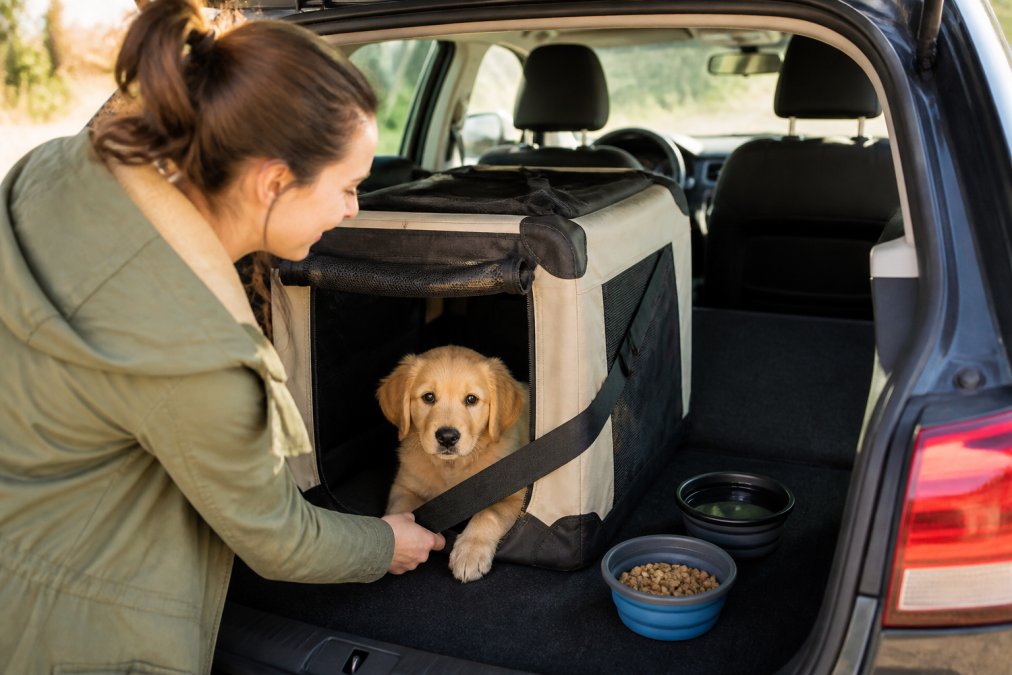
Start taking short car rides a few weeks before your trip. Drive for just five to ten minutes without a specific destination. The puppy should learn that riding in a car is normal and safe. Gradually increase the duration.
The right equipment makes all the difference:
- Carrying Case: A sturdy, padded crate provides the puppy with a sense of security and prevents distractions
- Seat belt: Secure the crate or use a safety belt to keep the puppy safe
- Ventilation: Make sure there's plenty of fresh air; a hot car is dangerous
- Water: Make sure to have small amounts of water on hand, especially on longer trips
- Breaks: Stop every two to three hours so your puppy can stretch its legs
Some puppies get carsick. This is normal and usually goes away over time. Start your trip on an empty stomach, and don't feed the puppy until after the ride.
Travel First-Aid Kit for Puppies – What to Include
A well-stocked first-aid kit for puppies is essential. You're often far from your veterinarian, so you should be prepared for emergencies.
These items belong in every first-aid kit:
- First-aid supplies: Gauze, band-aids, and elastic bandages for minor wounds
- Disinfectants: A mild antiseptic for scratches and scrapes
- Tick Remover: Ticks are common in nature; remove them immediately and properly
- Thermometer: A digital thermometer for dogs can help if you suspect your dog has a fever
- Medications: Magnesium tablets for diarrhea and a remedy for nausea
- First Aid Book: A short guide to handling emergencies will give you peace of mind
- Contact Information: Write down the phone number of a veterinarian near your lodging
Be sure to get your puppy's EU pet passport, too. This document is important when you travel to other countries, and it shows that your puppy has been vaccinated.
Pack your first-aid kit so that you can reach it quickly. A separate backpack in the car is more practical than a large suitcase in the trunk.
Food, Water, and Breaks During the Trip
Proper nutrition and hydration during the trip will keep your puppy healthy and reduce stress.
Water is essential to life. Offer your puppy water at every break. Bring a portable water bowl or use a collapsible bowl from a pet store. Give small amounts—too much water at once can cause nausea. If your little companion shows signs of nervousness despite getting enough fluids, you can Calming dietary supplements for puppies help make the trip more relaxing.
Food should not be given until after the ride. A full bladder and a full stomach are a bad combination in the car. Feed your puppy after you arrive or after a long break.
Schedule regular breaks:
- Stop every two hours for short exercise breaks
- At least 15 minutes Allow time for a bathroom break
- Choose shady spots, your puppy needs protection from the heat
- Avoid playing: After a break, your puppy should rest, not run around
A long car ride can be tiring for a puppy. The more breaks you take, the more relaxed the trip will be for everyone.
Stress Management and Socialization at the Vacation Destination
Once you arrive at your vacation destination, it’s important to socialize your puppy properly while avoiding stress. It’s a balancing act: Too little exposure can lead to anxiety disorders, while too much can lead to overwhelm and behavioral problems.
Social Desensitization—Step by Step
Socialization is crucial right now. A puppy that has positive experiences with new people, animals, sounds, and environments will grow up to be more confident and relaxed. But socialization doesn't mean exposing your puppy to everything all at once.
Follow this proven step-by-step plan:
Days 1–2: Quiet Exploration
- Explore only the immediate vicinity of the lodging without encountering strangers
- No new people, no other dogs, no loud noises
- Goal: The puppy should get used to its new surroundings and build trust with its new home
- Duration of walks: 10–15 minutes, several times a day
Days 3–4: Controlled Exposure
- Short walks in quiet areas with few people or other dogs
- If you encounter other dogs, keep your distance (at least 3–5 meters) and watch how your puppy reacts
- New sounds (e.g., birdsong, distant cars) are okay, but avoid loud surprises
- Duration: 15–20 minutes, two to three times a day
Starting on Day 5: Gradual increase
- Longer walks in busier areas
- Brief, positive interactions with other dogs (only if both dogs are calm)
- Introduce new people, but only one at a time and in a relaxed atmosphere
- Explore different types of surfaces (grass, gravel, pavement)—this helps build their paws and confidence
Targeted Training for Environmental Stimuli
Most puppies are afraid of new sounds and smells. This is normal, but it can be trained:
-
Noises: If your puppy is afraid of traffic noise, stay close by, remain calm, and reward him with treats when he calms down. Avoid comforting or encouraging him—that will only reinforce the fear. Repeat the exposure several times a day in short sessions (5–10 minutes).
-
Odors: New smells can be overwhelming for puppies. Let him sniff around at his own pace. If he gets nervous, distract him and give him time to get used to it.
-
Other dogs: Not all puppies like other dogs right away. If your puppy seems scared or reacts aggressively, don't force an encounter. Keep your distance and let him watch. Over time, he'll become more confident.
Recognizing Signs of Stress and Responding Appropriately
Recognize these signs of stress in your puppy:
- Body language: Tucked-in tail, flattened ears, arched back, stiffening
- Breathing patterns: Rapid panting, shallow breathing, gasping
- Behavior: Hiding or backing away, trembling, overreacting to normal stimuli, aggression, barking for no reason
- Physiological: Diarrhea, vomiting, loss of appetite, excessive salivation
If your puppy shows signs of stress:
- Leave the situation immediately. Go back to a quiet place—that's not a failure, but good management.
- Give him some time to cool off. At least 30 minutes of rest in a quiet environment.
- Don't comfort them. That makes the fear worse. Stay neutral and calm.
- Please try again later. Start off more gently. If your puppy is afraid of traffic, don't start on a busy street—start near a quiet street with little traffic.
- Build positive associations. If your puppy is afraid of a certain sound, play his favorite game or give him treats when the sound can be heard in the distance. This will help him associate the sound with something positive.
Leash Requirements and Local Regulations
In many areas, you must keep your dog on a leash. Check the local regulations—some places require dogs to be on a leash in nature reserves or during certain seasons. Always keep your puppy on a leash when required. This protects your puppy as well as other people and animals.
A long leash (3–5 meters) gives your puppy more freedom to explore while you maintain control. This is ideal for socialization in new environments.
Don't overwhelm your puppy with too many new experiences on the first day. An overstimulated puppy becomes stressed and may develop long-term anxiety disorders. Less is more in the early stages. If your puppy is completely exhausted after a walk or shows signs of stress, scale back the activity the next day.
Keep a simple journal during your vacation. Write down which situations stress your puppy out and which ones he handles well. This will help you plan future trips better and recognize patterns.
Daily Routine and a Place of Retreat at Your Vacation Home
A consistent daily routine is the best way to manage stress when vacationing with a puppy. Your puppy needs predictability to feel safe.
Stick to the same schedule as you do at home:
- Waking up at the same time every day
- Breakfast right after waking up
- Morning walk at the same time
- Afternoon nap (Puppies need plenty of sleep)
- Afternoon Walk
- Dinner
- Bedtime
This routine gives your puppy a sense of security. He knows what to expect and can mentally prepare for it.
A place of refuge is essential. Set up a quiet area where your puppy can retreat when he’s overwhelmed. This could be a crate, a bed in a separate room, or a corner with his blanket. This spot should be off-limits; no one should disturb your puppy there.
Puppies sleep 18 to 20 hours a day. This is normal and important for their development. Don't force your puppy to do anything if he wants to rest. A well-rested puppy is a happy puppy.
At Ferienwohnungen Gutenbrunn, you'll find accommodations with quiet areas where your puppy can retreat safely.
Families with puppies who are looking for a nature-oriented place to stay with a peaceful atmosphere and who appreciate personalized support.
Conclusion: Your first vacation with a puppy will go smoothly if you plan ahead
Taking your first vacation with a puppy is doable—and with the right preparations, it can even be relaxing. The seven tips in this guide cover all the key areas: from the right age to choosing accommodations to your daily routine while you're there.
The key is planning. The more time you invest before you leave, the smoother the trip will go. A well-prepared puppy is a calm puppy, and a calm puppy means relaxation for the whole family.
Gutenbrunn Vacation Rentals offers dog-friendly accommodations with personalized service from Anna & Herbert. The peaceful location in the Waldviertel region, the secure outdoor areas, and the proximity to green spaces make our vacation rentals ideal for your first vacation with a puppy. Book directly with us and enjoy accommodations that are specifically tailored to the needs of dog owners.
Frequently Asked Questions
At what age is it a good idea to take a puppy on vacation?
Puppies should be at least 12–16 weeks old before traveling. By this age, they have received their core vaccinations and are more emotionally stable. Younger puppies are still very attached to their mother and littermates and may suffer from separation anxiety. In addition, their immune systems are not yet fully developed. Talk to your veterinarian before planning a trip—he or she can give you specific recommendations based on your puppy’s vaccination status.
How do I help my puppy adjust to a new environment?
Start with short exploratory walks around your vacation home. Show the puppy its safe space, its water and food bowls, and where it should go to the bathroom. Keep things calm during the first week and avoid overwhelming the puppy with too many new stimuli. Use familiar items, such as his favorite toy or a blanket from home. Positive reinforcement with treats and praise helps the puppy feel secure. Give him time to get used to his new surroundings at his own pace.
What should be included in a first-aid kit for puppies?
A well-stocked first-aid kit should include the following essentials: bandages (gauze bandages, adhesive bandages), antiseptic for minor wounds, a thermometer, magnesium for diarrhea, tick tweezers and a tick remover, ear cleaner, a toothbrush and toothpaste for dogs, as well as all of your puppy’s necessary medications in sufficient quantities. Also be sure to pack the EU Pet Passport, vaccination certificates, and your veterinarian’s phone number. Before your trip, ask your veterinarian what additional items might be useful.
How can I make traveling with a young dog stress-free?
Plan several breaks—ideally every 2–3 hours. Let the puppy run around and play sufficiently before the trip so that he’ll be calmer during the journey. Gradually get him used to the carrier and the car by taking short drives beforehand. Make sure there’s plenty of water and ventilation in the vehicle. Avoid feeding the puppy right before the trip to minimize motion sickness. Speak soothingly to the puppy and reward calm behavior with treats.
Your first vacation with your puppy will be an unforgettable experience. With good preparation, a dog-friendly place to stay, and a consistent routine, you’ll lay the perfect foundation for a successful start to your vacation. Contact Ferienwohnungen Gutenbrunn today and plan your next family vacation with your puppy in the natural surroundings of the Waldviertel region.


Comments are closed, but trackbacks and pingbacks are open.