



Table of Contents
- Dog-Friendly Lakes and Swimming Spots in the Waldviertel: Where Your Day at the Beach Will Be a Real Success
- Dog Swimming Spots in the Waldviertel: Places You Should Know About
- Lakes in the Waldviertel with a Dog: What's Allowed at Each Body of Water
- Dogs by the Water: Properly Enforcing Leash Requirements and Showing Consideration
- Access and Amenities at the Swimming Areas: Parking, Entry Point, Shade
- Water Quality and Safety: What to Look for Before Jumping Into the Water
- Summer Vacation with Your Dog: Bathing, Swimming, and Enjoying Nature
- Getting There and Finding Your Way: How to Plan Your Route to the Swimming Spots
- Conclusion: Discover the most beautiful swimming spots in the Waldviertel with your dog
- Frequently Asked Questions
Last updated: October 15, 2026
Dog-Friendly Lakes and Swimming Spots in the Waldviertel: Where Your Day at the Beach Will Be a Real Success
Many dog owners are familiar with this problem: The vacation rental is booked, the weather is perfect, but then there’s still no answer to the one question that determines the whole day. Where is my dog even allowed to go in the water? That’s exactly where this guide comes in. The honest answer is: There isn’t a single comprehensive list of dog-friendly lakes and swimming spots. in the Waldviertel. The rules vary from body of water to body of water, and often even from one section of the shore to another.
That’s why we’ve compiled the information we usually share with our guests over the phone. You’ll learn which swimming spots are suitable for dogs, how to properly follow leash laws, and what to look out for regarding water quality and safety. Important note: Never rely solely on a travel guide—not even this one. Always check with the local municipality or the facility operator, as rules can change from season to season.
The most important rule for a day at the beach: Permission trumps convenience. A spot that’s officially allowed is more fun than a secret entry point where you’re constantly looking over your shoulder.
Dog Swimming Spots in the Waldviertel: Places You Should Know About
The Search for Dog-Friendly Swimming Spots in the Waldviertel Most guidebooks end with the same sentence: ‚Check with the local municipality.‘ That’s honest, but unsatisfying. That’s why we’ve compiled a list of places in the region that people actually visit regularly with their dogs—including what we know about each one and what you’ll need to clarify on site.
First, a note that applies to all the following locations: The Waldviertel is not a swimming lake region like the Salzkammergut or the Carinthian Lakes. Most of the bodies of water are ponds, reservoirs, and flowing waters with different owners. There is no official, state-wide list of dog-friendly swimming spots. Instead, there are local regulations that vary from municipality to municipality and, in some cases, from one section of the shore to another.
Ednesberger Lake near Gutenbrunn: a shallow shoreline and plenty of space
Lake Edlesberg is a reservoir with a gently sloping shore and is considered the most popular spot in the region for visiting with dogs. This is ideal for dogs because they can walk slowly into the water instead of jumping off a ledge. The shore is partly grassy and partly wooded, and there are shady spots to rest afterward.
What you should know:
- The entry is shallow, but the bottom can be muddy—water shoes for the owner aren't a luxury
- There is no continuous supervision; you remain responsible for yourself.
- On warm weekends, the parking lot fills up quickly; early in the morning, it's much quieter
- Bring water and a blanket; there isn't shade everywhere
- The water level may vary depending on precipitation and the operator
A common mistake: letting dogs go into the water right after eating. It's better to wait an hour, especially with larger breeds.
Ponds and small reservoirs: quiet, but not very developed
In addition to Lake Edlesberg, there are several ponds and smaller reservoirs in the region that are suitable for swimming with your dog. These spots are generally quieter, but also less developed. Specifically, this means: no snack bar, no restroom, often no designated parking area, and access is frequently via dirt roads.
Who should consider these spots:
- Dogs that avoid other dogs
- Drivers who are on the road early in the morning
- Anyone looking for nature instead of infrastructure
- Families who bring everything themselves anyway
Important to note about these spots: Many ponds in the Waldviertel are part of a fishing district or are privately owned. Swimming with a dog isn’t automatically permitted there, and a dog running loose near the water can be considered a disturbance to the fishing grounds. Check with the local municipality or the leaseholder beforehand—don’t wait until you’re at the shore.
Streams: An Underestimated Alternative for Hot Days
One aspect that’s missing from most guidebooks: In the Waldviertel, it’s not just still bodies of water that are worth exploring. Rivers and streams such as the Kamp, the Lainsitz, or smaller tributaries offer shallow, gravelly entry points in many places, which are often more pleasant for dogs than muddy pond banks. The water is cooler, the current reduces algae growth, and the banks are often more accessible.
Things to keep in mind:
- Many people underestimate the current—even when the water level is low, the middle of a river can have a strong current.
- Gravel bars are often on private property or part of a fishing area
- After heavy rain, the water level rises quickly and the water becomes murky
- Nature reserves along rivers may restrict access to the riverbanks
How to Find the Right Spot for Yourself
Since there is no central list, the most reliable method is to conduct a local search. Here's how to do it:
- Call the municipality. Local authorities know which bodies of water in their area are open for swimming and where dogs are allowed.
- Ask the operator. For reservoirs and larger swimming facilities, the operator is the right point of contact, not the municipality.
- Look for signs when you're there. Many beach rules are posted at the entrance—even if no sign is visible at first glance.
- Check the fishing area. If the body of water is leased to a fishing club, that club's rules apply.
- Check the current conditions. Water levels, algae conditions, and visitor numbers change weekly.
Lakes in the Waldviertel with a Dog: What's Allowed at Each Body of Water
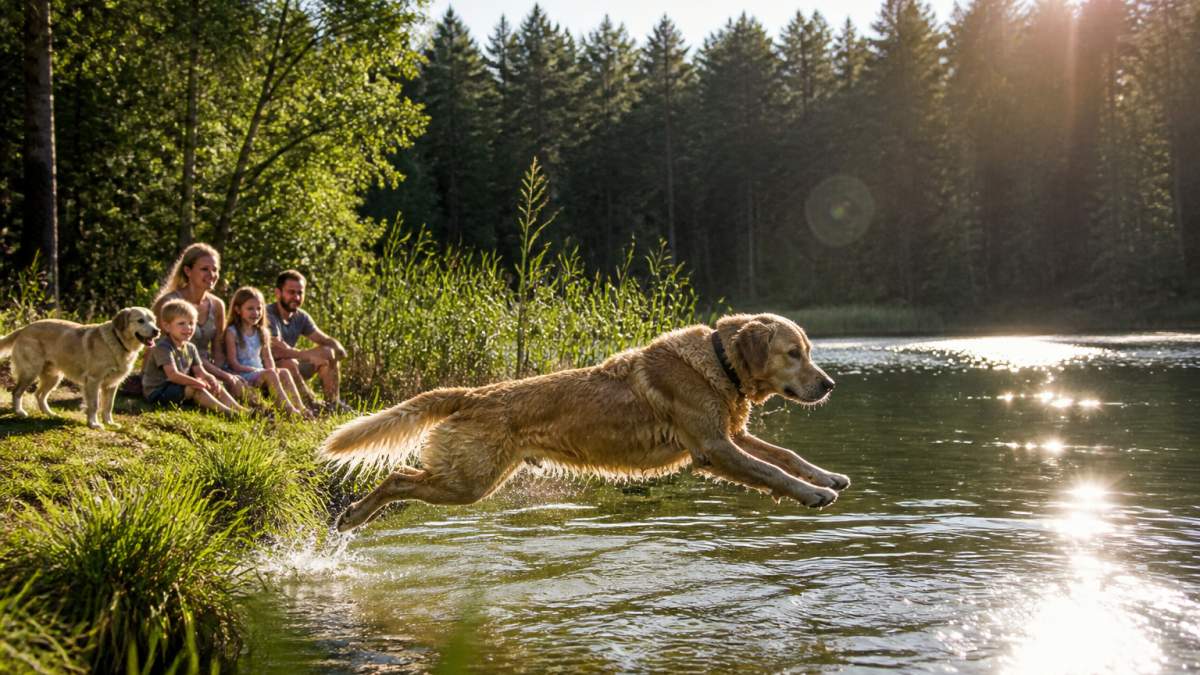
Lakes in the Waldviertel region with Dogs aren’t generally allowed or prohibited. The rules depend on the owner: the municipality, the federal government, a private owner, or a fishing club. That’s why you’ll often find different rules along different sections of the same lake. Once you understand this, you’ll plan differently—and avoid arguments on the shore.
Who has the authority to make decisions?
In Austria, there are no uniform ‚dog swimming regulations‘ for lakes. The rules stem from several levels that may apply simultaneously:
- Water Law: The Water Rights Act governs the use of water bodies. It does not definitively regulate whether and where swimming is permitted—but it does provide the framework for official permits.
- Regulation on Bathing Waters: Officially designated swimming areas undergo regular water quality testing and ratings. This regulation pertains to water quality, not to whether dogs are allowed.
- Municipal Swimming Pool Regulations: Many municipalities issue their own swimming regulations for their lakes. These regulations often specify whether dogs are allowed, whether they must be kept on a leash, and whether there are designated dog areas.
- Fisheries Law: If a body of water is leased to a fishing club, that club’s rules apply. Dogs near the water may be considered a disturbance to the fishing grounds.
- Environmental Protection Law: In protected areas, restrictions on entry and swimming may apply, sometimes on a seasonal basis (during the breeding season).
- Private Law: For private ponds and private property, the owner makes the decision. Without permission, you risk being charged with trespassing.
Leash Law: The Rule That Applies Almost Everywhere
The most important practical rule: Outside of clearly marked off-leash areas, dogs must be kept on a leash. This also applies on the shore, even if no one is there to enforce it. In many municipalities, the leash requirement is stipulated in the bathing regulations or in the general local police ordinance.
What this means in concrete terms:
- On the shore: Keep your dog on a leash, even if other dogs are off-leash
- In the water: Off-leash access is permitted only in areas specifically designated for that purpose
- In dog zones: Off-leash allowed, but only within the marked area
- In nature reserves: Often a year-round or seasonal leash requirement
Seasonal Restrictions
Many regulations do not apply throughout the entire year. Typical examples:
- Breeding season (spring through early summer): In many areas along the shore, leashes are required or access is prohibited to protect nesting waterfowl.
- Swimming Season: Some municipalities allow dogs only outside the official swimming season or only at certain times of the day.
- Fishing Seasons: In fishing areas, access to the shore may be restricted during certain times.
- Water level: During low water or after flooding, certain areas may be closed.
What You Should Check on the Shore
Before the dog goes into the water, it's a good idea to take a quick walk around:
- Signs at the entrance: Swimming Rules, Leash Requirements, Dog Areas
- Barriers: Fences or buoys often mark protected areas
- Other swimmers: Even without a ban, be considerate—keep your distance and don't startle children
- Waterfowl: Nests on the shore are easy to overlook
- Legacy: Always bring it with you, even in the water area
The Most Common Misconceptions
- ‚Swimming with a dog is always allowed at the lake.‘ Wrong. It depends on the owner and the pool rules.
- ‚If there's no sign, it's allowed.‘ Wrong. The absence of signage does not automatically mean permission.
- ‚My dog listens, so he's allowed to run free.‘ Wrong. Obedience is no substitute for authorization.
- ‚The leash requirement does not apply in the water.‘ Wrong. It also applies wherever it is mandated.
| Water Body Type | Typical rule | What this means for you |
|---|---|---|
| Community Swimming Lake | Swimming is usually allowed; dogs must be kept on a leash on the shore | Check the beach rules at the entrance; use the dog area |
| Reservoir | Areas may be closed; operator rules | Check the signs at the entrance; ask the operator |
| Private Pond | Permission Required | Ask first, or you risk being reported |
| Fishing Waters | Often prohibited or restricted | Keep dogs away, including from the shore |
| Natural Swimming Area | Unregulated, but nature conservation can still be effective | Consideration is your only rule |
| Watercourses | Often freely accessible, but be mindful of the current and shoreline rights | Inspect gravel bars, check water levels |
Anyone who lets their dog run loose near a fishing area risks being charged with disturbing the fishing waters. The fine can amount to several hundred euros, and you’ll still have to deal with the tenant.
Practical Implications
The most reliable method is still to ask on the spot. A call to the local municipality or a glance at the sign at the entrance will clarify things better than any general statement. If there is no sign, the basic rule is to be considerate: keep your dog on a leash, maintain a safe distance from swimmers, and clean up after your dog. If you follow these guidelines, you’ll find plenty of spots in the Waldviertel where everyone can enjoy a relaxing day at the beach.
Dogs by the Water: Properly Enforcing Leash Requirements and Showing Consideration
Dogs by the Water: Leash requirements and consideration for others are the areas where things most often go wrong. The simple rule is: Outside of clearly marked off-leash areas, dogs must be kept on a leash. This also applies along the shore, even if no one is there to enforce it.
Why this is more than just bureaucracy: A dog running loose on the shore disturbs nesting waterfowl, frightens children, and can endanger other swimmers. In many municipalities, the leash requirement is stipulated in the swimming regulations, even if there is no sign indicating it.
Here's how to put it into practice:
- Use a leash instead of letting the dog run free when the area is unfamiliar
- Practice the recall command before you go to the water
- Keep your distance from other groups—at least a few meters
- Always pick up after yourself, even in the water
- If it's hot, go for a walk early in the morning or in the evening—it's quieter then
A practical tip: Bring a short leash and a long leash. That way, you'll have flexibility without losing control.
Access and Amenities at the Swimming Areas: Parking, Entry Point, Shade
Access and amenities determine whether a day at the beach will be relaxing or not. A beautiful lake with steep shores and no parking is often more stressful than relaxing when you’re there with your dog and family.
What you should keep in mind:
- Parking: Is there an official parking lot, or just a dirt road?
- Introduction: Flat and sandy is better than rocky and steep
- Shadow: Trees or umbrellas—otherwise it'll get too hot for the dog and the child
- Watering hole: Is there drinking water for the dog?
- Return trip: How do you get back with wet dogs and wet stuff?
For families with strollers or wheelchairs, a paved path to the shore is essential. Not every swimming spot offers this. Check in advance if accessibility is important to you.
Water Quality and Safety: What to Look for Before Jumping Into the Water
Water quality and safety are not a minor issue; they are the reason why some swimming days are cut short. Still bodies of water warm up quickly in the summer, and as the temperature rises, so does the risk of algae and bacteria.
Key points:
- Cloudy, greenish water with streaks: it's best not to let children swim in it
- After heavy rain: wait one to two days
- Blue-green algae can be dangerous for dogs; symptoms appear quickly
- Stagnant bodies of water are warmer and more vulnerable than flowing bodies of water
- After bathing, rinse the dog with clean water
Water safety also means: Know the current. At reservoirs, the water level can fluctuate, and the bottom can drop off suddenly. Walk the first few meters yourself before letting your dog go in.
Bring a bottle of clear water and a towel. Rinsing your dog off briefly after a swim removes algae and germs that would otherwise end up in its stomach when it licks itself.
Summer Vacation with Your Dog: Bathing, Swimming, and Enjoying Nature
Summer Vacation with Your Dog in the Waldviertel That means: bathing, swimming, and enjoying nature—but with a plan. The region is pleasantly warm in July and August, the lakes warm up nicely, and the forests provide shade.
Still, keep in mind that the midday heat can be dangerous for dogs. Plan your day at the beach in two sessions: early in the morning and late in the afternoon. In between, stay in the shade or at your lodging.
What makes a summer vacation with your dog enjoyable:
- Short distances between accommodations and the water
- A place of refuge with shade and cool ground
- A place to rinse off the dog
- Nearby hiking trails for cooler hours
Our vacation rentals are in a quiet location, with a garden and plenty of shade, and Lake Edlesberg is just a few minutes away. This makes it easy to plan a day at the beach without a long drive.
Getting There and Finding Your Way: How to Plan Your Route to the Swimming Spots
Getting to the Waldviertel and finding your way around are easier than many people think if you check the routes in advance. The region is rural, which means public transportation is limited, and you’ll have more flexibility if you travel by car.
For planning:
- Check the travel time between your lodging and the swimming spot
- Plan for some extra time—dirt roads are often slow
- Fill up beforehand; gas stations are rare outside of towns
- Download the map offline—the connection isn't stable everywhere
- Bring cash with you; some parking lots don't have card readers.
If you're traveling with a dog, plan on taking a break every hour. This will keep your dog calm and make the trip more relaxing. If you're traveling with a dog that requires accessible accommodations, you should discuss the route with your lodging provider in advance to ensure that the path to the shore is suitable.
Conclusion: Discover the most beautiful swimming spots in the Waldviertel with your dog
You won’t find the most beautiful dog-friendly lakes and swimming spots in the Waldviertel by consulting a list—you’ll find them by being prepared. Check the local rules, follow the leash requirements, and pay attention to water quality. Then your day at the beach will be relaxing for everyone—your dog, your kids, and you.
Frequently Asked Questions
Are dogs allowed to swim in the lakes in the Waldviertel?
It depends on the specific body of water. At many natural lakes and ponds, dogs are allowed to swim as long as you follow the local rules and don’t disturb other visitors. At some swimming areas, however, dogs must be kept on a leash or access to the water may be restricted. Before your visit, check the current regulations set by the respective municipality or lake operator. There are no uniform rules in the region, so it’s important to read the signs on site and be considerate of other visitors.
Which swimming spots in the Waldviertel are suitable for dogs?
Swimming spots with a gentle slope into the water and plenty of space on the shore—such as Edlesberger See—are particularly well-suited. Some ponds and reservoirs in the region also have areas where dogs can go into the water. Look for designated dog swimming areas or spots where swimming for dogs isn’t explicitly prohibited. Checking the on-site signage and the municipality’s website will help you find the right spot. Popular destinations for outings with dogs are often quieter and offer more space to retreat.
Does my dog have to stay on a leash at lakes in the Waldviertel?
In many areas, dogs must be kept on a leash—especially in nature reserves, at popular swimming spots, and during the breeding season. Even if your dog is well-trained, you should keep it on a leash to protect wildlife and avoid conflicts with other swimmers. Some lakes have designated off-leash areas where your dog is allowed to swim without a leash. Check the local regulations before taking your dog off the leash. Being considerate of others is the key to a relaxing day at the beach.
How can I tell if the water is safe for my dog?
Clear water without heavy algae growth is a good sign. Avoid bodies of water with thick mats of blue-green algae, as these can be toxic to dogs. Also watch out for currents, steep banks, and broken glass on the bottom. If you’re unsure, check with the local municipality about the current water quality. After swimming, you should rinse your dog off with clear water to remove any residue. This keeps their skin healthy and allows you to tell early on whether your dog tolerated the water well.
The challenge remains: Even the perfect swimming spot isn’t much use if the accommodations aren’t right. That’s exactly why Gutenbrunn Vacation Rentals exists. Anna and Herbert rent out four accessible apartments with open-concept kitchens and bedrooms, located in a quiet area and offering personal assistance instead of a hotline. Dogs are welcome, and Lake Edlesberg is nearby. Book directly with us and start your vacation without the stress of tight deadlines.


Comments are closed, but trackbacks and pingbacks are open.