



Table of Contents
- Safety Rules for Dogs in Vacation Rentals: What Matters Most
- Making Your Vacation Rental Dog-Safe: The Safety Check Before You Arrive
- Checklist for Vacationing with Your Dog: What You Need to Sort Out Before You Leave
- Helping Your Dog Adjust to a New Environment: The First Few Hours at Your New Home
- Travel First-Aid Kit for Dogs: What Every Bag Should Have
- Dogs Left Alone and Unsupervised in a Vacation Rental
- Emergency Plan: Injuries, Escapes, and Heat Stress
- House Rules and Consideration: Clearly Defining Guests' Responsibilities
- Safety Rules for Dogs in Vacation Rentals: The Bottom Line
- Frequently Asked Questions
Last updated: October 17, 2026
Safety Rules for Dogs in Vacation Rentals: What Matters Most
Safety rules for dogs in vacation rentals can make the difference between a relaxing vacation and a costly incident. The most important rule is: Never leave your dog unattended, and secure the apartment before letting your dog roam freely for the first time.
Safety Rules for Dogs in Vacation Rentals These are clear agreements and practical precautions designed to prevent a dog from getting hurt, running away, or causing damage while in someone else’s home. They cover three areas: securing the home, supervision by the owner, and an emergency plan in case of an emergency.
The following guide provides step-by-step instructions on how to make a vacation rental dog-safe, what to include in your first-aid kit, and how to ensure a calm start to your stay. At the end, you’ll find a concise summary for future reference.
The three basic rules: Secure your home before moving in, keep an eye on your dog at all times, and have emergency numbers handy. If you follow these three steps, you’ll have covered 90 percent of the risks.
Making Your Vacation Rental Dog-Safe: The Safety Check Before You Arrive
The safety check begins before you enter the apartment. Before booking, ask about the balcony, stairs, flooring, and fence height.
Check-in in Five Steps
While most guidebooks stop at travel preparation, safety is a key consideration in the first Ten minutes after unlocking the door. Walk through the apartment in this order before letting the dog off the leash:
- Entrance Door and Escape Routes: Does the door close securely? Is there a second door leading outside that might be left open by accident? Check to see if the dog can fit through the gap between the door and the floor—any gap wider than 5 centimeters is a risk for small breeds.
- Window: Count all the windows and make a note of which ones can be tilted. Tilt-and-turn windows are the most common cause of accidents because dogs can stick their heads through them and get trapped. Only ventilate the room when the dog is not in it, or secure tilt-and-turn windows with a commercially available tilt-and-turn window guard.
- Balcony and Terrace: Check the height of the railing. A medium-sized dog can jump over a railing less than 1 meter high. Cover any gaps less than 10 centimeters wide with a net. Watch out for loose railing bars and flower boxes that could serve as a springboard.
- Stairs: Open staircases without risers are dangerous for small dogs and puppies. If your home has multiple levels, keep your dog on one level at first, or secure the stairs with a child safety gate.
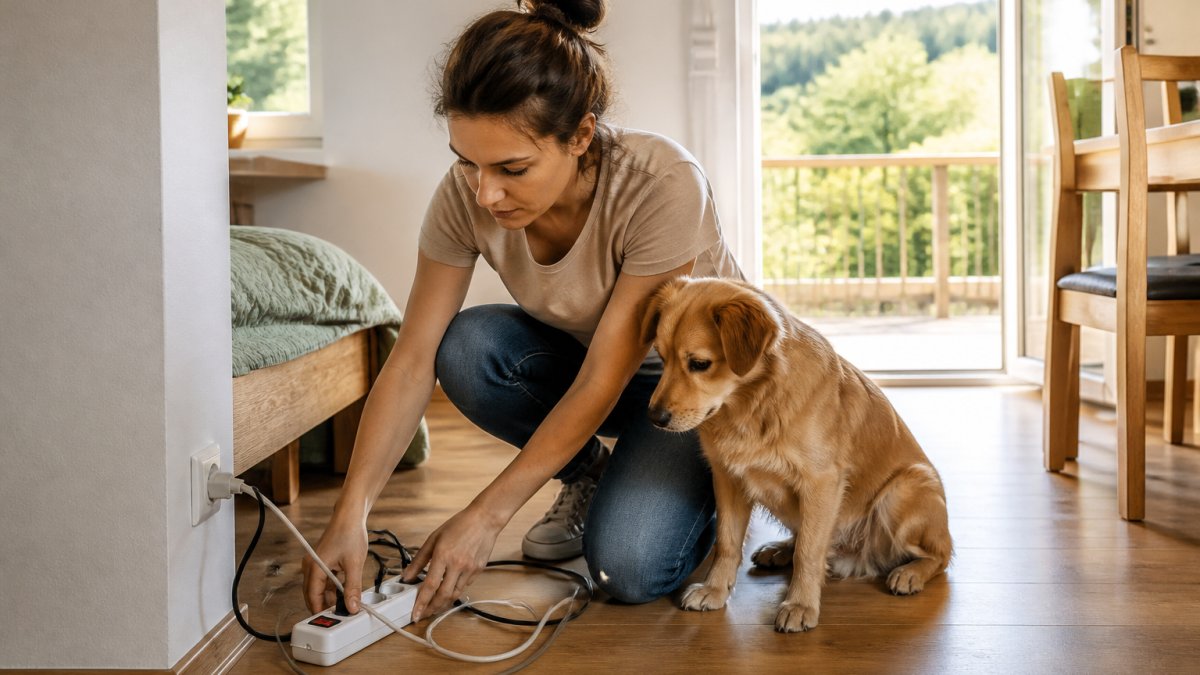
- Floor and Cables: Check to see if there are any exposed cables, if power strips are within reach, or if loose carpet edges could be a tripping hazard. Coil up cables and tuck power strips behind furniture.
Common Sources of Danger in the Kitchen, Bathroom, and Living Area
Most accidents don't happen outside, but inside. Take a walk through your home and see it through a dog's eyes:
- Kitchen: Stovetops, open dishwashers, trash cans, and cleaning supplies near the floor. Make sure the trash can has a secure lid and that cleaning supplies are stored in a lockable cabinet.
- Bathroom: The toilet is left open, soap is lying around, there are medications in the nightstand, and the tiles are wet. Close the toilet and put the medications in a locked box.
- Living area: Cords, power strips, fragile decorations, and poisonous houseplants. Remove anything that could be swallowed, especially children's toys.
- Bedroom: Open drawers, clothes racks, small objects on the floor. Clear the floor before the dog enters the room.
How to Secure Balconies, Windows, and Doors Properly
A tilted window can be dangerous for a curious dog. Before opening the window for the first time, check:
- Are the windows only tilted open or fully open? Always close tilt windows when the dog is alone in the room.
- Does the balcony have a solid railing? Safety nets close gaps smaller than 10 centimeters.
- Does the patio door close securely? A dog trying to get outside shouldn't be able to slip through.
A window left ajar is the most common cause of accidents in vacation rentals. A dog that sticks its head through the window can get stuck and suffer life-threatening injuries. Only open the window to let in fresh air when the dog is not in the room.
Differences by Type of Accommodation
Not every type of lodging has the same requirements. A vacation home with a fenced-in property requires different checks than an upstairs vacation apartment:
- Vacation rental with a balcony: Focus on the tilt windows, balcony railing, and stairwell. Find out whether the dog must be kept on a leash in the stairwell.
- Vacation home with a garden: Check the fence for gaps and make sure it's tall enough. A fence less than 1.20 meters high can be jumped over by many dogs. Watch out for garden ponds, pool covers, and poisonous plants.
- Ground-floor apartment with a terrace: Check the patio door and adjacent flower beds. Some dogs dig under fences.
If you complete these checks before letting your child walk on their own for the first time, you’ve already eliminated the most common risks. The rest is supervision—and that begins the moment you step into your home.
Checklist for Vacationing with Your Dog: What You Need to Sort Out Before You Leave
A Vacation Checklist with a dog This prevents you from realizing you've forgotten important documents or rules only once you arrive. Go over these points a week before departure.
Travel Documents and Health:
- EU Pet Passport with a valid rabies vaccination
- Microchip number and registration verified
- Recent health checkup by the veterinarian
- Dog Liability Insurance Active
- Copies of all documents, both digital and in paper form
Equipment:
- Leash, harness, and collar with name tag
- Muzzles for Public Transportation
- Travel Crate for the Trip
- Food for the entire trip, plus a little extra
- First-Aid Kit and Tick Remover
Arrangements with the host:
- Read the house rules regarding dog ownership
- Number of Permitted Dogs Confirmed
- Arrival time and key handover have been arranged
- Host's emergency contact information saved
The Official information from the European Commission on traveling with pets summarize the document requirements. In Austria, the provisions of the Federal Ministry of Social Affairs, Health, Long-Term Care, and Consumer Protection Regarding rabies vaccination.
Helping Your Dog Adjust to a New Environment: The First Few Hours at Your New Home
The first few hours determine how relaxed the whole week will be. Let your dog explore the apartment on its own first, before guests arrive or you all head out together.
- Let it sink in: Put the leash on, walk through the apartment together once, and don't force anything.
- Create a permanent space: A blanket or basket in a quiet corner, away from the doorway.
- Provide water and food: After the drive, it's best to stick to small portions.
- A quick walk outside: Only after arriving, not immediately upon arrival.
- Give them some peace and quiet: Call it a night early on the first night; avoid noise and commotion.
A dog that is allowed to get used to a new environment, rather than being thrown into it, barks less often and relaxes more quickly. This also helps the neighbors.
Travel First-Aid Kit for Dogs: What Every Bag Should Have
Every vacation rental that has a dog should have a first-aid kit for dogs. It covers minor injuries and helps get your dog through until you can see a veterinarian.
- Wound Disinfection for minor scratches
- Bandages and self-adhesive pads
- Tick Remover and tweezers
- Charcoal tablets for an upset stomach
- Cooling pack for bruises and heat stress
- Poop Bags in sufficient numbers
- Copy of the vaccination record and contact with a veterinarian
- Muzzle for transport to the veterinarian
Before your trip, ask your veterinarian which medications are appropriate for your dog. Never give your dog human pain relievers without consulting your veterinarian first.
Save the number for the emergency veterinary service in your area before you arrive. In the Waldviertel The distances are long, and in an emergency, every minute counts. We provide our guests with the contact information upon arrival.
Dogs Left Alone and Unsupervised in a Vacation Rental
Unsupervised dogs pose the greatest risk of conflict in vacation rentals. The rule is simple: Never leave a dog alone in the apartment if it isn't used to being there.
Before booking, check whether leaving your dog alone is even allowed. Many accommodations prohibit it in their house rules. If your dog is allowed to stay alone, test this out at home first and keep the time short.
Practical Rules for Unsupervised Dogs:
- A maximum of 30 minutes on the first try, then increase
- Doors and Windows keep closed
- Nothing edible keep it within reach
- Radio or soft sounds can help
- Notify your neighbors, when the dog is left alone for a short time
A dog that howls or barks disturbs other guests. This can quickly lead to complaints and, in the worst case, termination of the rental agreement.
Emergency Plan: Injuries, Escapes, and Heat Stress
An emergency plan for dogs in vacation rentals should cover three scenarios. Write down the most important phone numbers and keep them in a visible place—ideally on the inside of the apartment door and as a photo on your cell phone.
Emergency contacts who must be available before arrival
Before you arrive, you should save and verify the following numbers:
- Emergency Veterinary Services in the Region: Ask your host where the nearest veterinary clinic with emergency services is located. In rural areas, distances can be long—find out in advance which clinic is open at night.
- Veterinary clinic with 24-hour emergency service: Not every veterinary practice accepts emergency cases at night. You should know of a veterinary clinic within a reasonable distance.
- Host: Direct contact is helpful if the dog runs away or causes damage to the apartment.
- Veterinarian at Home: For questions regarding medications and pre-existing conditions.
- Microchip number and photo of the dog: In case the dog runs away.
Don't just save this list digitally. A note on your front door will still work even if your cell phone is dead.
In Case of Injuries: Set Priorities
Not every injury is equally urgent. Make a distinction between:
- Life-threatening: Severe bleeding, difficulty breathing, loss of consciousness, open fractures. Every minute counts—stabilize the dog, cover the wound, and drive immediately to the nearest veterinary clinic. Call ahead so the staff is prepared.
- Urgent, but not critical: Deep cuts, lameness, vomiting lasting several hours. Call the clinic and follow their instructions.
- Minor injuries: Scratches, bruises, tick bites. Disinfect the area, monitor it, and bring the child in if the condition worsens.
For transport to the vet: Put a muzzle on your dog, even if it doesn’t normally snap. Pain can make many dogs unpredictable. A blanket to help carry your dog and a towel to cover the wound should be included in your first-aid kit.
If Your Dog Runs Away: The First Few Minutes Are Critical
A lost dog in an unfamiliar area often can't find its way back. Here's what to do:
- Don't run after them. A dog that is being chased will keep running. Call out calmly and wait at a spot the dog is familiar with.
- Systematically search the surrounding area. Walk along the paths you used to walk together. Dogs often use familiar routes to find their way.
- Notify your host and neighbors. It might help to call your host, since they know the area and where dogs are often seen.
- Have your microchip number and photo ready. For announcements to the municipality, animal shelters, and local groups.
- Lay out the food and blanket. A familiar scent can bring the dog back.
In Case of Heat Stress: Immediate Actions
Heat stress is the most common preventable emergency during the summer. Signs include heavy panting, staggering, reddened mucous membranes, and loss of consciousness.
- Take the dog immediately into the shade or into a cool room.
- Offer him some water, but don't force him to drink it.
- Cool their paws, belly, and the insides of their ears with damp cloths. Do not use ice water—it can constrict blood vessels and make cooling less effective.
- If your pet is staggering or has lost consciousness, take it to the veterinarian immediately.
Never leave a dog in a parked car, not even when it's 20 degrees. The temperature inside the car can rise to life-threatening levels within minutes. This applies even if you're just running a quick errand.
First-Aid Kit for Emergencies
Keep your first-aid kit within easy reach in case of an emergency. Put the following items in a separate bag that you can take with you on outings:
- Wound Disinfection and Sterile Compresses
- Self-adhesive bandages and band-aids
- Tick remover and tweezers
- Muzzle
- Towel and blanket
- Cooling pack
- Copy of the vaccination record and emergency contacts
If you have this equipment with you and have saved the numbers in advance, you'll be prepared for the three most common emergencies. The rest is a matter of staying calm—and that's something you can practice.
House Rules and Consideration: Clearly Defining Guests' Responsibilities
Guest responsibilities and host rules are two different things. The host decides where the dog is allowed to run and where it isn't. The guest makes sure their dog follows those rules.
Typical rules in the house rules:
| Area | Landlord Rule | Hosting Obligation |
|---|---|---|
| Apartment | Dogs allowed, limited number | Supervise your dog; report any damage |
| Outdoor facilities | Leash Requirement in the Garden | Use a leash; pick up after your dog |
| Rest Periods | Quiet at noon and at night | Calming Your Dog, Preventing Barking |
| Other guests | Consideration | Keep your distance; do not let your dog run free |
| Stairwell | Dog in your arms or on a leash | Keep your distance; don't crowd others |
Consideration starts the moment you enter the house. A wet dog running through the stairwell leaves footprints. A barking dog wakes up other guests. If you keep this in mind beforehand, you’ll save yourself some trouble.
The Austrian Veterinary Association recommends always keeping dogs on a leash in unfamiliar surroundings until they have become accustomed to them.
Safety Rules for Dogs in Vacation Rentals: The Bottom Line
Safety rules for dogs in vacation rentals aren't just paperwork—they're the key to a peaceful vacation. If you secure your rental, keep an eye on your dog, and have an emergency plan in place, you'll avoid most problems.
Dogs are welcome at Ferienwohnungen Gutenbrunn. Our four apartments are located in a quiet area in the Waldviertel, with plenty of nature right on your doorstep. Anna and Herbert will give you the most important information upon arrival and are available to assist you personally if anything is unclear. Book directly with us and start your vacation with your dog on a relaxed note.
Frequently Asked Questions
What do I need to keep in mind when traveling to Austria with my dog?
To enter Austria with a dog, you need a valid EU pet passport, a valid rabies vaccination, and a microchip. The microchip must have been implanted before the rabies vaccination. Before booking vacation accommodations, also check whether dogs are allowed and whether liability insurance for the dog is required. Such insurance is not generally required for dogs in Austria, but many landlords expect it. Be sure to bring your dog’s vaccination record and insurance documents with you.
How can I make a vacation rental safe for my dog?
When you arrive, go through the apartment systematically: Tuck away cables and power strips, store cleaning supplies and medications in locked cabinets, and secure the balcony and windows so the dog can’t jump out. Also check the floor for small items that could be swallowed and make sure the dog cannot access hot stovetops when unsupervised. Ask your hosts about any known hazards. A short safety checklist will help ensure you don’t overlook anything.
Where should the dog sleep in the vacation rental?
The sleeping area should be quiet, draft-free, and not right next to the front door. Many dogs relax more quickly if they have a familiar pillow or blanket from home. Don’t place the sleeping area next to a radiator or an open window. Check with your hosts in advance to see if the dog is allowed to sleep in bed or on the sofa to avoid any misunderstandings. During the first few nights, it helps to set up the sleeping area close to your own bed.
What should be included in a first-aid kit for dogs?
A first-aid kit for dogs should include bandages, tick tweezers, blunt-tipped scissors, disposable syringes for flushing, an animal-safe wound ointment, and medications prescribed by your veterinarian for diarrhea and motion sickness. Also be sure to bring your veterinarian’s contact information and your dog’s vaccination record. Before you leave, ask your veterinarian which medications are suitable for your dog and have the dosage written down. Human pain relievers are often dangerous for dogs and do not belong in the first-aid kit.
A vacation with your dog stands or falls on how well you prepare. If you’re looking for a place to stay where your dog is welcome and you don’t have to worry about every little detail yourself, Ferienwohnungen Gutenbrunn is the right choice for you. We offer dog-friendly apartments with personalized service, a quiet location close to nature, and direct booking without going through a third-party platform. Get started with Ferienwohnungen Gutenbrunn and look forward to a getaway where your dog can relax, too.


Comments are closed, but trackbacks and pingbacks are open.