


Table of Contents
- Why the Waldviertel Is a Paradise for Predatory Fish Anglers
- Lower Austria Fishing License: What You Need to Know Before Your First Cast
- The Best Predator Lures for Pike, Zander, and Perch
- Spinning Techniques: From the Shore and from a Boat
- Closed Seasons for Predatory Fish in Austria: When You Can Fish for Which Species
- Types of Water Bodies and Hotspots in the Waldviertel Region
- Seasonal Strategies: When Do Pike, Zander, and Catfish Bite Best?
- Equipment for Predatory Fish Fishing in the Waldviertel
- Night Fishing and Boat Fishing: What You Need to Know
- Conclusion: Success with the Right Method
- Frequently Asked Questions
Last updated: September 29, 2026
Why the Waldviertel Is a Paradise for Predatory Fish Anglers
Predatory Fish Fishing in the Waldviertel: The Best Methods can’t be summed up in a single sentence, but their common thread is easy to explain. The region combines deep reservoirs, clear streams, and ponds in a landscape of granite, moss, and dense spruce forests. It is precisely this mix of cold- and warm-water habitats that makes it so attractive to pike, walleye, and perch.
Gutenbrunn Vacation Rentals is located right in the heart of this fishing area. Anna and Herbert have known the waters around Gutenbrunn for years, and guests keep asking them the same question: Where do I start, and with what? This guide brings together the answers. It’s aimed at anglers casting their lines in the Waldviertel for the first time, as well as experienced spin fishermen looking specifically for the best techniques.
The appeal lies not only in the fish population. It’s the tranquility. Anyone who stands on the shore at five in the morning and hears nothing but fog and water will understand why the Waldviertel is considered one of Austria’s most unspoiled fishing areas. Anyone who wants to learn more about the region and its waterways will find information at the Lower Austria State Government Office, Department of Hydraulic Engineering the official information about the individual districts.
Lower Austria Fishing License: What You Need to Know Before Your First Cast
You can’t do anything without a valid Lower Austria fishing license. The fishing license is the legal basis for being allowed to fish in a fishing district at all. In Lower Austria, it is not issued centrally for the entire state, but rather on a district-by-district basis.
What you need to clarify beforehand:
- Area Pass or Day Pass: For short stays, a day pass is usually sufficient; it can be purchased directly from the property owner or leaseholder.
- State Association Fishing License: Many fishing areas also require a membership card from the Lower Austrian State Fishing Association.
- Catch Report: In some fishing areas, you are required to keep a record of your catch.
- Water Regulations: Each fishing area has its own rules regarding methods, bait, and catch limits.
The exact regulations vary from fishing area to fishing area, so it’s worth checking the fishing regulations and license information from the Lower Austrian State Fishing Association before you head out. A common mistake made by beginners is to rely solely on the day pass and forget the additional association card that’s required.
Anyone who fishes without a valid fishing permit not only risks an administrative fine but may also permanently lose their fishing privileges in many areas. Make sure you have the right license before you even unpack your rod.
The Best Predator Lures for Pike, Zander, and Perch
There is no single “best” lure for predatory fish; rather, the right lure depends on the body of water and the target species. A murky reservoir calls for different lures than a clear stream. If you understand this, you’ll save money and catch more fish.
Soft Plastics and Jig Heads: The All-Around Choice for Murky Waters
Soft plastic lures on jig heads are the standard for Predatory Fish Fishing in the Waldviertel Region. They emit pressure waves that pike and zander can detect even in poor visibility. For murky reservoirs, the rule is: larger lures, brighter colors, and heavier jig heads.
- Zander: slender rubber lures between 10 and 15 centimeters, natural colors
- Pike: Larger models starting at 15 centimeters, eye-catching, bold colors
- Perch: Small rubber bands between 5 and 8 centimeters long on the lightweight head
How you work the lure matters more than which lure you choose. A soft plastic lure that moves smoothly along the bottom will get more bites than an expensive lure that’s just dragged aimlessly through the water.
Wobblers and Spinners: Classics That Are Sure to Succeed
Wobblers and spinners are the classics among predatory fish lures. Wobblers mimic sick fish and are ideal for trolling and casting along edges. Spinners produce vibrations and are especially effective at luring perch and pike out of cover.
For shallow shoreline areas, use floating wobblers; for deep reservoir edges, use sinking models. Spinners work best in areas with little current and clear water.
Spinning Techniques: From the Shore and from a Boat
Spinning techniques are at the heart of modern predator fishing. Spinning involves actively working an artificial lure and systematically searching the water. It’s the most versatile method because you can fish from both the shore and a boat.
When fishing from the shore, cast parallel to the edge, not straight down into the depths. This keeps the bait in the strike zone longer. When fishing from a boat, you can cover edges, shallows, and plateaus that are inaccessible from shore.
The most important techniques:
- Jigging: Guide the rubber lure across the bottom with short hops
- Dropshot: Present the bait vertically above the bottom
- Throwing and Cranking: Retrieve wobblers or spinners at a steady pace
- Vertical Fishing: Guide the lure vertically beneath the boat
Jigging and Drop Shot: Vertical Fishing for Success
Jigging and dropshot are two vertical techniques that are particularly well-suited for deep reservoirs. When jigging, the lure bounces along the bottom in short jerks, attracting zander and pike near the bottom. Dropshot, on the other hand, keeps the lure almost stationary and relies on subtle twitches.
A common misconception: that the dropshot rig is only good for perch. In the deep, cold reservoirs of the Waldviertel region, this method regularly catches zander that don’t respond to traditional lures.
When using the dropshot rig, use a weight that is as light as possible. In the clear waters of the Waldviertel, predatory fish are spooked by too much weight and will avoid the bait.
Closed Seasons for Predatory Fish in Austria: When You Can Fish for Which Species
Closed seasons for predatory fish in Austria are regulated by law and vary by state and fish species. A closed season means that a species may not be fished during a specific period to ensure its reproduction. The minimum size limit specifies the minimum length at which you are allowed to catch a fish.
The regulations of Lower Austria apply to the Waldviertel region. Pike and walleye typically have closed seasons in the spring, during the spawning season. Perch can usually be fished year-round, but is subject to local minimum size limits.
Always check the specific regulations in your fishing district’s water regulations, as fishing districts may impose stricter rules than state law. In this context, “fair hunting” means: Anyone who ignores a closed season or minimum size limit harms the fish population and risks losing their license.
Types of Water Bodies and Hotspots in the Waldviertel Region
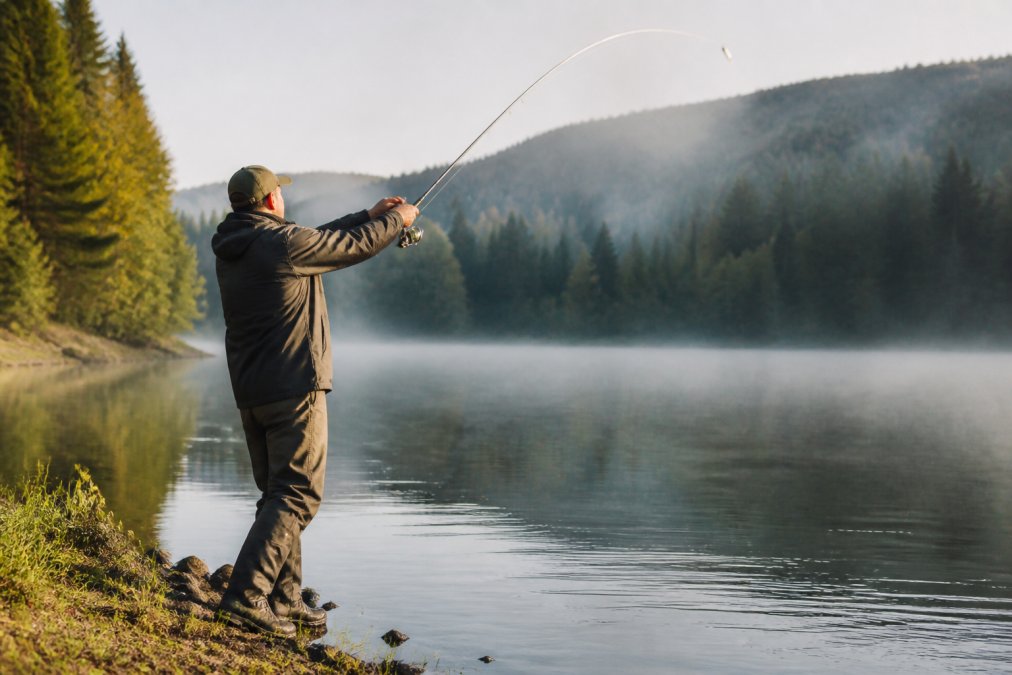
Most guides to predator fishing treat „the lake“ as a single, uniform setting. In the Waldviertel, that doesn’t work. A deeply carved reservoir on a granite bed behaves completely differently from a shallow, summer-warm pond or a fast-flowing stream. If you use the same method everywhere, you’ll miss half your bites. That’s why we’ve included a breakdown of water profiles, methods, and baits—the very detail most guides leave out.
The Three Water Profiles and What Sets Them Apart
Reservoirs (deep, cold, with varied bottom topography): The large reservoirs in the Waldviertel—such as the reservoir near Edlesberg or the reservoirs along the Kamp reservoir chain—often reach depths of 20 to over 40 meters near the dam walls. The water is cool and rich in oxygen; the banks drop off steeply, and underwater lie sunken tree trunks, old stream beds, and rocky ledges. It is precisely these ledges that serve as prime fishing spots. This is where jigging, drop-shot, and vertical fishing are most effective, because you can guide the bait precisely at depth.
Running waters (oxygen-rich, cool, with varying currents): Streams and smaller rivers, such as the upper Kamp or the Lainsitz, carry clear, oxygen-rich water with gravel banks, eddies, and cover provided by roots and rocks. Here, spinners, small wobblers, and light soft plastics—which you work downstream—are the go-to lures. The fish are positioned behind obstacles in the current—cast upstream of the obstacle and let the lure drift naturally toward it.
Ponds and small bodies of standing water (shallow, warm, weedy): Many ponds in the Waldviertel are only two to four meters deep; they warm up significantly in the summer and silt up along the edges. Fields of water lilies, reed beds, and deadwood provide the structure. Pike and perch stay close to this cover. Shallow-running wobblers, spinners, and weedless soft plastics are the right choice; heavy jigging isn’t very effective here because the bait gets snagged in the weeds.
Hotspots and How to Read Them
The reservoir near Edlesberg is best known for its zander population. The productive spots are not in the middle of the basin, but at the transitions: where a shallow area drops off into deeper water, and at the mouths of the tributaries, which bring nutrients and small fish. Anglers fishing from the shore should look for these same transitions—edges, rock piles along the dam, and areas where tributaries flow in.
A tried-and-true method: Mark two or three points along the shore where the depth contour line changes, and fish them systematically in sections rather than aimlessly walking along the shoreline. In the surrounding ponds and streams, the same principles apply on a smaller scale—cover, transitions, and the edge of the current.
Methods by Water Type—A Brief Overview
- Deep Reservoir: Jigging and drop-shot fishing along steep edges, vertical fishing from a boat over plateaus
- Watercourses: Use spinners and small wobblers downstream; cast your lure upstream of obstacles
- Shallow pond: shallow-running wobblers and spinners along the edges of the weed beds, light soft plastic lures
The depth of the water therefore determines not only the method but also how the lure is worked. In deep areas, you work the lure vertically and slowly; along shallow edges, you cast and retrieve it at a steady pace. Once you’ve internalized this approach, you’ll be able to find the right spot and the appropriate technique more quickly in any new body of water in the Waldviertel.
Before your first cast, check the official fishing regulations for your area—depth information, boating rules, and permitted methods can vary significantly from one reservoir or pond to another.
Seasonal Strategies: When Do Pike, Zander, and Catfish Bite Best?
Most seasonal guides tell you which time of year is good. They don’t tell you why—and that’s exactly the difference between a plan and a calendar. The feeding activity of predatory fish in the Waldviertel region is determined by water temperature, the spawning cycle, and oxygen levels. If you monitor these three factors, you’ll know where to cast your bait even without a specific date.
Water Temperature as a Timer
As a rough guide for the waters of the Waldviertel region: When the water temperature drops below about 8 °C, pike and zander become sluggish and stay deep; they are most active between about 10 and 18 °C; above about 22 °C, zander and catfish in particular retreat to cooler, more oxygen-rich areas. These thresholds aren’t hard and fast rules, but they explain why the same method yields catches in April but comes up empty in August.
Spring: The Transition Period
Once the closed season ends, the peak pike season begins. The fish hold in shallow water, often at depths of two to four meters, and spawn in weedy coves. This is followed by a brief feeding lull, during which you’ll have better luck using slow retrieves and natural colors rather than aggressive lures. Zander stay even deeper during this phase and respond to soft plastic lures worked vertically along the edges.
Summer: Early, Late, and Deep
During the warmer months, fish activity shifts to the early morning and evening hours. Before sunrise and at dusk, pike and zander hunt in shallow water; during the day, they retreat to deeper, cooler layers. This is exactly where vertical fishing and the drop shot technique pay off—you can reach the fish that have left the shallow water. Catfish are most active now and bite mainly at night; they require heavy tackle and patience.
Fall: the most intense phase
As the water cools, pike and zander build up fat reserves for the winter. This is the most productive time of year in the Waldviertel. The fish are returning to shallower waters and hunting over shoals and along edges. Larger lures and faster retrieves work reliably now. As temperatures drop, catfish become increasingly inactive.
Winter: deep and slow
When water temperatures are low, zander and pike stay deep and move very little. Success now comes from slow, vertical fishing with small- to medium-sized lures right along the bottom structure. Winter anglers need patience and precise lure control more than they need a heavy rod.
A Brief Overview of the Season
- Spring: Pike near the surface after the closed season, then a feeding lull; zander deeper along the edges
- Summer: Early and late in the day in shallow water; during the day, vertically in deep water; catfish at night
- Fall: Peak season; pike and walleye are more active in shallower waters and more aggressive
- Winter: deep, slow, vertical along the basic structure
Fall is the most productive time for predator fishing in the Waldviertel region. Pike and zander feed voraciously before winter, and the cooler water temperatures make them more active. However, if you pay attention to the water temperature rather than just the calendar, you’ll find the right depth and method for every season.
Equipment for Predatory Fish Fishing in the Waldviertel
Tackle for predatory fish fishing in the Waldviertel should be tailored to the region’s conditions. Clear water, deep reservoirs, and powerful fish call for a rod that delivers the bait with precision and holds up during the fight.
The basic equipment:
- Spinning rod: Medium to heavy casting class for soft plastics and wobblers
- Role: Sturdy stationary reel with a good brake
- String: Braided main line for direct contact with the bait
- Undercut scoop: Large and rubber-coated to protect the fish's mucous membrane
- Landing net handle: long enough for shore fishing along steep banks
A common mistake is using a rod that’s too light for large soft plastics. Anyone fishing for pike and zander in the Waldviertel needs a rod with plenty of backbone.
Night Fishing and Boat Fishing: What You Need to Know
Night fishing and boat fishing are subject to specific regulations in Lower Austria. Night fishing is not permitted everywhere and is often restricted to certain bodies of water. In many fishing districts, boat fishing requires an additional permit and a boat that meets safety standards.
What you should clarify:
- Is night fishing allowed in your fishing area, and what methods are permitted?
- Do you need a separate boating license?
- Are there rental options available at the body of water?
- What safety equipment is required?
A boat greatly expands your reach. You can access ledges and plateaus that remain inaccessible from the shore. When night fishing, remember to stay quiet, use light sparingly, and work your bait slowly.
Conclusion: Success with the Right Method
Predatory fish fishing in the Waldviertel rewards anglers who tailor their method, bait, and season to one another. Those who obtain their Lower Austria fishing license in advance, respect closed seasons, and bring the right equipment will find ideal conditions for pike, zander, and perch in the region’s reservoirs and ponds. In addition to traditional methods, targeted fishing along the shoreline requires the The right gear for fly fishermen, in order to fish successfully even in the shallower areas of the Waldviertel's waterways.
After a long day by the water, one thing matters most: a quiet place to unwind. Gutenbrunn Vacation Rentals offers barrier-free and wheelchair-accessible vacation rentals with personalized service from Anna and Herbert, where Dogs are also welcome. Its peaceful location near Lake Edlesberg makes this accommodation the ideal base for your fishing vacation in the Waldviertel. Book directly with the hosts and start your next day of fishing feeling relaxed.
Frequently Asked Questions
What are some methods for fishing for predatory fish in the Waldviertel region?
The most common methods are spin fishing with artificial lures, jigging with soft plastic lures, drop-shot fishing, and trolling from a boat. In the reservoirs of the Waldviertel region, jigging and spin fishing with wobblers have proven particularly effective, as they allow anglers to effectively cover deep areas and structures. For beginners, shore fishing with a spinning rod is the easiest method, while boat fishing offers more flexibility.
When do predatory fish bite best?
Predatory fish bite best during twilight hours—that is, early in the morning and in the evening. In the Waldviertel region, the months of May, June, and September are particularly productive, when pike and zander are actively hunting. On hot summer days, the fish retreat to deeper, cooler areas, so early morning or night fishing is the best option.
What are the legal requirements for anglers in Lower Austria?
In Lower Austria, you need a valid fishing license, which you can obtain from the district administration office or online. In addition, you must observe the closed seasons and minimum sizes for predatory fish species such as pike, zander, and catfish. You can find the exact regulations in the Lower Austrian Fishing Regulations. For certain bodies of water, a day pass or fishing area permit is required, which you can purchase directly from the property manager.
What equipment is recommended for spin fishing in the Waldviertel?
For spin fishing in the Waldviertel, a medium-weight spinning rod measuring 2.10 to 2.70 meters in length and with a casting weight of 10 to 40 grams is suitable. You’ll also need a fixed-spool reel in size 2500 to 3000 and braided line with a diameter of 0.10 to 0.14 millimeters. An under-the-arm landing net is a must, as are polarized sunglasses and wading-proof clothing for the shoreline areas.


Comments are closed, but trackbacks and pingbacks are open.