


Table of Contents
- Exploring the Waldviertel by Wheelchair: Discover Accessible Outings
- Accessible Attractions in the Waldviertel: Specific Recommendations
- Explore Accessible Hiking Trails Along the Lake
- Accessible Garden Paths for Wheelchair Users
- Handy Checklist: Things to Check Before Your Trip
- Accessible accommodations as a starting point
- Common Challenges and How to Overcome Them
- Frequently Asked Questions
Last updated: October 17, 2026
Exploring the Waldviertel by Wheelchair: Discover Accessible Outings
The Waldviertel Wheelchair Tour opens up possibilities that many people aren’t even aware of. There are accessible destinations here—you just have to know where to find them. The region offers lakes, cultural sites, and nature trails that are truly accessible—not just on paper. At Ferienwohnungen Gutenbrunn, we understand that a successful outing in a wheelchair requires planning, but that spontaneity should also be possible.
This guide outlines specific goals and practical routes in the Waldviertel. We reveal what „accessible“ really means and which attractions are actually accessible. You’ll learn which paths are flat, where public transportation works well, and how to use your lodging as a starting point.
What makes a tourist destination truly accessible?
Accessibility doesn't mean there are ramps everywhere. It means: level paths, no unexpected steps, wide doors, and wheelchair-accessible restrooms. Some places advertise their accessibility but only have one parking space for people with disabilities. That's a start, but it's not enough.
A truly accessible destination has the following characteristics:
- Flat or slightly sloping paths (maximum 6 % gradient)
- No unexpected steps or thresholds
- Aisles that are sufficiently wide (at least 90 cm)
- Accessible Restrooms Nearby
- Parking spaces for people with disabilities
- Benches for taking a breather
- Clear Information Before Your Visit
Contact attractions directly before you head out. Websites are often out of date. A quick phone call can save you a wasted trip.
Accessible Attractions in the Waldviertel: Specific Recommendations
The Waldviertel has more to offer than many people realize. Much of the region is flat, and some towns have taken accessibility seriously. Instead of simply labeling destinations as „wheelchair-accessible,“ we’ll outline what really matters here: surface, slope, path width, door widths, steps, ramps, and accessible restrooms. This way, you can assess before you go whether a destination is suitable for your type of wheelchair and your support needs.
Lakes and Natural Landmarks
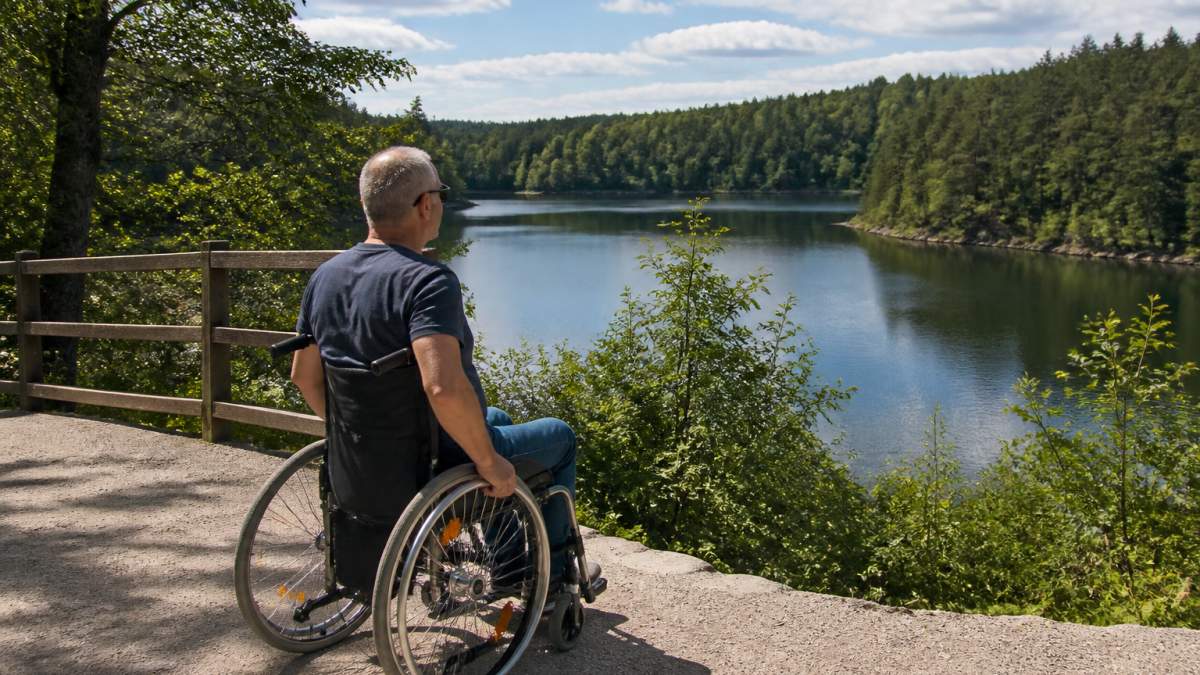
Lake Edlesberg is a classic destination for accessible outings. The lakeside path is mostly flat and paved; the surface consists primarily of compacted gravel and asphalt, so even manual wheelchairs can navigate it easily. The path is about two meters wide in most sections, though it narrows to about 1.20 meters in some narrow spots. The incline remains moderate along the loop trail; a few short ramps at the entrance are paved. Parking is available right at the entrance, including designated spaces for people with disabilities. The lakeside restaurant is accessible via a step-free entrance; when making a reservation, ask for a table with ground-level access and inquire about the accessible restroom.
The Kamp River offers additional opportunities. Certain sections are wheelchair-accessible, especially in the flatter areas. The paths are partly gravel and partly paved; the gravel can become soft after rain. Check on-site for current trail conditions, especially after flooding or repair work.
You don't have to go far to experience nature. Many local trails are accessible if you know what to expect beforehand. Look for forest roads instead of hiking trails: they're often wider, less steep, and have a firmer surface. That's the difference between a successful outing and a frustrating one.
Cultural Attractions
Museums and historic sites in the Waldviertel are becoming increasingly accessible. Some castles and fortresses have made their facilities accessible to wheelchair users, though not all of them. Be sure to ask specific questions in advance: door widths (at least 90 cm is recommended), ramps instead of steps, elevators, accessible restrooms, and whether the main entrance is accessible without steps. Call ahead—websites are often not up to date.
The art district in the region has several galleries with barrier-free access. Some require advance registration. This is normal and not an obstacle; it shows that they are well-prepared. When you register, be sure to ask about the shortest, step-free route from the parking lot to the entrance.
Village museums are often housed in old buildings. This is where things get more challenging. Not every historic building can be easily renovated; narrow doors, thresholds, and steps leading to the restroom area are common. Look specifically for museums with modern access features or those that at least have ground-level exhibition areas and an accessible restroom.
Food and Beverage and Breaks
A good outing calls for a break. Restaurants and cafés by the lake are usually accessible. Outdoor tables are often at ground level. When making a reservation, ask about wheelchair-accessible seating, the width of the entrance door, and accessible restrooms.
Smaller country inns can sometimes be problematic. Old buildings, narrow doors, steps leading to the restroom area. Here, too, it’s best to ask in advance so you aren’t caught off guard. A quick phone call to ask about steps at the entrance, door width, and restroom access will save you from an unpleasant surprise.
For each destination, ask yourself three questions: How wide is the narrowest door? Are there steps or a ramp at the main entrance? Where is the nearest accessible restroom? The answers to these three questions often determine whether a trip will be practical.
Plan some breaks. Not just for bathroom breaks, but because relaxation is part of the fun. A cup of coffee with a view is worth more than a rushed tour.
Explore Accessible Hiking Trails Along the Lake
Hiking in a wheelchair is possible. You just need to take different paths than when walking. The goal is to find flat routes with a reliable surface. So that you not only know it’s possible but also how to do it, we’ll list the starting point, distance, estimated duration, rest stops, and potential obstacles, as well as how to get there with barrier-free access.
Flat routes with reliable accessibility
The lakeside path around Lake Edlesberg is the best option for wheelchair users in the Waldviertel region. The route is flat, the surface is paved, and benches invite you to take a break. A lap around the lake takes about 45 minutes to an hour, depending on your pace. The distance is about two to three kilometers, depending on the route chosen. The surface is mostly asphalt and compacted gravel; the path is about two meters wide in most sections. Benches along the shore and the lakeside restaurants serve as places to take a break. Potential obstacles: narrow spots on certain sections of the shore; leaves and moisture on the asphalt after rain.
The Kamp River Trail has sections that are accessible. Check on-site to see which parts of the trail are currently passable. Flooding and repairs can change conditions. Be sure to ask specifically about the gradient, the width of the trail, and whether there are passing spots in case someone is coming toward you.
Flat forest trails are rare, but they do exist. Look for forest roads instead of hiking trails. These are often wide enough and less steep. A good starting point is a paved parking lot at the edge of the forest; from there, you can often plan a round-trip route so that you can turn back at any time if you start to run out of energy.
Starting Points and Getting There by Public Transportation
Public transportation in the Waldviertel works well, but some planning is necessary. Buses run regularly to the lakes and larger towns. Many buses have ramps or lifts for wheelchair users; when booking, ask whether the specific route is accessible, as not every bus is. Look for accessible bus stops with raised curbs or ramps.
Train stations have varying standards. The train station in Groß Gerungs is accessible. Smaller stations may have issues, such as a lack of elevators or high platform edges. If you’re traveling by train, contact ÖBB in advance and ask about the accessibility of the specific station, assistance with boarding, and how to reserve a wheelchair-accessible seat.
Parking spaces for people with disabilities are located at the main destinations. Please use them. Not only are they closer, but they’re often free. Check in advance to make sure the parking space is paved and level so you can safely unload your wheelchair.
For the last leg of your journey—from the train station or bus stop to your destination—it’s worth checking out local taxi or transfer services that offer wheelchair-accessible vehicles. Contact the region’s tourist information office to find out which providers are currently available and whether advance booking is required.
Buses don't always run on schedule. Delays can occur in winter and during bad weather. Be sure to allow for extra time, especially if you need to catch a return trip. Check in advance to see if the last bus of the day is accessible; otherwise, getting back might be a problem.
Before you travel, check directly with ÖBB and the regional bus operator to see if elevators, ramps, and lifts are working. A quick phone call the day before will confirm operating hours, construction sites, and access conditions, and save you from making a trip for nothing.
Accessible Garden Paths for Wheelchair Users
Gardens are often underrated destinations. Some in the Waldviertel region have made their paths wheelchair-accessible. These places offer peace and nature without much effort.
Certain private gardens are open to visitors. You can find more information at the region’s tourist information office. Some gardens require advance registration, which means you’ll need to set aside some time—an advantage, not a hindrance.
Botanical gardens and plant exhibitions increasingly feature accessible areas. The paths are often paved and level. There are plenty of benches to rest on.
Garden paths offer something that hiking trails don't: design. For those who can't or don't want to spend hours out in nature, they can find relaxation here in a smaller space.
Handy Checklist: Things to Check Before Your Trip
A good outing starts with preparation. This checklist will help you make sure you don't forget anything.
Get information about accessibility
- Call the destination and ask about accessibility
- Ask whether restrooms are available and accessible
- Ask about parking spaces for people with disabilities
- Check current road conditions (construction zones, repairs)
- Check opening hours and admission prices
- Ask if advance registration is required
- Check the weather and pack your rain gear
Different Types of Wheelchairs and Support Needs
Not all wheelchairs are the same. A lightweight sports wheelchair handles uneven terrain differently than a large electric wheelchair. A manual wheelchair requires level surfaces; an electric wheelchair can handle steeper inclines.
Your personal stamina is important. Some trips are too long, others too short. Know your limits and plan accordingly.
Caregivers are often necessary. Whether someone needs one or not depends on the individual. Plan for realistic scenarios, not ideal ones.
People who use manual wheelchairs should choose flat, wide paths. Electric wheelchair users have more flexibility, but should plan for battery life. Anyone who needs an escort should arrange for one in advance.
Accessible accommodations as a starting point
The right accommodations make all the difference. They're not just a place to sleep, but a base for relaxation and excursions.
Gutenbrunn Vacation Rentals offers accessible rooms in the Waldviertel region. The apartments are wheelchair-accessible, featuring wide doors, level floors, and accessible bathrooms.
The location is ideal for day trips. Lakes, cultural sites, and nature trails are all within easy reach. Your hosts, Anna and Herbert, know the region well and are happy to offer practical tips.
Good accommodations mean you can relax without having to constantly plan ahead. You know the bathroom is accessible, the shower works, and you can wake up in the morning and enjoy your day.
Common Challenges and How to Overcome Them
Not everything goes smoothly. That's normal. Here are some common problems and practical solutions.
The trails are less accessible than promised. Many places are 80 % accessible, but then there’s a surprise step. Solution: Always have a Plan B. An alternative destination nearby reduces frustration.
The weather is changing. Rain can make some paths slippery. Snow is a problem. Solution: Check the weather forecast, bring rain gear, and plan an indoor day in case of extreme weather.
Public transportation is suspended. Buses are running late, and trains aren't running. Solution: Allow extra time, know alternative routes, and if necessary, call a taxi or a family member.
My muscles and joints are acting up. Longer trips can be tiring. Solution: Start with short day trips, plan breaks, and choose realistic distances.
Restrooms are too far away or inaccessible. That's a real problem. Solution: Before heading out, find out where the restrooms are, and bring catheter supplies if needed.
Frequently Asked Questions
Where can you go in the Waldviertel in a wheelchair?
The Waldviertel offers several wheelchair-accessible destinations: flat lakeside promenades, level nature trails, and cultural attractions with barrier-free access. It’s important to check accessibility in advance—while some paths are flat, they may have uneven surfaces or lack ramps. Lodging facilities and tourism associations provide specific information about current conditions and wheelchair-accessible travel options via public transportation.
How can I tell if a hiking trail is accessible by wheelchair?
Pay attention to these criteria: path width (at least 1.5 meters), surface material (asphalt or compacted gravel is better than loose gravel), slope (flat or a maximum gradient of 5 %), and uneven surfaces and tree roots. Accessible hiking trails along the lake are often better maintained. Ask your lodging provider for up-to-date information—local hosts know the actual conditions better than online descriptions.
What should I keep in mind when planning an accessible outing in the Waldviertel?
Plan time for breaks—the peaceful natural surroundings invite you to linger, but long drives can be tiring. Check the hours of operation and availability of restrooms. Bring water and snacks with you, as dining options are limited in remote areas. Let your lodging know about any special needs—personal assistance from your hosts can be invaluable if you have questions or in case of an emergency.
Are accessible garden paths truly navigable for wheelchair users?
Yes, provided they are professionally constructed: a level surface, paved (with gravel or asphalt), without steps or sharp edges, and at least 1.5 meters wide. Many private gardens and nature sites in the Waldviertel have such paths. Before your visit, you should ask whether the path is regularly maintained—unevenness can result from frost or root pressure. A recent inspection and verification of accessibility by the operator will give you peace of mind.
A wheelchair is no obstacle in the Waldviertel; with the right information, it’s a tool for enjoyable excursions. There are accessible destinations here, ranging from lakes to cultural sites to garden paths. Ferienwohnungen Gutenbrunn offers the ideal base: wheelchair-accessible apartments, personalized assistance from Anna & Herbert, and a central location for your excursions. Book directly with us and enjoy a barrier-free vacation.

Comments are closed, but trackbacks and pingbacks are open.