


Quick Overview
Accessible nature experiences for families can be identified by verifiable information on trail width, surface, and gradient. A trail should be at least 1.5 meters wide, level, and firm so that wheelchairs and strollers can pass easily. Check these details with the operator before your trip.
- Determine the surface, slope, and width of the path to your destination in advance.
- At least 1.5 meters of clear width so that a wheelchair and a stroller can fit side by side.
- Short loops with benches in sight are often better suited for young children.
- Access to bodies of water is only barrier-free if the shore path, dock, and entry point are all compatible.
- Before your visit, check for seasonal closures or construction sites.
Table of Contents
- Why Accessible Nature Experiences Are So Valuable for Families
- Accessible Family-Friendly Destinations in Austria
- Identifying Accessible Hiking Trails for Wheelchair Users
- Accessible lake access points and lookout points
- Bog Trails and Nature Trails with Children
- Planning a Family Outing with a Wheelchair: Step by Step
- Checklist for an Accessible Family Outing (To-Go)
- Age-appropriate and inclusive outdoor activities
- Plan your next nature vacation in the Waldviertel
- Frequently Asked Questions
Discover 9 Accessible Nature Experiences for Families
Last updated: October 30, 2026
Why Accessible Nature Experiences Are So Valuable for Families
Accessible nature experiences make outings possible for everyone. A stroller, wheelchair, or walker shouldn't slow down a family outing. That's exactly why it's worth taking a closer look before you go.
Anyone who travels with children knows the problem. A trail that looks harmless on the map suddenly ends at a step or a steep gravel slope. Then the outing quickly turns into a disappointment.
It is therefore important to clarify three things early on:
- Background: Asphalt, compacted gravel, or forest floor?
- Gradient: How steep is the trail, and are there any rest stops?
- Width: Can a wheelchair and a stroller fit side by side?
This guide presents nine ideas for accessible nature experiences with your family. The examples will help you plan your outings realistically.
Accessible Family-Friendly Destinations in Austria
The best way to identify accessible destinations in Austria is to look for specific details. Pay attention to information about path width, surface, and slope before you set out. If you know these three factors, you can assess whether a destination is truly suitable for wheelchairs, strollers, or walkers.
Many nature trails feature paved paths, viewing platforms, and rest areas. This often makes them easier for families with young children to use than steep hiking trails. However, it is crucial that the information provided can be verified—not every trail advertised as „accessible“ actually is.
You should clarify the following key figures before your arrival:
- Distance: Short walks are better for families with young children than long walks.
- Gradient: Flat sections are usually easier for wheelchair users to navigate than steep sections.
- Background: Asphalt and compacted gravel are suitable for wheelchairs and strollers, while forest floors and gravel are usually not.
- Width: At least 1.5 meters of clear width so that a wheelchair and a stroller can fit side by side.
- Places to take a break: Benches within sight are helpful.
Check for family-friendly infrastructure:
In addition to the trail itself, restrooms, diaper-changing facilities, and parking spaces are key to the success of your outing. Be sure to ask in advance about accessible restrooms, the distance between the parking lot and the entrance, and places to sit along the trail. Access to public transportation is also important if you don’t have a car.
Regional examples with different characteristics:
In the mountain and Alpine regions, there are often observation decks with level access, while in the Waldviertel and Mühlviertel regions, marsh trails and nature trails with wooden walkways are more common. Some lakes in the Salzkammergut and Burgenland offer flat lakeside promenades suitable for wheelchairs and strollers. The most reliable way to get specific information about gradients and surface conditions is to contact the operator directly or the regional tourist information office.
Before your visit, check to see if there are any seasonal restrictions, construction projects, or weather-related closures. A quick call to the operator will help you avoid disappointment when you arrive.
If you're unsure, check directly with the operator before your visit. Up-to-date information is usually the most reliable source. You can find more information under "Accessibility in Tourism.".
Identifying Accessible Hiking Trails for Wheelchair Users
An accessible hiking trail for wheelchair users is wide, level, and firm. You can find specific information about such routes in accessible hiking trails for people with mobility impairments. It should be rideable without assistance. If you avoid gravel, roots, and slopes, you'll usually make good progress.
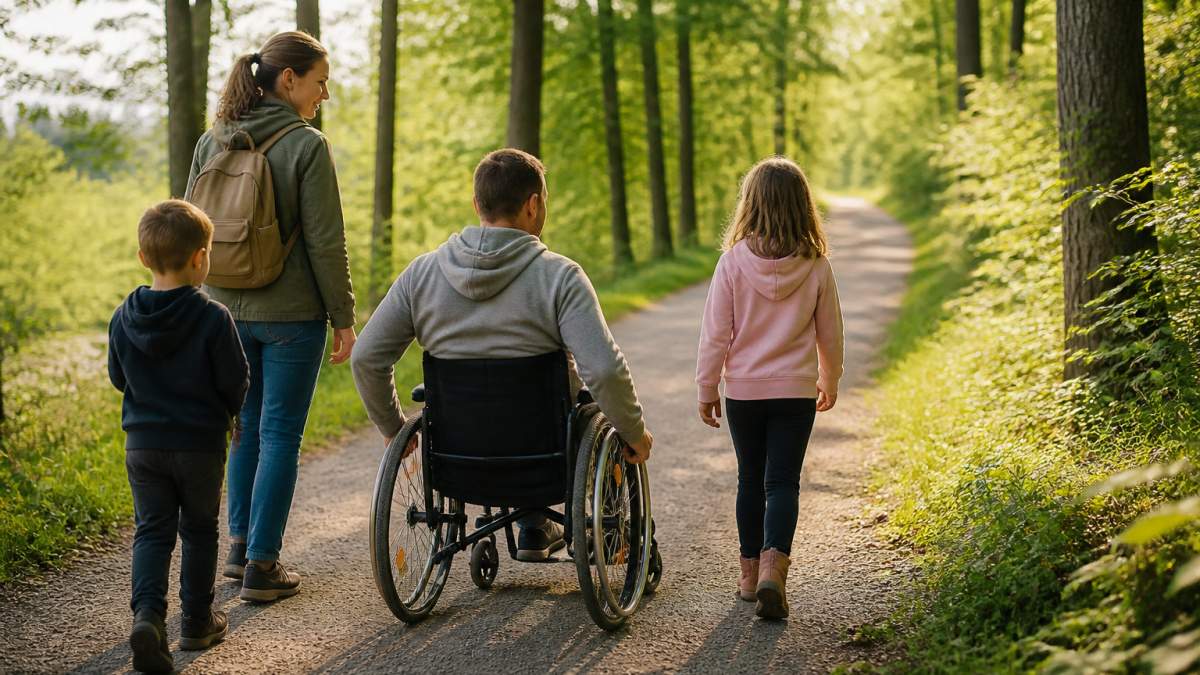
Even small details, such as a single threshold, can make a path impassable for wheelchair users.
A simple test can help you make your choice:
- Is the path at least 1.5 meters wide?
- Is the surface solid throughout?
- Are crossings and bridges properly secured?
For more information, see "Accessibility in Tourism.".
Accurately Assess Trail Conditions and Gradients
The gradient often matters more than the length. A short, steep incline is more difficult for wheelchairs than a long, flat stretch.
Check the route in advance, if possible using a map or a description. Look out for words like „steep,“ „steps,“ or „forest floor.“.
Also, be sure to plan for breaks. A bench along the way is helpful for both children and their chaperones.
Accessible lake access points and lookout points
Lakeside getaways are especially appealing to families. Tips for a Accessible Vacation by the Lake help with planning. A flat path along the shore with a dock is perfect for playing, observing, and relaxing. Here's how to find and plan Accessible hiking trails by the lake. It's important that the access is truly level. A pebble beach or stairs leading down to the water can quickly become an obstacle for wheelchairs.
What to Look for When Accessing a Lake:
- Web width: The walkway should be wide enough for wheelchairs and strollers.
- Tire tread: Non-slip wooden or metal walkways are safer in wet conditions than smooth concrete surfaces.
- Railing: Continuous railings on both sides provide safety, especially when there are children around.
- Entering the Water: For wheelchair users, some lakes have wheelchair-accessible ramps or lifts—be sure to ask in advance.
- Shaded areas: Trees or shade sails along the shore make it easier to spend longer periods of time there with children.
Viewpoints with level access are ideal for a quick stop. Often, even a short walk is enough to enjoy the scenery. Check whether the path to the platform is paved and whether there are places to sit. Skywalks and observation towers are only family-friendly if they are accessible without steps and the platform is wide enough for wheelchairs and strollers.
Accessibility for Different Needs:
In addition to wheelchair use and mobility impairments, it’s worth considering other limitations. For people with visual impairments, tactile guidance systems or high-contrast markings along the path are helpful. For family members with hearing impairments, visual information on information boards is important. For those with cognitive impairments, short, clearly structured routes with few turns make it easier to find their way. Ask the facility operator which of these features are available.
A lake access point is truly accessible only if the path, the dock, and the entry point are all compatible. Check all three—not just the path along the shore.
If you're looking for a lake with accessible paths, you can find out more in advance. An overview is available at Accessible Tourist Destinations in Austria.
This overview summarizes what you should look out for at lakeside access points and lookout spots.
| Characteristic | What to Look For | Note |
|---|---|---|
| Web width | Wide enough for wheelchairs and strollers | Narrow walkways are difficult |
| Facing | Non-slip, made of wood or metal | Smooth concrete is slippery when wet |
| Railing | Continuously on both sides | Especially important when you have children |
| Getting into the water | Ramp or platform lift | Check with the operator in advance |
| Shaded Spots | Trees or shade sails along the shore | Make longer stays easier |
Bog Trails and Nature Trails with Children
Bog trails and nature trails are both educational and exciting. Children discover plants, animals, and bodies of water right along the trail.
Many of these trails are wooden walkways. This makes them easy to walk on, but you should check their width. Narrow walkways can often be difficult to navigate with a stroller.
Good nature trails have information signs at eye level. This way, even children in wheelchairs can read the information.
Planning a Family Outing with a Wheelchair: Step by Step
A well-planned family outing with a wheelchair starts with preparation. Explained step by step Planning a Family Vacation with a Wheelchair, what really matters. A detailed guide to Wheelchair-Accessible Nature Experiences in the Waldviertel shows you how to organize the trip. The following steps will help you do that.
- Select a destination: Check the road conditions and the grade.
- Clarify directions: Are there parking spaces with room for a ramp?
- Planning Breaks: Set checkpoints approximately every 30 to 45 minutes.
- Packing your gear: Water, snacks, rain gear, and spare batteries.
- Have alternatives ready: If a route is blocked, you'll need a Plan B.
The Gutenbrunn Vacation Apartments in the Waldviertel offer accessible apartments as a starting point for excursions in the surrounding area.
Checklist for an Accessible Family Outing (To-Go)
This checklist will help you pack and plan:
- Goal Reviewed for Accessibility
- Path width and surface noted
- Parking lot near the entrance
- Spare battery for a wheelchair or electric wheelchair packed
- Bring water and snacks
- Rain jackets for the whole family
- Emergency number saved
- Plan B for Bad Weather
Age-appropriate and inclusive outdoor activities
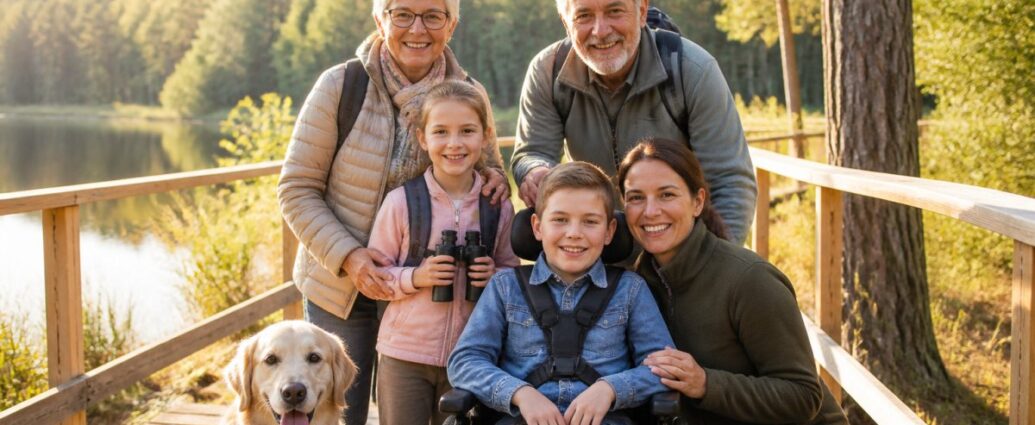
Inclusive outdoor activities are suitable for all age groups. Grandparents, children, and people with disabilities can enjoy these activities together.
Good examples include birdwatching from a boardwalk, picnicking on flat meadows, or short walks with breaks along the way.
When planning, keep this in mind: It’s better to take shorter routes with more breaks than long trips that overwhelm everyone.
Plan your next nature vacation in the Waldviertel
A relaxing nature vacation calls for a peaceful base. The Gutenbrunn Vacation Apartments offer accessible accommodations, personalized service, and plenty of space for families, wheelchair users, and dog owners. From there, you can set out on excursions throughout the region.
Book directly with your hosts, Anna & Herbert, and plan your getaway in nature. Feel free to ask them which nearby trails are particularly well-suited for you.
Frequently Asked Questions
What outdoor activities are suitable for families with wheelchair users?
Paths with a firm, level surface—such as gravel or asphalt paths—viewing platforms, and lakeshores with paved access are particularly suitable. Before setting out, you should check whether there are ramps, handrails, and wide passageways. Many nature trails are accessible by stroller or wheelchair if the route is short and level. Check with your destination for current trail information, as conditions and closures can change on short notice.
How can you tell if a hiking trail is accessible?
An accessible hiking trail has an even, firmly compacted surface without loose stones or deep roots. The gradients remain gentle, and cross-slopes are minimal. It is helpful to have information about the trail’s width, rest benches, and places to turn around. Do not rely solely on the label „accessible“; instead, check the specific details about the trail’s conditions.
How do I plan an accessible family outing in nature?
Start by choosing a destination that meets the needs of all family members. Check the directions, parking options near the entrance, and restroom facilities. Plan short segments with breaks and have an alternate route ready. If you use a wheelchair or a stroller, you should drive the route in advance or check it using photos and maps.



Comments are closed, but trackbacks and pingbacks are open.