



Table of Contents
- Why an accessible family vacation means more than just step-free access
- What Really Makes a Vacation Rental Accessible for Families
- Certified Businesses and Seals of Quality: How to Recognize Reliable Accessibility
- Planning an Accessible Vacation: Checklist for Travel Preparation
- Find wheelchair-accessible destinations for the whole family
- Nature Experiences and Barrier-Free Hiking
- Discover Culture and Attractions with Accessibility in Mind
- Sports Programs for Families with Mobility Limitations
- Costs and Financial Assistance for Accessible Family Vacations
- Testimonials: How Families with Special Needs Experience Their Accessible Vacations
- Why the Waldviertel Is an Ideal Destination for Accessible Family Vacations
- Avoiding Common Mistakes When Making a Reservation
- Conclusion: Your accessible vacation starts with proper planning
- Frequently Asked Questions
Last updated: September 22, 2026
Why an accessible family vacation means more than just step-free access
An accessible Vacation with Family begins where most self-help guides end: with the question of whether everyone involved can truly feel at home. Barrier-free access is a basic requirement, but it doesn’t tell us whether a child in a wheelchair can actually reach the lake, whether grandparents using a walker can make it along the hiking trail to the bench, or whether there’s enough space left after a long day to simply take a deep breath.
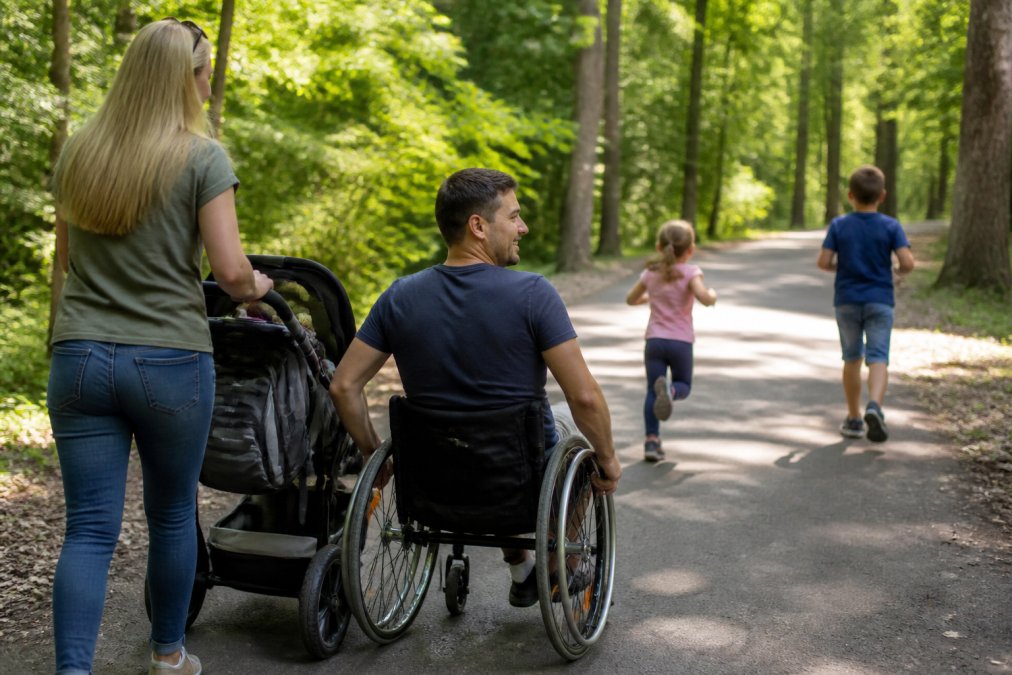
Accessibility in Tourism It is the combination of physical accessibility, reliable information before booking, and an environment that excludes no one from the family. A wheelchair-accessible bathroom without a turning circle in the hallway remains a barrier. A destination with a barrier-free entrance but no accessible restroom becomes a wasted trip after just two hours.
The Official information from the Austrian Hotel Association regarding accessibility And that is why the Ministry of Social Affairs’ advisory centers have been emphasizing the same point for years: accessibility is a combination of factors, not a single feature. Anyone who focuses on just one criterion will be disappointed again on their next vacation.
That's exactly where this guide comes in. We'll show you how to identify reliable accessibility options, how to prepare for your trip, and which attractions in the region are truly suitable for the whole family.
What Really Makes a Vacation Rental Accessible for Families
One Barrier-free vacation apartment You can’t tell if a place is family-friendly just by looking at the label—it comes down to three things: freedom of movement in everyday life, the number of actual sleeping spots, and whether the apartment still works for everyone even after a week. Ferienwohnungen Gutenbrunn offers apartments designed with these points in mind, featuring a kitchen-dining area and separate bedrooms.
The Most Important Criteria for True Accessibility
Before booking, check these points. In practice, they often have a greater impact on whether your stay is enjoyable than the square footage alone:
- Door widths: Wheelchairs generally require a clear width of at least 80 centimeters. Ask for the actual measurement, not just „wide doors.“.
- Movement areas: There should be enough space to maneuver around the bed, toilet, and shower. A bathroom without a turning area is not wheelchair-accessible, even if it is at ground level.
- Flooring: Non-slip, low-seam flooring makes it easier to use wheelchairs, walkers, and strollers.
- Sleeping arrangements: An apartment for six people needs six real beds, not a makeshift arrangement on the couch.
- Kitchen: A kitchen-dining area with a wheelchair-accessible section makes it possible to prepare meals on your own, especially with children.
- Outdoor area: Level access to the garden or patio significantly extends the time spent outdoors.
When booking, always ask for a specific photo of the bathroom with the door open. Hosts who take accessibility seriously will send such photos within a day. Those who avoid the question or simply refer you to the website often have something to hide.
A common misconception is the assumption that accessibility is an either/or situation. In practice, it’s a matter of degrees: An apartment can be suitable for a wheelchair user and, at the same time, work perfectly for a toddler with a balance bike. Both need space, level surfaces, and short distances.
Certified Businesses and Seals of Quality: How to Recognize Reliable Accessibility
Quality seals are useful when they are verified. In Austria, the Austrian Working Group for Rehabilitation and Accessibility Certifications that evaluate businesses based on uniform criteria. A verified seal means that an independent body has verified the information on-site, rather than relying solely on the business’s self-reported information.
Look for these characteristics of reliable labeling:
| Characteristic | Reliable | Less reliable |
|---|---|---|
| Exam | On-site External Audit | Company Self-Report |
| Criteria | Published Standards | Vague wording |
| Validity | Date and Term | Permanent Information |
| Details | Dimensions and Photos | Description text only |
However, a certificate is never a substitute for a personal conversation. The best source of information is still direct contact with the hosts, who know the apartment and can assess whether it’s a good fit for your specific situation.
Don't rely on the „accessible“ category on booking sites. This designation is often assigned by the business itself and isn't verified. A property listed as accessible may have steps at the entrance because no one checked the information. Always ask directly.
Planning an Accessible Vacation: Checklist for Travel Preparation
A structured planning checklist for an accessible vacation saves time and helps you avoid the usual surprises once you arrive. Start planning at least six to eight weeks before your trip so that you still have alternatives if your accommodations are fully booked.
Checklist for Travel Preparation:
- Contact the accommodation directly and ask for specific measurements (door widths, turning radii, beds)
- Request photos of the bathroom, entryway, and bedrooms
- Plan your trip and check for accessible transfers
- Check the accessibility of destinations in advance
- Pack assistive devices and replacement parts (wheelchair tools, replacement tubes, chargers)
- Bring a sufficient supply of medications and prescriptions
- Write down emergency contacts and the nearest places to go
- Arrange for assistance or a travel companion as needed
- Book an apartment based on your actual needs, not on the maximum number of people
- Check with the host in advance if you're bringing your dog along
Accessible Travel by Public Transportation
Traveling by train and bus in Austria is easy to plan for travelers with limited mobility if you register in advance. The ÖBB Information on Accessible Travel We offer a dedicated service for travelers with limited mobility, including assistance with boarding and transferring trains. Please indicate your needs when booking so that staff will be on hand at the station.
Things to Keep in Mind:
- Transfers: Be sure to allow plenty of time for transfers. A transfer with a wheelchair takes longer than simply walking.
- Access to the train station: Not every train station is accessible without steps. Check the accessibility of each individual stop.
- Last mile: Find out in advance how to get from the train station to your accommodations. You should reserve a taxi with a wheelchair-accessible vehicle.
- Luggage: Less luggage means more freedom of movement. A travel companion or luggage service takes the burden off your shoulders.
Notifying the service provider of your need for assistance when booking is the most important single step in planning your trip. Without this notification, there is often no one waiting for you at the station, and your entire day of travel can come to a standstill.
Find wheelchair-accessible destinations for the whole family
Wheelchair-Accessible Destinations The most reliable way to find them is through regional tourism portals, personal recommendations, and information from local hosts—not through general search queries. In the Waldviertel region, it’s worth checking out the Official accessibility information from Lower Austria Tourism, which filters attractions by accessibility. In addition, the Austrian Council for People with Disabilities: Tips for Accessible Travel Focus on verified goals.
This order has proven effective when making a selection:
- Check that the entrance is accessible. A single block of steps renders the entire target unusable.
- Clarify the details regarding the restroom facilities. Without access to a restroom, the outing will end after two hours at the latest.
- Evaluate trails in the terrain. Gravel paths are difficult to navigate in a wheelchair, whereas paved or hard-surfaced paths are no problem.
- Plan for places to retreat to. Children and adults with limited mobility need breaks. Benches, shade, and a café within walking distance make all the difference.
- Allow for a time buffer. A family outing takes longer than planned.
Specific Goals in the Waldviertel Region and Their Typical Strengths
Instead of a long list, it’s worth taking a look at the types of destinations that consistently work well in the region. These categories have proven effective for families with members who have limited mobility:
- Reservoirs and ponds: Trails around bodies of water, such as the Edlesberger Pond, are usually flat, paved, and equipped with benches. The trail runs right along the water’s edge; children can walk, and wheelchairs and strollers can travel along the same path.
- Accessible Themed Trails: Nature trails with a solid surface and gentle inclines are suitable for hand bikes, wheelchairs, and walkers. Look for routes designated as „accessible“ rather than simply „hiking trails.“.
- Museums with special exhibitions: Many regional museums in the Waldviertel have installed elevators and ramps in recent years. Be sure to ask in advance whether the main exhibition or only a section of it is accessible.
- Monasteries and abbeys: Historic sites are rarely fully accessible. However, some offer barrier-free guided tours and accessible courtyards. Please call ahead to inquire about elevators, restrooms, and tour times.
- Lookout towers and observation decks: Suitable only if the entrance is step-free. Many waiting rooms have narrow spiral staircases and are therefore unsuitable for wheelchairs.
A unique perspective: the two-hour rule
Most guidebooks list destinations without taking the family’s stamina into account. A practical rule of thumb based on experience with affected families is this: Plan outings so that you can return to your lodging within two hours. That may sound restrictive, but it actually extends the vacation because it prevents exhaustion and overwhelm. A morning outing with an early return, a lunch break at home, and a second short afternoon activity works better for most families than a full-day outing.
A common mistake is assuming that a destination is either completely accessible or completely unsuitable. In practice, there are shades of gray. Some destinations are suitable for wheelchair users but less practical for those using walkers. Others work for both, but lack accessible dining options. Therefore, always assess the specific situation of your family, and if you’re unsure, ask the accommodation provider directly—hosts know the region and can help determine which destination is best suited for your family.
Always call the attractions directly instead of relying on their websites. Ask specific questions: „How many steps are there at the entrance? Is there an elevator? Where is the nearest accessible restroom?“ Anyone who can answer these three questions has given the issue serious consideration.
Nature Experiences and Barrier-Free Hiking
Barrier-free nature experiences are in the Waldviertel It’s not uncommon—you just need to know which trails are suitable. Many hiking trails in the region are gravel paths or feature exposed roots and steep inclines, which can be problematic for those using wheelchairs or walkers. However, there are an increasing number of designated accessible routes with paved surfaces, gentle slopes, and regular rest areas.
What to Look for When Choosing a Hiking Trail:
- Tire tread: Asphalt or compacted gravel with a solid surface are passable; loose gravel and dirt paths are not.
- Gradient: Mild inclines are manageable for hand bikes and wheelchairs, but steep sections are not.
- Width: The path should be wide enough for two people to ride side by side.
- Rest areas: Benches placed at regular intervals allow the whole family to take breaks.
- Signage: Clear signs prevent you from ending up on an unsuitable section of the trail.
The peaceful natural surroundings of Gutenbrunn are one of the reasons why families with members who have limited mobility come here. Ferienwohnungen Gutenbrunn is located in a quiet area, making it a great starting point for walks.
Discover Culture and Attractions with Accessibility in Mind
The best way to explore cultural attractions that are accessible to everyone is to do some research in advance, because historic buildings are rarely accessible on their own. Monasteries, castles, and old towns were built over centuries without consideration for mobility. Many buildings have since been retrofitted, but the level of accessibility varies greatly.
Before your visit, please check the following:
- Entrance and Elevator: Is there step-free access, and is there an elevator that is also wheelchair-accessible?
- Exhibition spaces: Are the main areas accessible, or just part of them?
- Guided Tours: Are there special guided tours for visitors with limited mobility?
- Restroom facilities: Accessible restrooms are a must, not a bonus.
- Parking: Are there designated parking spaces near the entrance?
For families with children, it's also worth asking whether there are any hands-on activities available.
Sports Programs for Families with Mobility Limitations
Sports options for families with mobility challenges have expanded significantly in recent years. Handbike rentals, wheelchair-accessible ski resorts, and guided bike tours with an escort are now standard in many regions. In winter, several ski resorts in the Alps offer specially equipped lifts and monoski courses; in summer, handbike trails and accessible bike paths are the most common options.
What Families Should Clarify in Advance
- Rental: Is the necessary equipment available on site, or do I need to bring my own? Hand bikes and monoskis aren't available everywhere.
- Accompaniment: Is a travel companion or assistant needed, and is one provided? Some providers offer trained staff.
- Courses: Are there beginner courses for children and adults? Beginner courses are often the biggest hurdle for families getting started.
- Weather: Outdoor sports depend heavily on the weather. Be sure to plan for alternatives.
- Insurance: Check in advance whether the equipment is insured and whether you need to sign a liability waiver.
Specific Sports and Their Requirements
Handbike: In the summer, hand bikes are the most accessible sport for wheelchair users. They are available for rent in various regions, often on a daily basis. Flat, paved bike paths along rivers and lakes are ideal for families. Be sure to check the frame size in advance and whether an electric motor is available, as hills can quickly become exhausting when relying solely on muscle power.
A Unique Perspective: Sports as a Family Activity, Not Just an Individual Pursuit
Most guidebooks treat sports for people with disabilities as individual activities. That’s the wrong approach for a family vacation. Look for sports that everyone can participate in at the same time: handcycling and regular cycling on the same bike path, monoskiing and skiing in the same group, swimming in the same pool. This requires more planning ahead of time, but it turns the vacation into a shared experience for everyone involved rather than a caregiving situation.
Always check with the rental company to confirm actual availability for your travel dates. During peak season, hand bikes and monoskis are often booked up weeks in advance. If you wait until you arrive to ask, you’ll come away empty-handed. Ideally, book them at the same time you book your lodging so the equipment will be ready when you arrive.
The most important step is to make a reservation in advance. Whether it’s a handbike, monoski, or a lift at the swimming pool, the equipment won’t be available unless you book it in advance. At the same time, check whether an attendant is required and whether they need to be booked separately.
Costs and Financial Assistance for Accessible Family Vacations
The costs and financial assistance available for an accessible vacation can be planned in advance if you know what expenses to expect. In addition to lodging and travel, depending on your situation, there may be costs for assistance, a travel companion, assistive device rentals, and accessible transportation. These expenses vary widely and should therefore be calculated on a case-by-case basis.
Possible sources of funding:
- Care Allowance: Depending on the situation, it can be used to pay for assistance services while on vacation.
- Disability ID Card: Depending on the type of registration, this entitles you to discounts on admission and, in some cases, on travel expenses in Austria.
- Travel Expense Reimbursements: Some social insurance providers and organizations offer subsidies for travel requiring assistance.
- Counseling Centers: The Information from the Ministry of Social Affairs on Support Services provide advice on specific claims.
Testimonials: How Families with Special Needs Experience Their Accessible Vacations
Testimonials from affected families are the most reliable source because they provide details that are missing from brochures.
The most important piece of advice from user reviews is this: Ask for measurements, not features. „Accessible“ means something different to everyone. „Door width 85 centimeters, turning radius 150 centimeters, bathroom with a walk-in shower“ is unambiguous.
Why the Waldviertel Is an Ideal Destination for Accessible Family Vacations
The Waldviertel is ideal for a barrier-free family vacation because it is quiet, easy to navigate, and close to nature. Instead of crowded city centers with cobblestone streets and narrow alleys, there are wide-open landscapes, paved paths, and short distances between accommodations and attractions. For families with members who have limited mobility, this is a key advantage: less logistical hassle means more relaxation.
Avoiding Common Mistakes When Making a Reservation
Common mistakes made when booking cost families more than just money—they ruin their vacation. The following issues come up in almost every complaint about accessible accommodations:
- Rely on the category in the portal. The claim that something is „accessible“ is usually not verified.
- Do not ask for measurements. „Wide doors“ is not a specification you can use for planning.
- Booking too late. Accessible apartments are limited and book up quickly during the vacation season.
- Just make sure you have a place to stay. An accessible room in an environment without accessible pathways is of little help.
- Do not clarify the assistance in advance. Unless you've made a reservation, no one will be waiting for you at the train station or at the ski resort.
- Planning too many activities. One outing a day is enough. The rest is for relaxation.
- Do not test pets. Not every place to stay allows dogs, and not every setting is suitable for an active dog.
The most costly mistake is booking without direct contact. If you book through a platform and never speak with the hosts, you won’t realize until you arrive that the apartment isn’t right after all. By then, it’s often too late to cancel, and your vacation is ruined.
Conclusion: Your accessible vacation starts with proper planning
A barrier-free family vacation stands or falls on preparation. Those who ask for measurements, request photos, make travel arrangements, and check out destinations in advance rarely encounter surprises. Those who rely on labels almost always do.
Frequently Asked Questions
What options are available for an accessible family vacation?
There are many options, ranging from accessible vacation rentals to wheelchair-accessible attractions and special nature experiences. Thorough planning is key. Look for certified establishments, check the specific amenities of the lodging, and seek out regions that offer good infrastructure for people with limited mobility. This will ensure a relaxing vacation for all family members.
How can I tell if a vacation rental is truly accessible for families?
A truly accessible vacation rental for families offers more than just a step-free entrance. Look for wide doors (at least 80 cm), a walk-in shower, sufficient turning space for a wheelchair (at least 150 cm), and a well-equipped kitchen. Also ask about the exact height of light switches and electrical outlets.
How can I find wheelchair-accessible places to visit for the whole family?
Look specifically for destinations that are designated as wheelchair-accessible. Tourism websites and regional tourism associations often provide detailed information. However, always check the details carefully, and if in doubt, call them directly. Many nature parks, museums, and attractions have since improved their accessibility, but the specifics on site are crucial for a smooth experience.
What should be included on a checklist for planning an accessible vacation?
A good checklist for planning an accessible vacation includes: a thorough inspection of the accommodations (door widths, bathrooms, floors), researching accessible travel options by train or bus, selecting wheelchair-accessible destinations, organizing necessary assistive devices, and identifying emergency contacts. The availability of nearby doctors and pharmacies is also important.
What is the difference between "barrier-free" and "accessible"?
The term ‚barrier-free‘ has a broader meaning and refers to comprehensive accessibility and usability for all people, regardless of any limitations. ‚Accessible to people with disabilities‘ refers more specifically to the needs of people with disabilities. An accessible accommodation is therefore designed so that as many people as possible can use it without assistance, which often goes beyond mere ‚disability-friendly‘ design.
Are there any special offers or subsidies for families with members who have limited mobility?
Yes, there are several options. Some regions or tourism associations offer special package deals for families with mobility challenges. In addition, under certain conditions, you can apply for grants to support accessible travel. It’s best to check with the relevant agencies well in advance.
How do I plan an accessible vacation in the Waldviertel?
For an accessible vacation in the Waldviertel, you should first book suitable accommodations, such as an accessible vacation rental for families. Then, research wheelchair-accessible attractions in the region, such as accessible hiking trails or museums. Also plan your trip using public transportation, as many train stations and buses are designed to be accessible. A detailed checklist will help ensure you don’t forget anything.
The challenge of planning an accessible family vacation rarely lies in the accommodations alone, but rather in coordinating all the details. That’s exactly what Ferienwohnungen Gutenbrunn is here for: four accessible and wheelchair-friendly apartments with a kitchen-diner and bedrooms, personalized support from Anna & Herbert, and a quiet location in the Waldviertel region near Lake Edlesberg. Book directly with us and clarify any questions before your arrival so that your vacation can begin without any last-minute stress.


Comments are closed, but trackbacks and pingbacks are open.