



Table of Contents
- Providing First Aid for Puppies on Vacation: What Matters Before You Leave
- The First Aid Kit for Dogs: Checklist for a Travel First Aid Kit
- Treating an Injury in a Dog: Step by Step
- Poisoning in Dogs: What to Do If Your Puppy Has Eaten Something Poisonous
- Recognizing Heat Stroke in Dogs and Responding Appropriately
- Transporting Puppies Safely and Taking Them to the Veterinarian
- Limitations of Self-Treatment: When to See a Veterinarian Immediately
- Conclusion: Be Well Prepared for Your Vacation with Your Puppy
- Frequently Asked Questions
Last updated: October 13, 2026
Providing First Aid for Puppies on Vacation: What Matters Before You Leave
First Aid for Puppies on vacation Being prepared means, above all, being ready before anything happens. A young dog puts everything in its mouth, has a sensitive stomach, and reacts to heat more quickly than an adult dog. At Ferienwohnungen Gutenbrunn, we know from many conversations with dog-loving guests that most emergencies while traveling can be avoided with the right preparation.
A puppy is a young dog up to about 12 months of age. During this time, its immune system is not yet fully developed, and its body is more sensitive to new environments. That is exactly what makes traveling riskier.
If you're traveling with a puppy, there are three things you should take care of beforehand: finding a veterinarian, packing a first-aid kit, and having a clear plan in case of an emergency. This guide shows you step by step how to do it.
Why Puppies Are More Prone to Emergencies While Traveling
New environments bring new dangers. A puppy knows its way around the house, but not the meadow at the vacation spot. Different plants grow there, different objects are lying around, and different animals live there.
On top of that, there's stress. Traveling means unfamiliar smells, long car rides, and changes to their routine. As a result, many puppies eat or drink less. Some develop diarrhea.
The most common travel emergencies involving puppies are:
- Poisoning from plants, food scraps, or rat poison
- Cuts from broken glass or sharp grass
- Insect bites, especially from ticks and bees
- Heatstroke in hot cars or in direct sunlight
- Gastrointestinal Problems Caused by a Change in Diet
The Waldviertel is a quiet region close to nature. Nevertheless, ticks are just as common here as anywhere else, and temperatures can rise quickly, especially in the summer.
Find emergency contacts and a local veterinarian
Before you leave, find out which veterinary clinic is located near your accommodations. Write down the phone number, address, and hours of operation. Also, locate a veterinary clinic that offers emergency services, since many clinics are closed on weekends.
You should keep this list on your cell phone and on paper:
- Name and phone number of the nearest veterinary clinic
- Address and phone number of a veterinary clinic with emergency services
- Your veterinarian's phone number
- Your on-site support person's number
- Poison Control Information for Animals
As hosts who provide personalized service, we at Ferienwohnungen Gutenbrunn are happy to help you find the right contacts in the region. That’s one of the advantages of booking directly with the hosts instead of through an anonymous platform.
The First Aid Kit for Dogs: Checklist for a Travel First Aid Kit
A First Aid Kit for Dogs It is a small kit containing bandages, disinfectant, and tools to help you manage the situation during the first few minutes after an incident. It is not a substitute for a veterinarian, but it buys you time.
Pack these items:
- Gauze bandages and sterile compresses
- Self-adhesive bandage
- Wound disinfectant for animals
- Tick tweezers or tick removal card
- Disposable gloves
- Scissors with rounded tips
- Digital Clinical Thermometer
- Muzzle or bite guard
- Cooling pack
- Emergency Numbers on Paper
A muzzle may sound harsh, but it's important. An injured dog may bite even its closest caregiver when it's in pain. This protects both you and your pet.
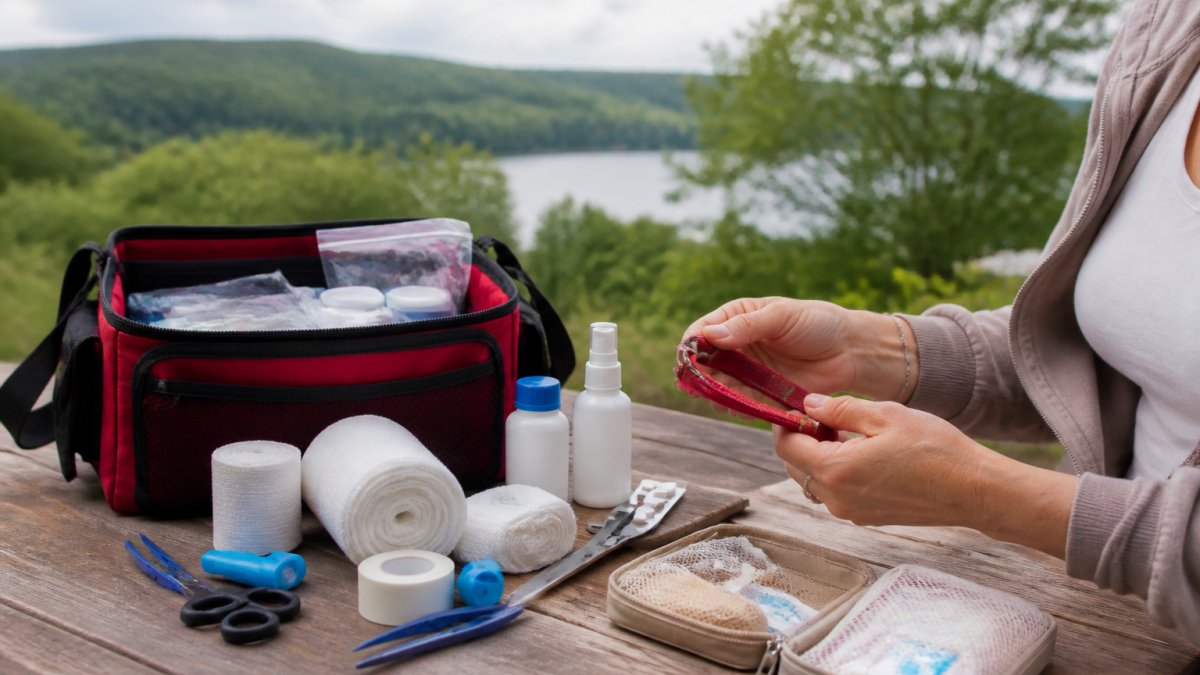
Create a list of all emergency numbers in duplicate: one laminated copy in your first-aid kit, and one as a photo on your cell phone. If your battery dies or your hands are shaking, a piece of paper is more helpful than a screen.
Treating an Injury in a Dog: Step by Step
One Treating an Injury in a Dog Always start by staying calm and ensuring safety. First, get yourself and the animal out of the danger zone before examining the wound.
Here's how to do it:
- Bring the situation under control. Get the puppy off the street or out of the brush.
- Calm the animal down. Speak calmly and hold them gently.
- Put on the bite guard. Even if your puppy doesn't usually bite.
- Examine the wound. Check for foreign objects such as splinters or glass.
- Stop the bleeding. Press a sterile gauze pad firmly against the wound for several minutes.
- Clean the wound. Rinse with clean water, then disinfect.
- Apply a bandage. Wrap loosely to allow for proper blood circulation.
- Call the veterinarian. Even for minor wounds, if you're unsure.
Cuts, paw injuries, and insect bites
Cuts often bleed heavily, but they look worse than they actually are. Applying pressure is key: A firm pressure bandage usually stops the bleeding within a few minutes.
Paw injuries can be tricky. Even a small cut hurts when walking, and the puppy will constantly lick it. Clean the paw, apply a bandage, and don't let the dog walk until you see a veterinarian.
If your dog is stung by an insect, follow these steps: Cool the area, monitor the situation, and if there is swelling in the face or throat, take your dog to the vet immediately. A sting on the muzzle can interfere with breathing.
Never wrap a bandage too tightly. A bandage that is too tight cuts off blood flow and can cause permanent damage within hours. Check regularly to make sure your toes are still warm.
Poisoning in Dogs: What to Do If Your Puppy Has Eaten Something Poisonous
Poisoning in Dogs: What to Do is a question that needs to be answered quickly. With a puppy, every minute counts, because its body often weighs only one-fifth as much as that of a full-grown dog. What is a harmless amount for an adult dog can already be critical for a puppy.
Why Puppies React Differently
Three factors make puppies more susceptible:
- Low body weight. The amount of poison ingested per kilogram of body weight is significantly higher. A piece of dark chocolate that would barely faze a 30-kg dog can seriously endanger a 5-kg puppy.
- Immature liver and kidneys. The body's detoxification systems are not yet fully functional. Toxins remain in the body longer.
- Faster drying. Vomiting and diarrhea cause a small body to lose fluids more quickly.
The First Five Minutes: Telephone Triage
Call a veterinarian or an animal hospital with an emergency service immediately, before you take any action yourself. Have these four pieces of information ready:
- What Was it eaten? (Product name, plant, medication)
- How much Approximately? (Number of pieces, estimated quantity)
- When When did it happen? (Time, number of minutes that have passed)
- What are the symptoms? What symptoms is the puppy showing now? (Vomiting, trembling, drooling, staggering, loss of consciousness)
The more detailed this information is, the more specific the advice the practice can provide. Some cases can be monitored over the phone, while others require an immediate visit.
These substances are especially dangerous for puppies
- Chocolate, especially dark varieties and baking chocolate; the higher the cocoa content, the more critical it is
- Rat poison and slug pellets, both of which can be fatal if not treated immediately
- Grapes and Raisins, even small amounts can cause kidney damage in small dogs
- Onions, garlic, leeks, destroy red blood cells
- Xylitol (in sugar-free gum, some candies, and dental care products)
- Certain houseplants such as dieffenbachia, poinsettia, and oleander
- Medications for People, especially acetaminophen and ibuprofen
- Antifreeze, smells sweet, so it's often licked
What You Shouldn't Do
Try not, to make the puppy vomit. This can do more harm than good, especially with harsh, corrosive, or foaming substances. When the puppy vomits, these substances can injure the esophagus again or enter the airways. Let the veterinarian make the decision.
Enter none Milk, oil, charcoal tablets, or home remedies without consulting a veterinarian. Some substances accelerate the absorption of the poison rather than inhibiting it.
What You Should Bring
- The Packaging or a scrap of fabric
- For plants: one Photo the plant or a leaf in a resealable bag
- The Stool sample, if the puppy has already vomited or had diarrhea
- Yours, List of Emergency Numbers from the first-aid kit
If you suspect poisoning, never wait for symptoms to appear. Some poisons don't take effect for hours, and by then the window of opportunity for detoxification has often already closed. A call to the veterinarian costs nothing and will help clarify the situation.
Prevention at Your Vacation Destination
Unfamiliar environments pose unfamiliar dangers. Take a systematic look around the house and yard: plants at the puppy’s nose level, open trash cans, medications lying around, and cleaning supplies within reach. Ask your hosts if snail bait or rat poison is used in the area—it’s not uncommon, and a curious puppy could easily get to it.
Recognizing Heat Stroke in Dogs and Responding Appropriately
Recognizing Heat Stroke in Dogs This means correctly interpreting the first signs and knowing the right thresholds. A puppy is at a disadvantage in several ways compared to a full-grown dog: it has less body mass to retain heat, its coat is often thinner, and it has a harder time regulating its own body temperature. That’s why it can become heat-stressed more quickly.
The Three Stages: Heat Stress, Heat Exhaustion, Heat Stroke
Not all cases of overheating are the same. Understanding the differences helps with assessment:
- Heat Stress: Heavy panting, restlessness, increased salivation. The puppy seeks shade but still seems responsive. Body temperature is usually below 40 °C.
- Heat exhaustion: Unsteady gait, weak walking, reddened gums, rapid pulse, apathy. Body temperature around 40–41 °C. Immediate action is required.
- Heatstroke: Impaired consciousness, convulsions, pale or blue mucous membranes, collapse. Body temperature above 41 °C. Life-threatening—take the animal to the veterinarian immediately.
A dog's normal body temperature ranges from 38.0 to 39.0 °C. That's why a digital thermometer should be part of your first-aid kit.
Which puppies are particularly at risk
- Brachycephalic Breeds (Pugs, French Bulldogs, Boxers)—their airways are shortened, and panting is less effective at cooling them down
- Very young puppies Under six months of age; thermoregulation is not yet fully developed
- Overweight Puppies, and the layer of fat provides additional insulation
- Puppies with Pre-existing Conditions such as heart defects or respiratory diseases
Here's how to do it, step by step
- Take it out of the sun. Go into the shade right away, into a cool room, or into a car with air conditioning.
- Place it on a cool surface. A damp towel on tile or concrete is enough.
- Refrigerate—but do it right. Moisten your dog's coat, paws, belly, and inner thighs with cool tap water. Place damp towels on the neck and head.
- Create a draft. A fan or a newspaper used as a fan aids in evaporative cooling.
- Offer small sips of water. Do not force-feed; do not pour food down the throat.
- Measuring Temperature, if possible. That way, you'll know if the cooling is working.
- Go to the vet, even if the puppy is feeling better. Heatstroke can have long-term effects, such as kidney damage, blood clotting disorders, and brain damage.
Take advantage of no ice water and no ice cubes for cooling. Excessive cooling constricts the blood vessels in the skin, which puts a strain on circulation and prevents heat from being dissipated. Cool tap water is sufficient.
What You Should Never Do
- Do not submerge the puppy in ice-cold water
- Do not give fever-reducing medications to people
- Do not leave the puppy alone, not even for a short time
- Don't wait to see if things get better on their own
Prevention While on Vacation
A car parked in the sun can become a death trap. When the outside temperature is 30 °C, the interior of a vehicle can heat up to over 50 °C in just a few minutes, even with the window slightly open. So please don't leave your puppy never Alone in the vehicle, even during short stops.
Plan your walks for the early morning or late evening. Asphalt can get so hot in direct sunlight that it burns paws; check the surface with the back of your hand before letting your puppy walk on it. Always bring water with you, even for short walks.
The most important rule is this: With a puppy, every minute counts. Heatstroke is not a condition you can just wait out; it is a medical emergency that requires immediate cooling and veterinary care.
Transporting Puppies Safely and Taking Them to the Veterinarian
Safe transportation protects both the puppy and you. In the car, the dog should be placed in a carrier or a safety harness secured with a seat belt.
Here's how to do it right:
- Line the box with a non-slip mat
- Put a familiar blanket inside—it's comforting
- Place the box in the back seat, not on the front passenger seat
- If your pet is feeling nauseous: do not feed it beforehand
In case of an emergency, please call the office first. That way, the staff will know you're coming and can prepare. Tell them what the injury is and your estimated arrival time.
The most important rule for any car ride with an injured puppy is: call ahead. A prepared veterinary team can save a life in the minutes you save.
Limitations of Self-Treatment: When to See a Veterinarian Immediately
Self-treatment has clear limits. First aid bridges the gap until professional care is available; it does not replace it.
Go to the vet immediately if:
- Heavy or unstoppable bleeding
- Suspected Poisoning
- Heatstroke or Loss of Consciousness
- Shortness of breath or blue mucous membranes
- Broken bone or open wound
- Seizures
- Vomiting or diarrhea with blood
When it comes to puppies, there’s a simple rule: When in doubt, it’s better to take them to the vet one time too many. A young dog has fewer reserves than a full-grown one. What’s harmless for an adult dog can be dangerous for a puppy.
You can find official guidelines on dog care and health at Federal Ministry of Social Affairs, Health, Long-Term Care, and Consumer Protection. General information on animal diseases and prevention is also available from the World Organization for Animal Health (WOAH).
Conclusion: Be Well Prepared for Your Vacation with Your Puppy
Emergencies while traveling are rare, but they can happen to anyone. If you write down the important numbers ahead of time, pack a first-aid kit, and know the most important steps to take, you’ll be able to handle the situation even in the heat of the moment.
That’s exactly the kind of peace and quiet we hope you’ll enjoy during your getaway. At Ferienwohnungen Gutenbrunn, you’ll find four lovingly furnished, wheelchair-accessible apartments in the Waldviertel, where families, wheelchair users, and dog owners can truly feel at home. Your dog is welcome, the paths right outside the door are quiet, and Anna and Herbert are available to speak with you personally if you have any questions.
Book directly with us and start your vacation with your puppy on a relaxed note.
Frequently Asked Questions
What should be included in a first-aid kit for puppies on vacation?
A first-aid kit for dogs on the go includes sterile gauze bandages and compresses, self-adhesive bandages, tick tweezers, wound disinfectant, an emergency blanket, small scissors, disposable gloves, and a list of emergency contacts and your veterinarian’s phone number. Additional items that are useful for puppies: a small syringe without a needle for administering fluids, and a muzzle or a soft bandage to protect against bites in case the puppy snaps out of pain.
How do I administer first aid to a puppy if it's injured?
If your dog is injured, first treat the bleeding: apply a sterile compress and secure it with a bandage without pressing too hard on the wound. Then rinse the wound with clean water and disinfect it. Keep the puppy calm, cover it with a warm blanket, and do not leave it unattended. In case of heavy bleeding, deep wounds, or if the puppy appears lethargic, take it to the veterinarian immediately. When transporting the puppy, place it on a flat surface or in a carrier.
What should you do if a puppy eats something poisonous while on vacation?
If your dog is poisoned, stay calm, keep the puppy away from the source of the poison, and do not induce vomiting without first seeking veterinary advice. Save any leftover substance or its packaging so the veterinarian can identify it. Call the veterinary clinic or emergency service immediately and describe what and how much the puppy has ingested. Symptoms such as vomiting, drooling, trembling, or loss of consciousness require immediate veterinary treatment.
How can I tell if a puppy is suffering from heatstroke?
You can recognize heatstroke in a dog by heavy panting, a glassy-eyed stare, a staggering gait, reddened mucous membranes, and a body temperature above 40 degrees Celsius. The puppy may become lethargic or collapse. Immediately move it into the shade, cool it down by applying damp cloths to its paws, belly, and neck, and offer it water. Drive to the veterinarian right away, even if its condition improves, as long-term damage may occur.


Comments are closed, but trackbacks and pingbacks are open.